Und dann auf "Zum Home-Bildschirm [+]".

Stöbern
genialokal zum Startbildschirm hinzufügen
Installieren Sie die genialokal App auf Ihrem Startbildschirm für einen schnellen Zugriff und eine komfortable Nutzung.
Installieren Sie die genialokal App auf Ihrem Startbildschirm für einen schnellen Zugriff und eine komfortable Nutzung.
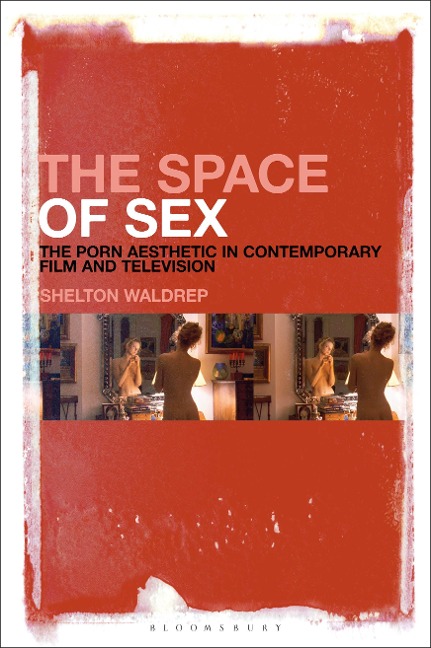
As film and television become ever more focused on the pornographic gaze of the camera, the human body undergoes a metamorphosis, becoming both landscape and building, part of an architectonic design in which the erotics of the body spread beyond the body itself to influence the design of the film or televisual shot. The body becomes the mise-en-scène of contemporary moving imagery. Opening The Space of Sex, Shelton Waldrep sets up some important tropes for the book: the movement between high and low art; the emphasis on the body, looking, and framing; the general intermedial and interdisciplinary methodology of the book as a whole.
The Space of Sex's second half focuses on how sex, gender, and sexuality are represented in several recent films, including Paul Schrader's The Canyons (2013), Oliver Stone's Savages (2012), Steven Soderbergh's Magic Mike (2012), Lars Von Trier's Nymphomaniac (2013), and Joseph Gordon-Levitt's Don Jon (2013). Each of these mainstream or independent movies, and several more, are examined for the ways they have attempted to absorb pornography, if not the pornography industry specifically, into their plot. According to Waldrep, the utopian elements of seventies porn get reprocessed in a complex way in the twenty-first century as both a utopian impulse-the desire to have sex on the screen, to re-eroticize sex as something positive and lacking in shame-with a mixed feeling about pornography itself, with an industry that can be seen in a dystopian light. In other words, sex, in our contemporary world, still does not come without compromise.
Shelton Waldrep is Distinguished Professor of English at the University of Southern Maine, USA. He is the author of The Dissolution of Place: Architecture, Identity, and the Body (2013) and The Aesthetics of Self-Invention: Oscar Wilde to David Bowie (2004), the co-author of Inside the Mouse: Work and Play at Disney World (1995), and the editor of The Seventies: The Age of Glitter in Popular Culture (1999).
Introduction
Part One: Topographies of Desire
1.Framing the Image: The Female Body in Late Kubrick
2.The Spy Who Loved Me: Bond and the Playboy Aesthetic
Part Two: The Pornographic Imaginary
3.Theorizing Pornography
4.Body of Art
Part Three: The Space of Sex in Contemporary Film and Television
5.Porn as Form and Content
6.Spatializing Desire
Bibliography
Index
Dieses eBook wird im PDF-Format geliefert und ist mit einem Adobe Kopierschutz (DRM) versehen. Sie können dieses eBook mit allen Geräten lesen, die das PDF-Format und den Adobe Kopierschutz (DRM) unterstützen.
Zum Beispiel mit den folgenden Geräten:
• tolino Reader
Laden Sie das eBook direkt über den Reader-Shop auf dem tolino herunter oder übertragen Sie das eBook auf Ihren tolino mit einer kostenlosen Software wie beispielsweise Adobe Digital Editions.
• Sony Reader & andere eBook Reader
Laden Sie das eBook direkt über den Reader-Shop herunter oder übertragen Sie das eBook mit der kostenlosen Software Sony READER FOR PC/Mac oder Adobe Digital Editions auf ein Standard-Lesegeräte mit epub- und Adobe DRM-Unterstützung.
• Tablets & Smartphones
Möchten Sie dieses eBook auf Ihrem Smartphone oder Tablet lesen, finden Sie hier unsere kostenlose Lese-App für iPhone/iPad und Android Smartphone/Tablets.
• PC & Mac
Lesen Sie das eBook direkt nach dem Herunterladen mit einer kostenlosen Lesesoftware, beispielsweise Adobe Digital Editions, Sony READER FOR PC/Mac oder direkt über Ihre eBook-Bibliothek in Ihrem Konto unter „Meine eBooks“ - „online lesen“.
Schalten Sie das eBook mit Ihrer persönlichen Adobe ID auf bis zu sechs Geräten gleichzeitig frei.
Bitte beachten Sie, dass die Kindle-Geräte das Format nicht unterstützen und dieses eBook somit nicht auf Kindle-Geräten lesbar ist.