Und dann auf "Zum Home-Bildschirm [+]".

Stöbern
genialokal zum Startbildschirm hinzufügen
Installieren Sie die genialokal App auf Ihrem Startbildschirm für einen schnellen Zugriff und eine komfortable Nutzung.
Installieren Sie die genialokal App auf Ihrem Startbildschirm für einen schnellen Zugriff und eine komfortable Nutzung.
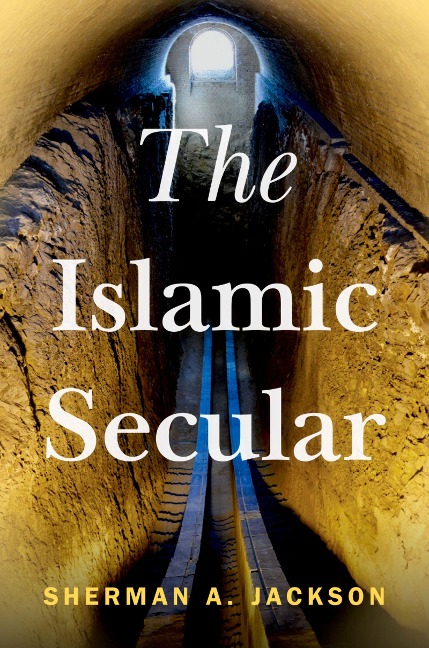
The basic point of the secular in the modern West is to "liberate" certain pursuits--the state, the economy, science--from the authority of religion. This is also assumed to be the goal and meaning of "secular" in Islam. Sherman Jackson argues, however, that that assumption is wrong. In Islam the "secular" was neither outside "religion" nor a rival to it. "Religion," in Islam was not identical to Islam's "sacred law," or "shari'ah." Nor did classical Muslim jurists see shari'ah as the all-encompassing, exclusive means of determining what is "Islamic." In fact, while, as religion, Islam's jurisdiction was unlimited, shari'ah's jurisdiction, as a sacred law, was limited. In other words, while everything remained within the purview of the divine gaze of the God of Islam, not everything could be determined by shari'ah or on the basis of its revelatory sources. Various aspects of state-policy, the economy, science, and the like were "differentiated," from shari'ah and its revelatory sources, without becoming non-religious or un-Islamic. Given the asymmetry between the circumference of shari'ah and that of Islam as religion, not everything that fell outside the former fell outside the latter. In other words, an idea or action could be non-shar'i (not dictated by shari'ah) without being non-Islamic, let alone anti-Islam. The ideas and actions that fall into this category are what Jackson terms "the Islamic Secular." Crucially, the Islamic Secular differs from the Western secular in that, while the whole point of the Western secular is to liberate various pursuits from religion, the Islamic Secular differentiates these disciplines not from religion but simply from shari'ah. Similarly, while both secularization and secularism play key roles in the Western secular, both of these concepts are alien to the Islamic Secular, as the Islamic Secular seeks neither to discipline nor to displace religion, nor expand to its own jurisdiction at religion's expense. The Islamic Secular is a complement to religion, in effect, a "religious secular." Nowhere are the practical implications of this more impactful than in Islam's relationship with the modern state. In this book, Jackson makes the case for the Islamic Secular on the basis of Islam's own pre-modern juristic tradition and shows how the Islamic Secular impacts the relationship between Islam and the modern state, including the Islamic State.
Sherman A. Jackson is King Faisal Chair of Islamic Thought and Culture and Professor of Religion and American Studies and Ethnicity at the University of Southern California. Prior to that, he spent many years at the University of Michigan's Department of Middle East Studies. He is the author of numerous books, including Islamic Law and the State: The Constitutional Jurisprudence of Shihab al-Din al-Qarafi (E.J. Brill, 1996), Islam and the Blackamerican: Looking Toward the Third Resurrection (OUP 2005), Islam and the Problem of Black Suffering (OUP 2009), and Sufism for Non-Sufis: Ibn 'Ata' Allah al-Sakandari's Taj al-'Arus (OUP 2012).
Introduction Chapter 1: The Conceptual Landscape: Secular, Religious, Islamic Chapter 2: Islam, Fiqh, the Hukm Shar'i and the Differentiated Realm Chapter 3: The Islamic Secular Chapter 4: The Islamic Secular and the Impossible State Chapter 5: The Islamic Secular and the Secular State Chapter 6: The Islamic Secular and Liberal Citizenship Conclusion Bibliography
Dieses eBook wird im PDF-Format geliefert und ist mit einem Adobe Kopierschutz (DRM) versehen. Sie können dieses eBook mit allen Geräten lesen, die das PDF-Format und den Adobe Kopierschutz (DRM) unterstützen.
Zum Beispiel mit den folgenden Geräten:
• tolino Reader
Laden Sie das eBook direkt über den Reader-Shop auf dem tolino herunter oder übertragen Sie das eBook auf Ihren tolino mit einer kostenlosen Software wie beispielsweise Adobe Digital Editions.
• Sony Reader & andere eBook Reader
Laden Sie das eBook direkt über den Reader-Shop herunter oder übertragen Sie das eBook mit der kostenlosen Software Sony READER FOR PC/Mac oder Adobe Digital Editions auf ein Standard-Lesegeräte mit epub- und Adobe DRM-Unterstützung.
• Tablets & Smartphones
Möchten Sie dieses eBook auf Ihrem Smartphone oder Tablet lesen, finden Sie hier unsere kostenlose Lese-App für iPhone/iPad und Android Smartphone/Tablets.
• PC & Mac
Lesen Sie das eBook direkt nach dem Herunterladen mit einer kostenlosen Lesesoftware, beispielsweise Adobe Digital Editions, Sony READER FOR PC/Mac oder direkt über Ihre eBook-Bibliothek in Ihrem Konto unter „Meine eBooks“ - „online lesen“.
Schalten Sie das eBook mit Ihrer persönlichen Adobe ID auf bis zu sechs Geräten gleichzeitig frei.
Bitte beachten Sie, dass die Kindle-Geräte das Format nicht unterstützen und dieses eBook somit nicht auf Kindle-Geräten lesbar ist.