Und dann auf "Zum Home-Bildschirm [+]".

Stöbern
genialokal zum Startbildschirm hinzufügen
Installieren Sie die genialokal App auf Ihrem Startbildschirm für einen schnellen Zugriff und eine komfortable Nutzung.
Installieren Sie die genialokal App auf Ihrem Startbildschirm für einen schnellen Zugriff und eine komfortable Nutzung.
Ihr gewünschter Artikel ist in 0 Buchhandlungen vorrätig - wählen Sie hier eine Buchhandlung in Ihrer Nähe aus:

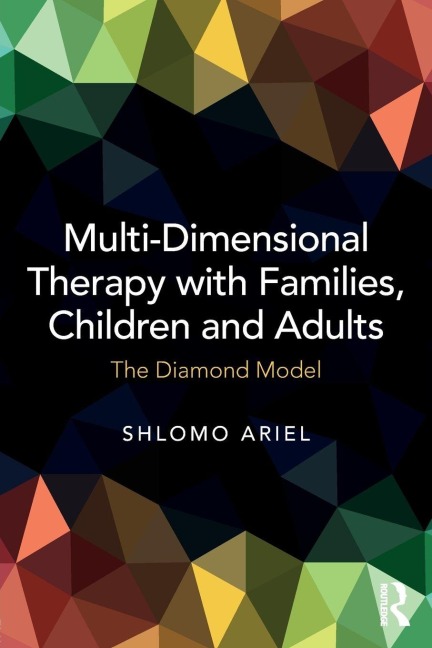

Multi-Dimensional Therapy with Families, Children and Adults: The Diamond Model is a comprehensive introduction to a model of multi-systemic, integrative, culturally competent, child and family-oriented psychotherapy: The Diamond Model.
This model integrates a great number of concepts, methods and techniques, found in diverse fields such as the various branches of psychology and psychotherapy, cultural anthropology, biology, linguistics and more, into a single linguistically unified theoretical and methodological framework. Through this model, the author presents clinical cases to help explore various internal and external factors that lead individuals and families to seek out therapy. The book also reserves a special place for examining play therapeutic and culturally competent techniques.
With vivid clinical examples throughout, Multi-Dimensional Therapy with Families, Children and Adults serves both as a theory-to-practice guide and as a reference book for therapists working with children and families in training and practice.--
Dr. Shlomo Ariel is a senior clinical psychologist and family therapist, an international trainer of therapists and Director of the Integrative Psychotherapy Center and the Israel Play Therapy Institute in Ramat Gan, Israel. http://www.enjoymychild.com
Contents Preface Acknowledgments Introduction Part 1 Theoretical and methodological foundations Chapter 1 The Diamond Model - essentials Chapter 2 The sublanguages of information processing, cybernetics and semiotics Chapter 3 The synchronic and diachronic perspectives and the concept of simplicity Part 2 The internal and external subsystems Chapter 4 The internal subsystems Chapter 5 The external subsystems Part 3 Multi-systemic diagnosis Chapter 6 Collecting and analyzing diagnostic data Chapter 7 Organizing the multi-systemic diagnostic data Part 4 Therapy Chapter 8 Planning and carrying out the therapy Chapter 9 The healing power of various therapeutic techniques Chapter 10 Make-believe play as a therapeutic instrument Chapter 11 Monitoring the therapeutic process Epilogue List of cases, examples and observations Index