Stöbern
genialokal zum Startbildschirm hinzufügen
Installieren Sie die genialokal App auf Ihrem Startbildschirm für einen schnellen Zugriff und eine komfortable Nutzung.
Installieren Sie die genialokal App auf Ihrem Startbildschirm für einen schnellen Zugriff und eine komfortable Nutzung.
Tippen Sie einfach auf Teilen:
 Und dann auf "Zum Home-Bildschirm [+]".
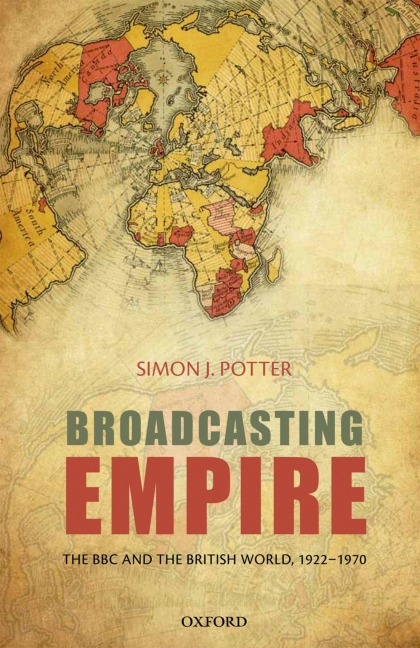
Broadcasting was born just as the British empire reached its greatest territorial extent, and matured while that empire began to unravel. Radio and television offered contemporaries the beguiling prospect that new technologies of mass communication might compensate for British imperial decline. In Broadcasting Empire, Simon J. Potter shows how, from the 1920s, the BBC used broadcasting to unite audiences at home with the British settler diaspora in Canada, Australia, New Zealand, and South Africa. High culture, royal ceremonial, sport, and even comedy were harnessed to this end, particularly on the BBC Empire Service, the predecessor of today's World Service. Belatedly, during the 1950s, the BBC also began to consider the role of broadcasting in Africa and Asia, as a means to encourage 'development' and to combat resistance to continued colonial rule. However, during the 1960s, as decolonization entered its final, accelerated phase, the BBC staged its own imperial retreat. This is the first full-length, scholarly study to examine both the home and overseas aspects of the BBC's imperial mission. Drawing on new archival evidence, it demonstrates how the BBC's domestic and imperial roles, while seemingly distinct, in fact exerted a powerful influence over one another. Broadcasting Empire makes an important contribution to our understanding of the transnational history of broadcasting, emphasising geopolitical rivalries and tensions between British and American attempts to exert influence on the world's radio and television systems.
Simon J. Potter is the author of News and the British World: the Emergence of an Imperial Press System, 1876-1922 (2003), and has published widely on the history of the press and broadcasting in the British empire. He was formerly a Government of Ireland Research Fellow, a Rydon Fellow at the Menzies Centre for Australian Studies, London, and a Harold White Fellow at the National Library of Australia.
- Introduction - 1: Diversity, 1922-31 - 2: Discord, 1932-35 - 3: Integration, 1935-39 - 4: War, 1939-45 - 5: Continuities, 1945-59 - 6: Challenges, 1945-59 - 7: Disintegration? 1960-70 - Conclusions
Dieses eBook wird im PDF-Format geliefert und ist mit einem Adobe Kopierschutz (DRM) versehen. Sie können dieses eBook mit allen Geräten lesen, die das PDF-Format und den Adobe Kopierschutz (DRM) unterstützen.
Zum Beispiel mit den folgenden Geräten:
• tolino Reader
Laden Sie das eBook direkt über den Reader-Shop auf dem tolino herunter oder übertragen Sie das eBook auf Ihren tolino mit einer kostenlosen Software wie beispielsweise Adobe Digital Editions.
• Sony Reader & andere eBook Reader
Laden Sie das eBook direkt über den Reader-Shop herunter oder übertragen Sie das eBook mit der kostenlosen Software Sony READER FOR PC/Mac oder Adobe Digital Editions auf ein Standard-Lesegeräte mit epub- und Adobe DRM-Unterstützung.
• Tablets & Smartphones
Möchten Sie dieses eBook auf Ihrem Smartphone oder Tablet lesen, finden Sie hier unsere kostenlose Lese-App für iPhone/iPad und Android Smartphone/Tablets.
• PC & Mac
Lesen Sie das eBook direkt nach dem Herunterladen mit einer kostenlosen Lesesoftware, beispielsweise Adobe Digital Editions, Sony READER FOR PC/Mac oder direkt über Ihre eBook-Bibliothek in Ihrem Konto unter „Meine eBooks“ - „online lesen“.
Schalten Sie das eBook mit Ihrer persönlichen Adobe ID auf bis zu sechs Geräten gleichzeitig frei.
Bitte beachten Sie, dass die Kindle-Geräte das Format nicht unterstützen und dieses eBook somit nicht auf Kindle-Geräten lesbar ist.