Und dann auf "Zum Home-Bildschirm [+]".

Stöbern
genialokal zum Startbildschirm hinzufügen
Installieren Sie die genialokal App auf Ihrem Startbildschirm für einen schnellen Zugriff und eine komfortable Nutzung.
Installieren Sie die genialokal App auf Ihrem Startbildschirm für einen schnellen Zugriff und eine komfortable Nutzung.
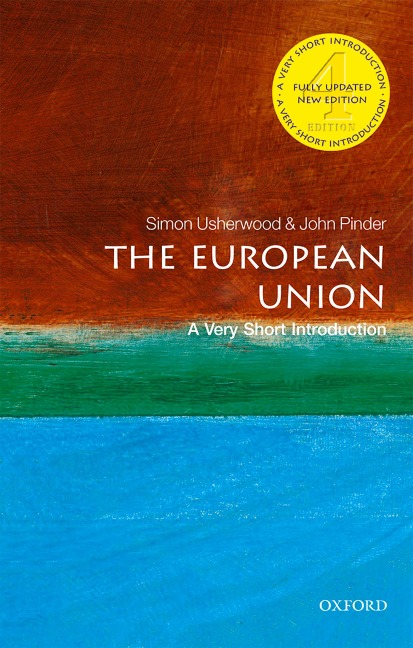
The European Union (EU) stands out as a fascinatingly unique political organisation. On the one hand, it has shown the potential for developing deep and wide-ranging cooperation between member states, going far beyond that found anywhere else in the world. On the other, it is currently in the throes of a phase of profound uncertainty about its viability and future. Showing how and why the EU has developed from 1950 to the present day, this Very Short Introduction covers a range of topics, including the Union's early history, the workings of its institutions and what they do, the interplay between 'eurosceptics' and federalists, and the role of the Union beyond Europe in international affairs and as a peace-keeper. In this fully updated fourth edition, Pinder and Usherwood cover the migrant crisis and the UK's decision to leave the Union, set in the context of a body that is now involved in most areas of public policy. Discussing how the EU continues to draw in new members, they conclude by considering the future of the Union and the choices and challenges that may lie ahead. ABOUT THE SERIES: The Very Short Introductions series from Oxford University Press contains hundreds of titles in almost every subject area. These pocket-sized books are the perfect way to get ahead in a new subject quickly. Our expert authors combine facts, analysis, perspective, new ideas, and enthusiasm to make interesting and challenging topics highly readable.
Simon Usherwood is Reader in Politics at the University of Surrey, where he specialises in the study of euroscepticism, and in UK-EU relations. As well as publishing widely in these areas, he has also been a frequent contributor to public debate, through the media, social media and numerous public speaking events. Since 2016, he has been a Senior Fellow of the 'UK in a Changing Europe' programme. John Pinder was Honorary Professor at the College of Europe, and Chairman of the Federal Trust, London. He was the author of The Building of the European Union (Third edition, OUP, 1998).
- Preface - Abbreviations - List of boxes - List of charts - List of illustrations - List of maps - 1: What the EU is for - 2: How the EU was made - 3: How the EU is governed - 4: Single market, single currency - 5: Agriculture, regions, budget: conflicts over who gets what - 6: Social policy, environmental policy - 7: 'An area of freedom, security and justice' - 8: A great civilian power...and more, or less? - 9: The EU and the rest of Europe - 10: The EU in the world - 11: Much accomplished...but what next? - References - Further reading - Glossary - Index
Dieses eBook wird im PDF-Format geliefert und ist mit einem Adobe Kopierschutz (DRM) versehen. Sie können dieses eBook mit allen Geräten lesen, die das PDF-Format und den Adobe Kopierschutz (DRM) unterstützen.
Zum Beispiel mit den folgenden Geräten:
• tolino Reader
Laden Sie das eBook direkt über den Reader-Shop auf dem tolino herunter oder übertragen Sie das eBook auf Ihren tolino mit einer kostenlosen Software wie beispielsweise Adobe Digital Editions.
• Sony Reader & andere eBook Reader
Laden Sie das eBook direkt über den Reader-Shop herunter oder übertragen Sie das eBook mit der kostenlosen Software Sony READER FOR PC/Mac oder Adobe Digital Editions auf ein Standard-Lesegeräte mit epub- und Adobe DRM-Unterstützung.
• Tablets & Smartphones
Möchten Sie dieses eBook auf Ihrem Smartphone oder Tablet lesen, finden Sie hier unsere kostenlose Lese-App für iPhone/iPad und Android Smartphone/Tablets.
• PC & Mac
Lesen Sie das eBook direkt nach dem Herunterladen mit einer kostenlosen Lesesoftware, beispielsweise Adobe Digital Editions, Sony READER FOR PC/Mac oder direkt über Ihre eBook-Bibliothek in Ihrem Konto unter „Meine eBooks“ - „online lesen“.
Schalten Sie das eBook mit Ihrer persönlichen Adobe ID auf bis zu sechs Geräten gleichzeitig frei.
Bitte beachten Sie, dass die Kindle-Geräte das Format nicht unterstützen und dieses eBook somit nicht auf Kindle-Geräten lesbar ist.