Und dann auf "Zum Home-Bildschirm [+]".

Stöbern
genialokal zum Startbildschirm hinzufügen
Installieren Sie die genialokal App auf Ihrem Startbildschirm für einen schnellen Zugriff und eine komfortable Nutzung.
Installieren Sie die genialokal App auf Ihrem Startbildschirm für einen schnellen Zugriff und eine komfortable Nutzung.
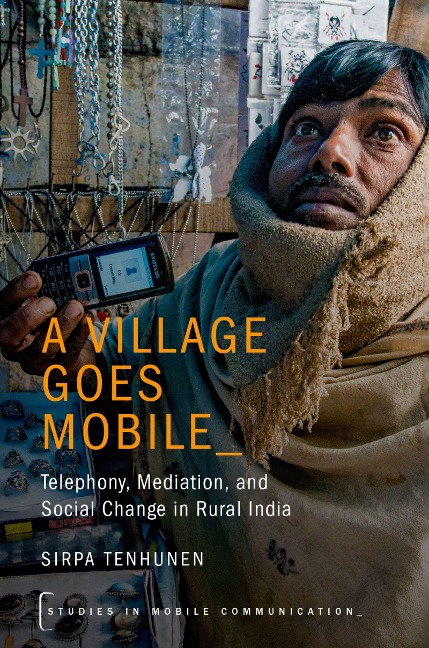
In A Village Goes Mobile, Sirpa Tenhunen examines how the mobile telephone has contributed to social change in rural India. Tenhunen's long-term ethnographic fieldwork in West Bengal began before the village had a phone system in place and continued through the introduction and proliferation of the smartphone. She here analyzes how mobile telephones emerged as multidimensional objects which, in addition to enabling telephone conversations, facilitated status aspirations, internet access, and entertainment practices. She explores how this multifaceted use of mobile phones has affected agency and power dynamics in economic, political, and social relationships, and how these new social constellations relate to culture and development. In eight chapters, Tenhunen asks such questions as: Who benefits from mobile telephony and how? Can people use mobile phones to change their lives, or does phone use merely amplify existing social patterns and power relationships? Can mobile telephony induce development? Going beyond the case of West Bengal, Tenhunen develops a framework to understand how new media mediates social processes within interrelated social spheres and local hierarchies by relating, media-saturated forms of interaction to pre-existing contexts.
Sirpa Tenhunen is an anthropologist who has carried out fieldwork in rural and urban India. In addition to the appropriation of mobile technology, her research interests cover gender and politics in India. She is currently Professor of Social and Cultural Anthropology at the University of Helsinki.
Chapter 1 Introduction Chapter 2 Theorizing phone use contexts and mediation Chapter 3 Why mobile phones became ubiquitous: remediation and socialities Chapter 4 Mobile telephony, economy and social logistics Chapter 5 Mediating gender: mobile phones and women's agency Chapter 6 Mediating conflict: mobile telephony and politics Chapter 7 Smartphones, caste, and intersectionalities Chapter 8 Conclusions
Dieses eBook wird im PDF-Format geliefert und ist mit einem Adobe Kopierschutz (DRM) versehen. Sie können dieses eBook mit allen Geräten lesen, die das PDF-Format und den Adobe Kopierschutz (DRM) unterstützen.
Zum Beispiel mit den folgenden Geräten:
• tolino Reader
Laden Sie das eBook direkt über den Reader-Shop auf dem tolino herunter oder übertragen Sie das eBook auf Ihren tolino mit einer kostenlosen Software wie beispielsweise Adobe Digital Editions.
• Sony Reader & andere eBook Reader
Laden Sie das eBook direkt über den Reader-Shop herunter oder übertragen Sie das eBook mit der kostenlosen Software Sony READER FOR PC/Mac oder Adobe Digital Editions auf ein Standard-Lesegeräte mit epub- und Adobe DRM-Unterstützung.
• Tablets & Smartphones
Möchten Sie dieses eBook auf Ihrem Smartphone oder Tablet lesen, finden Sie hier unsere kostenlose Lese-App für iPhone/iPad und Android Smartphone/Tablets.
• PC & Mac
Lesen Sie das eBook direkt nach dem Herunterladen mit einer kostenlosen Lesesoftware, beispielsweise Adobe Digital Editions, Sony READER FOR PC/Mac oder direkt über Ihre eBook-Bibliothek in Ihrem Konto unter „Meine eBooks“ - „online lesen“.
Schalten Sie das eBook mit Ihrer persönlichen Adobe ID auf bis zu sechs Geräten gleichzeitig frei.
Bitte beachten Sie, dass die Kindle-Geräte das Format nicht unterstützen und dieses eBook somit nicht auf Kindle-Geräten lesbar ist.