Und dann auf "Zum Home-Bildschirm [+]".

Stöbern
genialokal zum Startbildschirm hinzufügen
Installieren Sie die genialokal App auf Ihrem Startbildschirm für einen schnellen Zugriff und eine komfortable Nutzung.
Installieren Sie die genialokal App auf Ihrem Startbildschirm für einen schnellen Zugriff und eine komfortable Nutzung.

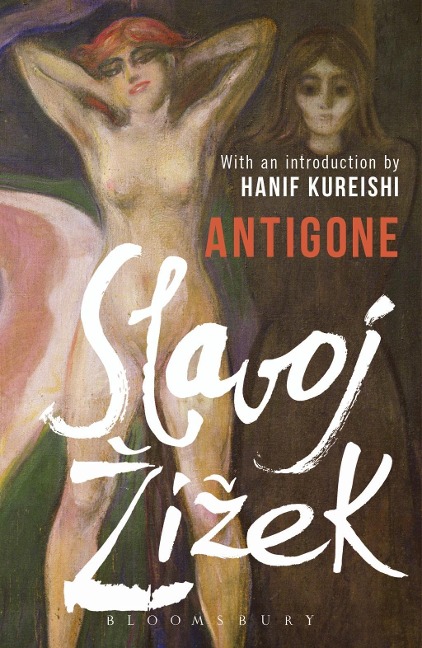
Antigone is universally celebrated as the ultimate figure of ethical resistance to the state power which oversteps its legitimate scope and as the defender of simple human dignity (more important than all political struggles). But is she really so innocent and pure? What if there is a dark side to her? What if Creon, the representative of state power, also has a valuable point to make? And what if both Antigone and Creon are part of a problem that only a popular intervention can confront?Zizek's rewriting of this classic play confronts these issues in a practical way: not by theorizing about them, but by imagining an Antigone in which, at a crucial moment, the action takes a different turn, an Antigone along the lines of Run, Lola, Run or of Brecht's learning plays. A brilliantly funny, moving and political piece for those who are interested in reading and watching Antigone in an entirely new way.
Slavoj Zizek is a Hegelian philosopher, a
Lacanian psychoanalyst, and a Communist.
He is International Director at the Birkbeck
Institute for Humanities, University of
London, UK, Visiting Professor at the New
York University, USA, Eminent Scholar at Kyung Hee University, Seoul, Korea and Senior Researcher at the Department of Philosophy, University of Ljubljana, Slovenia. He was born, is writing books, and will die.
Slavoj Zizek is a senior researcher at the Institute for Sociology and Philosophy at the University of Ljubljana, Slovenia; Global Distinguished Professor of German at New York University, USA, and international director of the Birkbeck Institute for the Humanities of the University of London, UK. His recent books include The Courage of Hopelessness: Chronicles of a Year of Acting Dangerously (2017) and Disparities (Bloomsbury, 2016).
Acknowledgements
Introduction
Play
Postscript
Index