Stöbern
genialokal zum Startbildschirm hinzufügen
Installieren Sie die genialokal App auf Ihrem Startbildschirm für einen schnellen Zugriff und eine komfortable Nutzung.
Installieren Sie die genialokal App auf Ihrem Startbildschirm für einen schnellen Zugriff und eine komfortable Nutzung.
Tippen Sie einfach auf Teilen:
 Und dann auf "Zum Home-Bildschirm [+]".
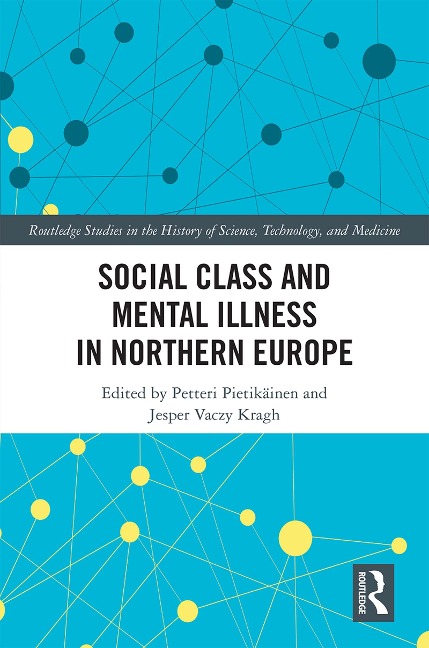
This book examines the relationship between social class and mental illness in Northern Europe during the 20th century. Contributors explore the socioeconomic status of mental patients, the possible influence of social class on the diagnoses and treatment they received in psychiatric institutions, and how social class affected the ways in which the problems of minorities, children and various 'deviants' and 'misfits' were evaluated and managed by mental health professionals. The basic message of the book is that, even in developing welfare states founded on social equality, social class has been a significant factor that has affected mental health in many different ways - and still does.
Petteri Pietikäinen is Professor of the History of Science and Ideas at the University of Oulu, Finland Jesper Vaczy Kragh is principle investigator at Psychiatry Region Zealand and a Fellow at CoRe, the University of Copenhagen, Denmark
1 .Introduction (Petteri Pietikainen and Jesper Vaczy Kragh) Part One: Psychiatry, Mental Hospitals and Social Class 2. Class and mental health in post-war Britain (Vicky Long) 3. Pity the poor patient: Small farmers, rural labourers and industrial workers in a mental hospital in Northern Finland, 1925-1970 (Petteri Pietikainen) 4. Different background, different cure? How the patients' socioeconomic status affected Finnish institutional psychiatry from the 1930s to the 1960s (Anu Rissanen) 5. After patient murder. Asylum psychiatry in the four German occupation zones, 1945-1955 (Maike Rotzoll) 6. Radical reformist psychiatry and the class awareness in Finland in the 1960s and 1970s (Mikko Myllykangas and Katariina Parhi) Part Two: Minorities, Deviants and Psychopaths 7. The Romani minority in Norwegian forensic hospitals, 1895-1940 (Øyvind Thomassen) 8. Femininity and social class in forensic psychiatric assessments in Norway, 1938-1969 (Maria Antonie Sæther) 9. Social class and drug addiction in European psychiatry, 1860-1955 (Jesper Vaczy Kragh) 10. Psychopaths, 'querulants' and class in 1930s Sweden: On controversial diagnoses, money, norms and networks (Annika Berg) Part Three: Social Class and Children: War, Nervousness and Hyperactivity 11. 'Nervous children' - medical notions of degeneration, mental health and social class in Denmark and England, ca 1900-1945 (Jennie Sejr Junghans) 12. Children changing places. Encountering the 'war child' in post-war Finland (Tuomas Laine-Frigren) 13. Challenging the biomedical narrative of ADHD: Social class, race, and hyperactivity in the US and the UK, ca. 1950-2010 (Marie Reinholdt)
Dieses eBook wird im PDF-Format geliefert und ist mit einem Adobe Kopierschutz (DRM) versehen. Sie können dieses eBook mit allen Geräten lesen, die das PDF-Format und den Adobe Kopierschutz (DRM) unterstützen.
Zum Beispiel mit den folgenden Geräten:
• tolino Reader
Laden Sie das eBook direkt über den Reader-Shop auf dem tolino herunter oder übertragen Sie das eBook auf Ihren tolino mit einer kostenlosen Software wie beispielsweise Adobe Digital Editions.
• Sony Reader & andere eBook Reader
Laden Sie das eBook direkt über den Reader-Shop herunter oder übertragen Sie das eBook mit der kostenlosen Software Sony READER FOR PC/Mac oder Adobe Digital Editions auf ein Standard-Lesegeräte mit epub- und Adobe DRM-Unterstützung.
• Tablets & Smartphones
Möchten Sie dieses eBook auf Ihrem Smartphone oder Tablet lesen, finden Sie hier unsere kostenlose Lese-App für iPhone/iPad und Android Smartphone/Tablets.
• PC & Mac
Lesen Sie das eBook direkt nach dem Herunterladen mit einer kostenlosen Lesesoftware, beispielsweise Adobe Digital Editions, Sony READER FOR PC/Mac oder direkt über Ihre eBook-Bibliothek in Ihrem Konto unter „Meine eBooks“ - „online lesen“.
Schalten Sie das eBook mit Ihrer persönlichen Adobe ID auf bis zu sechs Geräten gleichzeitig frei.
Bitte beachten Sie, dass die Kindle-Geräte das Format nicht unterstützen und dieses eBook somit nicht auf Kindle-Geräten lesbar ist.