Und dann auf "Zum Home-Bildschirm [+]".

Stöbern
genialokal zum Startbildschirm hinzufügen
Installieren Sie die genialokal App auf Ihrem Startbildschirm für einen schnellen Zugriff und eine komfortable Nutzung.
Installieren Sie die genialokal App auf Ihrem Startbildschirm für einen schnellen Zugriff und eine komfortable Nutzung.
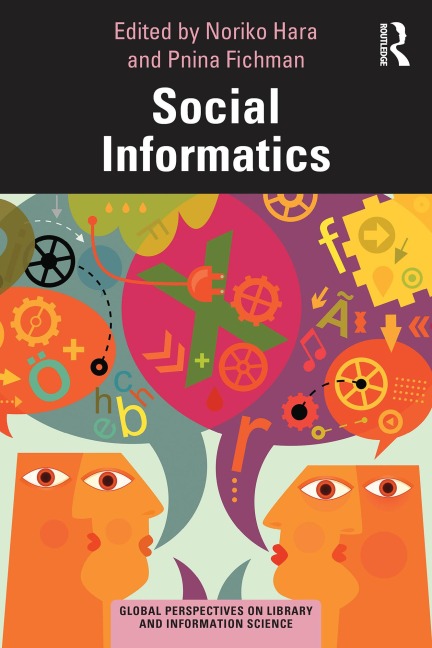
Social informatics examines how society is influenced by digital technologies and how digital technologies are shaped by political, economic, and socio-cultural forces. The chapters in this edited volume use social informatics approaches to analyze recent issues in our increasingly data-intensive society. Taking a social informatics perspective, this edited volume investigates the interaction between society and digital technologies and includes research that examines individuals, groups, organizations, and nations, as well as their complex relationships with pervasive mobile and wearable devices, social media platforms, artificial intelligence, and big data. This volume's contributors range from seasoned and renowned researchers to upcoming researchers in social informatics. The readers of the book will understand theoretical frameworks of social informatics; gain insights into recent empirical studies of social informatics in specific areas such as big data and its effects on privacy, ethical issues related to digital technologies, and the implications of digital technologies for daily practices; and learn how the social informatics perspective informs research and practice. Social Informatics provides the first book-length overview of Social Informatic research in recent years and will be essential reading for academics and students engaged in the study of information science, internet studies, emerging technologies, digital media, new media studies, computer science, the sociology of communication, and data science.
Noriko Hara is Professor and Department Chair in the Department of Information & Library Science in the Luddy School of Informatics, Computing, and Engineering at Indiana University, Bloomington. Pnina Fichman is a Professor of Information Science in the Luddy School of Informatics, Computing, and Engineering and the Director of the Rob Kling Center for Social Informatics at Indiana University, Bloomington.
Introduction; Section I: Theoretical Frameworks of SI; 1: Some reflections on the grounds of social informatics; 2: Social Informatics Thematic-Methodological Framework; Section II: Social Informatics Perspectives on Data; 3: From Innovative Methodologies to Creative Mythologies: Measuring GLAM Soft Power through Data-Driven Research; 4: Understanding Algorithmic Governance and Governance of Algorithms Through a Disinformation Policy Analysis; 5. Neutrality or Contextuality: Challenges for Sociotechnical Data Governance; Section III: Social Informatics Perspectives on Ethics and Social Justice; 6: Smart Governments: The Pitfalls of Big Data in Public Administration; 7: Augmenting Inequality: Socio-Technical Transformation of Medicine and Challenges to Digital Health Citizenship (DHC) in the Age of Artificial Intelligence (AI); 8: A Socio-Technical Interaction Network (STIN) Perspective on TikTok Fake News: The Case of the Russia-Ukraine War; Section IV: Opportunities and Challenges with Digital Technology Domestication; 9: Socio-ecological Model of Internet Challenges; 10: Role Expansion of social media groups: Example from the online activity for Roman Zadorov in Israel; 11: Social Media Affordances for Mediated Science Communication During the COVID-19 Pandemic
Dieses eBook wird im PDF-Format geliefert und ist mit einem Adobe Kopierschutz (DRM) versehen. Sie können dieses eBook mit allen Geräten lesen, die das PDF-Format und den Adobe Kopierschutz (DRM) unterstützen.
Zum Beispiel mit den folgenden Geräten:
• tolino Reader
Laden Sie das eBook direkt über den Reader-Shop auf dem tolino herunter oder übertragen Sie das eBook auf Ihren tolino mit einer kostenlosen Software wie beispielsweise Adobe Digital Editions.
• Sony Reader & andere eBook Reader
Laden Sie das eBook direkt über den Reader-Shop herunter oder übertragen Sie das eBook mit der kostenlosen Software Sony READER FOR PC/Mac oder Adobe Digital Editions auf ein Standard-Lesegeräte mit epub- und Adobe DRM-Unterstützung.
• Tablets & Smartphones
Möchten Sie dieses eBook auf Ihrem Smartphone oder Tablet lesen, finden Sie hier unsere kostenlose Lese-App für iPhone/iPad und Android Smartphone/Tablets.
• PC & Mac
Lesen Sie das eBook direkt nach dem Herunterladen mit einer kostenlosen Lesesoftware, beispielsweise Adobe Digital Editions, Sony READER FOR PC/Mac oder direkt über Ihre eBook-Bibliothek in Ihrem Konto unter „Meine eBooks“ - „online lesen“.
Schalten Sie das eBook mit Ihrer persönlichen Adobe ID auf bis zu sechs Geräten gleichzeitig frei.
Bitte beachten Sie, dass die Kindle-Geräte das Format nicht unterstützen und dieses eBook somit nicht auf Kindle-Geräten lesbar ist.