Und dann auf "Zum Home-Bildschirm [+]".

Stöbern
genialokal zum Startbildschirm hinzufügen
Installieren Sie die genialokal App auf Ihrem Startbildschirm für einen schnellen Zugriff und eine komfortable Nutzung.
Installieren Sie die genialokal App auf Ihrem Startbildschirm für einen schnellen Zugriff und eine komfortable Nutzung.
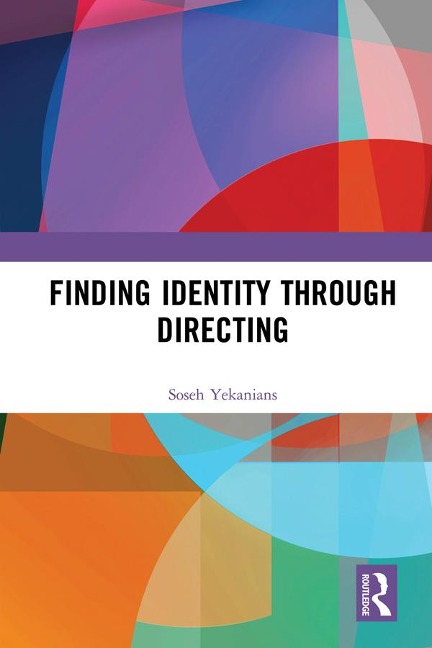
Finding Identity through Directing is a practice-led autoethnographical monograph that provides an in-depth exploration into the field of theatre directing and an individual's endless creative pursuit for belonging. The book specifically examines how a culturally displaced individual may find a sense of identity through their directing and addresses the internal struggles of belonging, acceptance and Self that are often experienced by those who have confronted cultural unhoming. The first half of the story scrutinises Dr Yekanians' own identity as an Iranian born Armenian-Australian and how she struggled with belonging growing up in a world that for the most part, was unaccepting of her differences. The second half, looks at how theatre directing, aided her (re)discovery of Self. While evidence shows that within the past decade there has been a growing interest in the vocation of theatre directing, embarking on a career within this field, while exciting, can often be a daunting and experimental vocation. Finding Identity through Directing questions this conundrum and specifically asks, in a competitive artistic profession that is rapidly developing, what attracts an individual to the authoritative role of the director and what are the underlying motivations of this attraction? By uncovering that there is more to the role of the director than the mere finality of a production, we can observe that the theatre is a promising setting for cultural exchanges in dialogue and for personal development. Theatre directing as the vehicle for these expansions and progressions of self can potentially address the internal struggles of identity often experienced by those who, in some form, have encountered cultural displacement.
Dr Soseh Yekanians is a senior lecturer in Theatre Media at Charles Sturt University. While her research focuses on understandings of Self, belonging and identity formation with specific reference to theatre directing, she is also fascinated with how theatre and the performing arts more generally, can speak to an individual's sense of displacement. Dr Yekanians hopes that with more research on how cultural stereotypes manifest in individuals through the pressures of society and how these stereotypes are performed via theatrical representations onstage, performance as a cultural phenomenon can begin to break down harmful stereotypes and offer cross-cultural exchanges that develop and empower people's (re)discovery of identity offstage.
Table of Contents Foreword Preface Acknowledgments IV Introduction 1 Field of Study 1 Structure of the Book 6 Methodology 7 Practice-led Research 8 Tacit Knowledge 9 Autoethnography and Reflexivity 11 The Interviews 13 In Summary 14 References 15 Chapter One: Attracted to Theatre 18 Setting the Scene 18 Prologue 18 The Essence of Theatre 19 Theatre as a Social Construct *3 The Theatre and Me 26 References 31 Chapter Two: Seeking Identity 33 Searching for Self 33 Identifying Identity 33 What's in a Home? 42 Belonging and Displacement 47 Flirting with the "Unhomely" and the "In-Between" 49 The Other 52 References 58 Chapter Three: Affinity with Armenia, a Narrative in Two Parts 62 Part I What Went Before 62 Birth of a Nation 62 The Beginnings of the Invaders 65 The Armenian Genocide 66 The Republic of Armenia Today 71 My Voyage from a Dream to Reality 72 September 2008 72 Part II The Journey Back 76 September 2014 75 A New Armenia or a New Me? 78 References 87 Chapter Four: Dating Directing 90 Deconstructing Directing 90 Background 90 Collaborative Research through the Kitchen Sink Collective 95 Turning Points in the Research 98 Moment One 98 Moment Two 100 To Be or Not to Be 102 Homing versus Belonging 104 The Director's Journey 109 Immersion into the Practice of Directing 112 No Worries and Uncle Jack 112 Background 112 Stereotype, Defamiliarisation and Difference 115 References 128 Conclusion 131 Final Thoughts 138 Appendices 140 Appendices 1 140 1.1 Interview Questions from Phase 1 140 1.2 Interview Questions from Phase 2 143 1.3 Full list of theatre directors interviewed 145
Dieses eBook wird im PDF-Format geliefert und ist mit einem Adobe Kopierschutz (DRM) versehen. Sie können dieses eBook mit allen Geräten lesen, die das PDF-Format und den Adobe Kopierschutz (DRM) unterstützen.
Zum Beispiel mit den folgenden Geräten:
• tolino Reader
Laden Sie das eBook direkt über den Reader-Shop auf dem tolino herunter oder übertragen Sie das eBook auf Ihren tolino mit einer kostenlosen Software wie beispielsweise Adobe Digital Editions.
• Sony Reader & andere eBook Reader
Laden Sie das eBook direkt über den Reader-Shop herunter oder übertragen Sie das eBook mit der kostenlosen Software Sony READER FOR PC/Mac oder Adobe Digital Editions auf ein Standard-Lesegeräte mit epub- und Adobe DRM-Unterstützung.
• Tablets & Smartphones
Möchten Sie dieses eBook auf Ihrem Smartphone oder Tablet lesen, finden Sie hier unsere kostenlose Lese-App für iPhone/iPad und Android Smartphone/Tablets.
• PC & Mac
Lesen Sie das eBook direkt nach dem Herunterladen mit einer kostenlosen Lesesoftware, beispielsweise Adobe Digital Editions, Sony READER FOR PC/Mac oder direkt über Ihre eBook-Bibliothek in Ihrem Konto unter „Meine eBooks“ - „online lesen“.
Schalten Sie das eBook mit Ihrer persönlichen Adobe ID auf bis zu sechs Geräten gleichzeitig frei.
Bitte beachten Sie, dass die Kindle-Geräte das Format nicht unterstützen und dieses eBook somit nicht auf Kindle-Geräten lesbar ist.