Und dann auf "Zum Home-Bildschirm [+]".

Stöbern
genialokal zum Startbildschirm hinzufügen
Installieren Sie die genialokal App auf Ihrem Startbildschirm für einen schnellen Zugriff und eine komfortable Nutzung.
Installieren Sie die genialokal App auf Ihrem Startbildschirm für einen schnellen Zugriff und eine komfortable Nutzung.
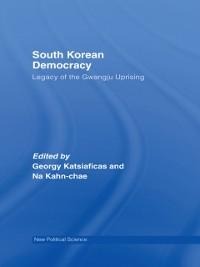
This new book offers a retrospective appraisal of the Gwangju Uprising by academics, activists and artists from Gwangju, Korea. In 1980, South Koreans took to the streets to demand democracy. When the military threatened brutal suppression of the popular movement, only in Gwangju did people refuse to submit. After horrific bloodshed, the citizens of Gwangju drove the military out of the city and held their liberated space for a week. As a "beautiful community" emerged, newspapers were published, hundreds of thousands of people congregated in popular assemblies, and the city's life gave new meaning to democracy. Although crushed by overwhelming military force, Gwangju's example inspired the eventual overthrow of the military dictatorship and ushered in a new democratic wave in East Asia. Providing a detailed analysis of the events of the Gwangju uprising, this new volume traces the birth of South Korean democracy in Gwangju's stubborn refusal to accept life without freedom. The book also focuses on the socio-economic background, the role of women in the uprising, issues of collective identity and the international significance of the revolt. Scholars and researchers of South Asian politics, social movements, history, democracy and development studies will find this volume to be of keen interest.
Georgy Katsiaficas is Professor of Humanities and Social Sciences at Wentworth Institute of Technology in Boston, Massachusetts, USA. Na Kahn-chae is Professor of Sociology at Chonnam National University, Gwangju, Korea.
Introduction 1. Remembering the Gwangju Uprising 2. The Socio-Economic Background of the Gwangju Uprising 3. Collective Action and Organization in the Gwangju Uprising 4. Women's Experiences in the Gwangju Uprising: Participation and Exclusion 5. The Gwangju People's Uprising and the Construction of Collective Identity: The Fighters' Bulletin 6. The Shadow of the Gwangju Uprising in the Democratization of Korean Politics 7. The Experience of the May 18th Uprising and the Communal Imagination 8. A New Perspective on the Gwangju People's Resistance Struggle: 1980-1997 9. Comparing the Paris Commune and the Gwangju Uprising
Dieses eBook wird im PDF-Format geliefert und ist mit einem Adobe Kopierschutz (DRM) versehen. Sie können dieses eBook mit allen Geräten lesen, die das PDF-Format und den Adobe Kopierschutz (DRM) unterstützen.
Zum Beispiel mit den folgenden Geräten:
• tolino Reader
Laden Sie das eBook direkt über den Reader-Shop auf dem tolino herunter oder übertragen Sie das eBook auf Ihren tolino mit einer kostenlosen Software wie beispielsweise Adobe Digital Editions.
• Sony Reader & andere eBook Reader
Laden Sie das eBook direkt über den Reader-Shop herunter oder übertragen Sie das eBook mit der kostenlosen Software Sony READER FOR PC/Mac oder Adobe Digital Editions auf ein Standard-Lesegeräte mit epub- und Adobe DRM-Unterstützung.
• Tablets & Smartphones
Möchten Sie dieses eBook auf Ihrem Smartphone oder Tablet lesen, finden Sie hier unsere kostenlose Lese-App für iPhone/iPad und Android Smartphone/Tablets.
• PC & Mac
Lesen Sie das eBook direkt nach dem Herunterladen mit einer kostenlosen Lesesoftware, beispielsweise Adobe Digital Editions, Sony READER FOR PC/Mac oder direkt über Ihre eBook-Bibliothek in Ihrem Konto unter „Meine eBooks“ - „online lesen“.
Schalten Sie das eBook mit Ihrer persönlichen Adobe ID auf bis zu sechs Geräten gleichzeitig frei.
Bitte beachten Sie, dass die Kindle-Geräte das Format nicht unterstützen und dieses eBook somit nicht auf Kindle-Geräten lesbar ist.