
Stöbern
genialokal zum Startbildschirm hinzufügen
Installieren Sie die genialokal App auf Ihrem Startbildschirm für einen schnellen Zugriff und eine komfortable Nutzung.
Installieren Sie die genialokal App auf Ihrem Startbildschirm für einen schnellen Zugriff und eine komfortable Nutzung.
Tippen Sie einfach auf Teilen:
 Und dann auf "Zum Home-Bildschirm [+]".
Bei genialokal.de kaufen Sie online bei Ihrer lokalen, inhabergeführten Buchhandlung!
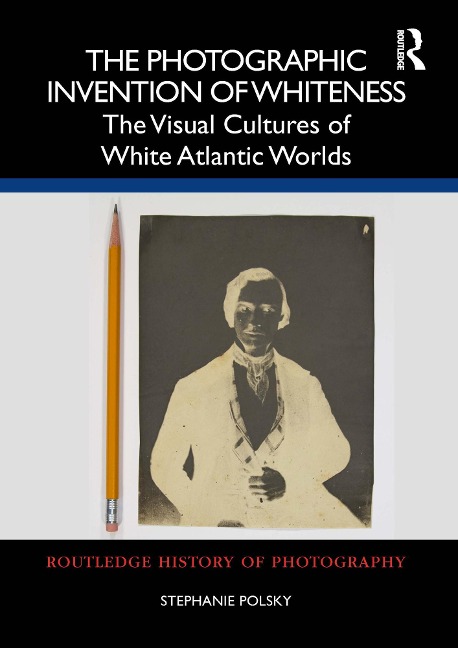
Focusing on the creation of the concept of Whiteness, this study links early photographic imagery to the development and exploitation that were common in the colonial Atlantic World of the mid-to-late nineteenth century. With the advent of the daguerreotype in the mid-nineteenth century, White European settlers could imagine themselves as a supra-national community, where the attainment of wealth was rapidly becoming accessible through colonisation. Their dispersal throughout the colonial territories made possible the advent of a new representative type of Whiteness that eventually merged with the portrayal of modernity itself. Over time, the colonisation of the Atlantic World became synonymous with fascination itself within a European mind fixated upon both a racially subordinated world and the technical media through which it was represented. In the intervening centuries, images have acted as a medium of the imaginary, allowing for ideas around classification and the measurement of value to travel and to situate themselves as universal means. Contemporary societies still grapple with the residues of race, gender, class, and sexuality first established by the contrived mores of this representational medium, and those who were racialised by the camera as objects of fascination, curiosity, or concern have remained so well into the post-digital era. The book will be of interest to scholars working in history of photography, art history, colonialism, and critical race theory.
Stephanie Polsky is a Senior Academic Program Manager at the College of Arts, Media and Design at Northeastern University.
Introduction: The Invention of a Photographic Whiteness 1. Daguerreotypes, the Vanishing Native American, and the Invention of Western Typologies 2. Mathew Brady's Civil War, Daguerreotypes, and the Technological Redefinition of White Nationalism 3. Ain't I a Human: Louis Agassiz's Slave Daguerreotypes and White Scientific Voyeurism 4. How the West was Won: America at the Great Exhibition of 1851 5. The Founding of the Great White World: The Arctic Daguerreotypes 6. White Aesthetics: Daguerreotypes in the Consolidation of Colonial Empires in West Africa 7. Lewis Carroll and the Imperial Eroticisation of White Childhood 8. Material Agency: The Eames Office, Race, and US Cold War Photographic Aesthetics 9. The Apple and the Anthropocene: The Whiteness of Silicon Valley's Digital Ecologies Conclusion: Entrepreneurs, Clients, and Images: How Photography Inserted Whiteness into a Global Visual Economy
Dieses eBook wird im PDF-Format geliefert und ist mit einem Adobe Kopierschutz (DRM) versehen. Sie können dieses eBook mit allen Geräten lesen, die das PDF-Format und den Adobe Kopierschutz (DRM) unterstützen.
Zum Beispiel mit den folgenden Geräten:
• tolino Reader
Laden Sie das eBook direkt über den Reader-Shop auf dem tolino herunter oder übertragen Sie das eBook auf Ihren tolino mit einer kostenlosen Software wie beispielsweise Adobe Digital Editions.
• Sony Reader & andere eBook Reader
Laden Sie das eBook direkt über den Reader-Shop herunter oder übertragen Sie das eBook mit der kostenlosen Software Sony READER FOR PC/Mac oder Adobe Digital Editions auf ein Standard-Lesegeräte mit epub- und Adobe DRM-Unterstützung.
• Tablets & Smartphones
Möchten Sie dieses eBook auf Ihrem Smartphone oder Tablet lesen, finden Sie hier unsere kostenlose Lese-App für iPhone/iPad und Android Smartphone/Tablets.
• PC & Mac
Lesen Sie das eBook direkt nach dem Herunterladen mit einer kostenlosen Lesesoftware, beispielsweise Adobe Digital Editions, Sony READER FOR PC/Mac oder direkt über Ihre eBook-Bibliothek in Ihrem Konto unter „Meine eBooks“ - „online lesen“.
Schalten Sie das eBook mit Ihrer persönlichen Adobe ID auf bis zu sechs Geräten gleichzeitig frei.
Bitte beachten Sie, dass die Kindle-Geräte das Format nicht unterstützen und dieses eBook somit nicht auf Kindle-Geräten lesbar ist.