Und dann auf "Zum Home-Bildschirm [+]".

Stöbern
genialokal zum Startbildschirm hinzufügen
Installieren Sie die genialokal App auf Ihrem Startbildschirm für einen schnellen Zugriff und eine komfortable Nutzung.
Installieren Sie die genialokal App auf Ihrem Startbildschirm für einen schnellen Zugriff und eine komfortable Nutzung.
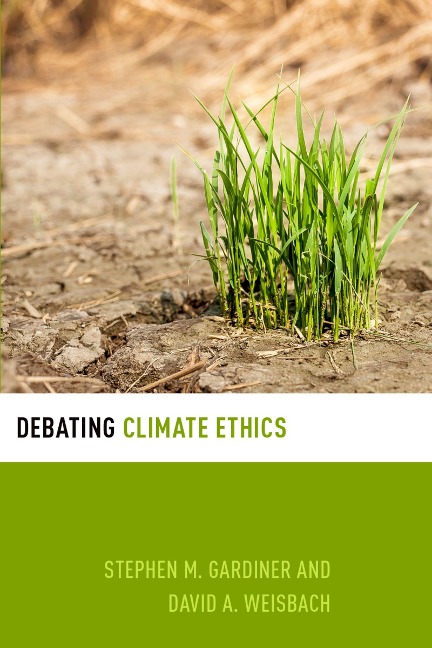
In this volume, Stephen M. Gardiner and David A. Weisbach present arguments for and against the relevance of ethics to global climate policy. Gardiner argues that climate change is fundamentally an ethical issue, since it is an early instance of a distinctive challenge to ethical action (the perfect moral storm), and ethical concerns (such as with justice, rights, political legitimacy, community and humanity's relationship to nature) are at the heart of many of the decisions that need to be made. Consequently, climate policy that ignores ethics is at risk of "solving" the wrong problem, perhaps even to the extreme of endorsing forms of climate extortion. This is especially true of policy based on narrow forms of economic self-interest. By contrast, Weisbach argues that existing ethical theories are not well suited to addressing climate change. As applied to climate change, existing ethical theories suffer from internal logical problems and suggest infeasible strategies. Rather than following failed theories or waiting indefinitely for new and better ones, Weisbach argues that central motivation for climate policy is straightforward: it is in their common interest for people and nations to agree to policies that dramatically reduce emissions to prevent terrible harms.
Stephen M. Gardiner is Professor of Philosophy and Ben Rabinowitz Endowed Professor of the Human Dimensions of the Environment at the University of Washington, Seattle. He is the author of A Perfect Moral Storm (Oxford, 2011), editor of Virtue Ethics, Old and New (Cornell, 2005), and co-editor of the Oxford Handbook of Environmental Ethics (Oxford, in press) and Climate Ethics: Essential Readings (Oxford, 2010). His research focuses on global environmental problems, future generations and virtue ethics. David Weisbach is the Walter J Blum Professor at the University of Chicago Law School and Senior Fellow at the University of Chicago Computation Institute and Argonne National Laboratories. Weisbach's research primarily focuses on issues related to taxation and on policy aspects of climate change. Weisbach received his BS in Mathematics from the University of Michigan in 1985; a Masters in Advance Study (Mathematics) from Wolfson College, Cambridge in 1986; and a JD from Harvard Law School in 1989. After graduating from law school, Weisbach clerked for Judge Joel M. Flaum of the U.S. Court of Appeals for the Seventh Circuit and worked as an associate in the law firm of Miller & Chevalier. In 1992, Weisbach joined the Department of Treasury where he worked as an attorney-advisor in the Office of the Tax Legislative Counsel and, subsequently, as associate tax legislative counsel. In 1996, Weisbach was appointed Associate Professor of Law at Georgetown Law Center and joined the Chicago faculty in 1998.
Part I By Stephen M. Gardiner 1. How Will We be Remembered? 2. Betraying the Future 3. Who Are We and What Do We Want? 4. Justice vs. Extortion Part II By David A. Weisbach 5. Introduction to Part II 6. Climate Policy and Self-Interest 7. The Role of Claims of Justice in Climate Change Policy 8. Summing Up Part III Responses 9. 'The Feasible is Political' 10. Weisbach Responds to Gardiner
Dieses eBook wird im PDF-Format geliefert und ist mit einem Adobe Kopierschutz (DRM) versehen. Sie können dieses eBook mit allen Geräten lesen, die das PDF-Format und den Adobe Kopierschutz (DRM) unterstützen.
Zum Beispiel mit den folgenden Geräten:
• tolino Reader
Laden Sie das eBook direkt über den Reader-Shop auf dem tolino herunter oder übertragen Sie das eBook auf Ihren tolino mit einer kostenlosen Software wie beispielsweise Adobe Digital Editions.
• Sony Reader & andere eBook Reader
Laden Sie das eBook direkt über den Reader-Shop herunter oder übertragen Sie das eBook mit der kostenlosen Software Sony READER FOR PC/Mac oder Adobe Digital Editions auf ein Standard-Lesegeräte mit epub- und Adobe DRM-Unterstützung.
• Tablets & Smartphones
Möchten Sie dieses eBook auf Ihrem Smartphone oder Tablet lesen, finden Sie hier unsere kostenlose Lese-App für iPhone/iPad und Android Smartphone/Tablets.
• PC & Mac
Lesen Sie das eBook direkt nach dem Herunterladen mit einer kostenlosen Lesesoftware, beispielsweise Adobe Digital Editions, Sony READER FOR PC/Mac oder direkt über Ihre eBook-Bibliothek in Ihrem Konto unter „Meine eBooks“ - „online lesen“.
Schalten Sie das eBook mit Ihrer persönlichen Adobe ID auf bis zu sechs Geräten gleichzeitig frei.
Bitte beachten Sie, dass die Kindle-Geräte das Format nicht unterstützen und dieses eBook somit nicht auf Kindle-Geräten lesbar ist.