Und dann auf "Zum Home-Bildschirm [+]".

Stöbern
genialokal zum Startbildschirm hinzufügen
Installieren Sie die genialokal App auf Ihrem Startbildschirm für einen schnellen Zugriff und eine komfortable Nutzung.
Installieren Sie die genialokal App auf Ihrem Startbildschirm für einen schnellen Zugriff und eine komfortable Nutzung.
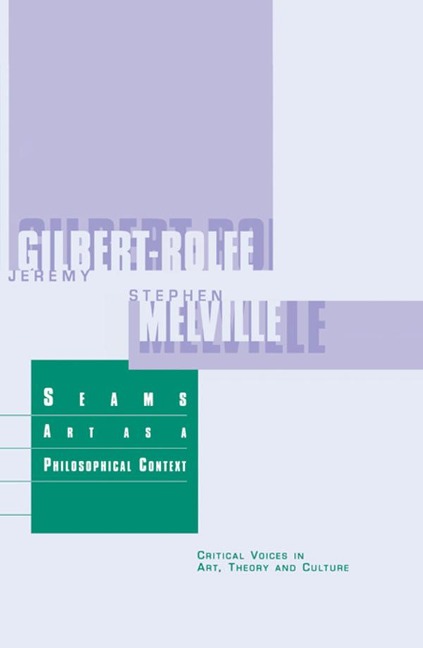
Jeremy Gilbert-Rolfe brings to Melville's work the insight not only of an art critic and theorist, but of a practicing artist as well. Navigating through the complexity of contemporary thought and philosophy, Gilbert-Rolfe unravels the Gordian knot of the diverse discourses that circumscribe Melville's views, revealing the practicality and clarity of Melville's speculative narratives. Stephen Melville is one of the most thoughtful critics to emerge in recent years. He has applied the tools developed by Jacques Derrida and Jacques Lacan to the problems of contemporary art. With his roots in Kant, Hegel, and Heidegger, he reopens questions of art's reception, interpretation, and commentary. Not only does he articulate the limitations of these categories, and how they are set into motion-stasis and balance are not the goal. He demonstrates how the territory of each of these discourses is maintained by their relationship to one another. Melville's texts not only represent the complexity of his subjec
Melville, Stephen; Gilbert-Rolfe, Jeremy
Introduction by Jeremy Gilbert-Rolfe; introduction1 Stephen Melville and Art's Philosophical Attitude Toward History; Part 1 Essays by Stephen Melville; Chapter 1 Robert Smithson; Chapter 2 Description; Chapter 3 Aesthetic Detachment; Chapter 4 Positionality, Objectivity, Judgment; Chapter 5 Psychoanalysis and the Place of Jouissance; Chapter 6 Division of the Gaze, or, Remarks on the Color and Tenor of Contemporary "Theory"; Chapter 7 Color has not Yet been Named; Chapter 8 Notes on the Reemergence of Allegory, the Forgetting of Modernism, the Necessity of Rhetoric, and the Conditions of Publicity in Art and Criticism; Chapter 9 Compelling Acts, Haunting Convictions; Chapter 10 Painting Put Asunder; Chapter 11 Postscript;
Dieses eBook wird im PDF-Format geliefert und ist mit einem Adobe Kopierschutz (DRM) versehen. Sie können dieses eBook mit allen Geräten lesen, die das PDF-Format und den Adobe Kopierschutz (DRM) unterstützen.
Zum Beispiel mit den folgenden Geräten:
• tolino Reader
Laden Sie das eBook direkt über den Reader-Shop auf dem tolino herunter oder übertragen Sie das eBook auf Ihren tolino mit einer kostenlosen Software wie beispielsweise Adobe Digital Editions.
• Sony Reader & andere eBook Reader
Laden Sie das eBook direkt über den Reader-Shop herunter oder übertragen Sie das eBook mit der kostenlosen Software Sony READER FOR PC/Mac oder Adobe Digital Editions auf ein Standard-Lesegeräte mit epub- und Adobe DRM-Unterstützung.
• Tablets & Smartphones
Möchten Sie dieses eBook auf Ihrem Smartphone oder Tablet lesen, finden Sie hier unsere kostenlose Lese-App für iPhone/iPad und Android Smartphone/Tablets.
• PC & Mac
Lesen Sie das eBook direkt nach dem Herunterladen mit einer kostenlosen Lesesoftware, beispielsweise Adobe Digital Editions, Sony READER FOR PC/Mac oder direkt über Ihre eBook-Bibliothek in Ihrem Konto unter „Meine eBooks“ - „online lesen“.
Schalten Sie das eBook mit Ihrer persönlichen Adobe ID auf bis zu sechs Geräten gleichzeitig frei.
Bitte beachten Sie, dass die Kindle-Geräte das Format nicht unterstützen und dieses eBook somit nicht auf Kindle-Geräten lesbar ist.