
Stöbern
genialokal zum Startbildschirm hinzufügen
Installieren Sie die genialokal App auf Ihrem Startbildschirm für einen schnellen Zugriff und eine komfortable Nutzung.
Installieren Sie die genialokal App auf Ihrem Startbildschirm für einen schnellen Zugriff und eine komfortable Nutzung.
Tippen Sie einfach auf Teilen:
 Und dann auf "Zum Home-Bildschirm [+]".
Bei genialokal.de kaufen Sie online bei Ihrer lokalen, inhabergeführten Buchhandlung!
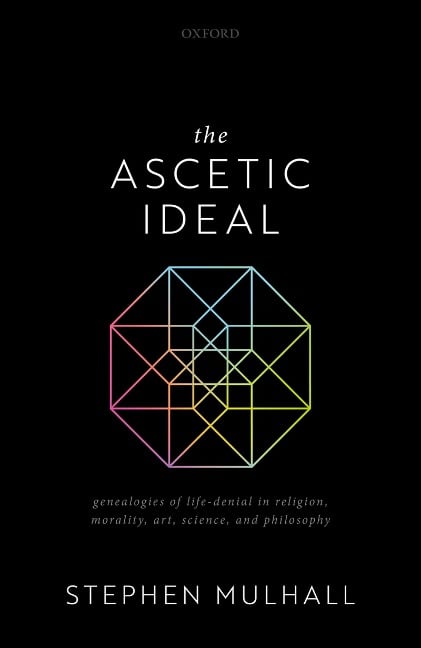
In The Ascetic Ideal, Stephen Mulhall shows how areas of cultural life that seem to be either essentially unconnected to evaluative commitments (science and philosophy) or to involve non-moral values (aesthetics) are in fact deeply informed by ethico-religious commitments, for better and for worse. The book develops a reading of Nietzsche's concept of 'the ascetic ideal', which he used to track the evolution, mutation, and expansion of the system of slave moral values, associated primarily with Judaeo-Christian religious belief through diverse fields of Western European culture--not just religion and morality, but aesthetics, science, and philosophy. Mulhall also offers an interpretation of Nietzsche's genealogical method that aims to rebut standard criticisms of its nature, and to emphasize its potential for enhancing philosophical understanding more generally. The focus throughout is on developments in those fields which occurred after the end of Nietzsche's intellectual career, and in particular on influential modes of thought and practice that have a contemporary significance. The goal is not simply to argue that Nietzsche's diagnosis and critique retains considerable merit, but also to show that Nietzsche is himself significantly indebted to the ideals he criticizes, and that this opens up a possibility of synthesizing elements of his approach with those drawn from its target. Hence, the book also tracks various ways in which the object of Nietzsche's criticism has undergone further mutations (just as his genealogical method would suggest), and in doing so has generated ways of pursuing the values central to asceticism that avoid Nietzsche's criticisms, and might even further his own goals.
STEPHEN MULHALL is Russell H. Carpenter Fellow in Philosophy, New College, University of Oxford
- Introduction - Essay One: Authority and Revelation - Essay Two: Writing the Life of the Mind - Essay Three: Knowing, Framing, and Enframing
Dieses eBook wird im PDF-Format geliefert und ist mit einem Adobe Kopierschutz (DRM) versehen. Sie können dieses eBook mit allen Geräten lesen, die das PDF-Format und den Adobe Kopierschutz (DRM) unterstützen.
Zum Beispiel mit den folgenden Geräten:
• tolino Reader
Laden Sie das eBook direkt über den Reader-Shop auf dem tolino herunter oder übertragen Sie das eBook auf Ihren tolino mit einer kostenlosen Software wie beispielsweise Adobe Digital Editions.
• Sony Reader & andere eBook Reader
Laden Sie das eBook direkt über den Reader-Shop herunter oder übertragen Sie das eBook mit der kostenlosen Software Sony READER FOR PC/Mac oder Adobe Digital Editions auf ein Standard-Lesegeräte mit epub- und Adobe DRM-Unterstützung.
• Tablets & Smartphones
Möchten Sie dieses eBook auf Ihrem Smartphone oder Tablet lesen, finden Sie hier unsere kostenlose Lese-App für iPhone/iPad und Android Smartphone/Tablets.
• PC & Mac
Lesen Sie das eBook direkt nach dem Herunterladen mit einer kostenlosen Lesesoftware, beispielsweise Adobe Digital Editions, Sony READER FOR PC/Mac oder direkt über Ihre eBook-Bibliothek in Ihrem Konto unter „Meine eBooks“ - „online lesen“.
Schalten Sie das eBook mit Ihrer persönlichen Adobe ID auf bis zu sechs Geräten gleichzeitig frei.
Bitte beachten Sie, dass die Kindle-Geräte das Format nicht unterstützen und dieses eBook somit nicht auf Kindle-Geräten lesbar ist.