
Stöbern
genialokal zum Startbildschirm hinzufügen
Installieren Sie die genialokal App auf Ihrem Startbildschirm für einen schnellen Zugriff und eine komfortable Nutzung.
Installieren Sie die genialokal App auf Ihrem Startbildschirm für einen schnellen Zugriff und eine komfortable Nutzung.
Tippen Sie einfach auf Teilen:
 Und dann auf "Zum Home-Bildschirm [+]".


Bei genialokal.de kaufen Sie online bei Ihrer lokalen, inhabergeführten Buchhandlung!
Ihr gewünschter Artikel ist in 0 Buchhandlungen vorrätig - wählen Sie hier eine Buchhandlung in Ihrer Nähe aus:

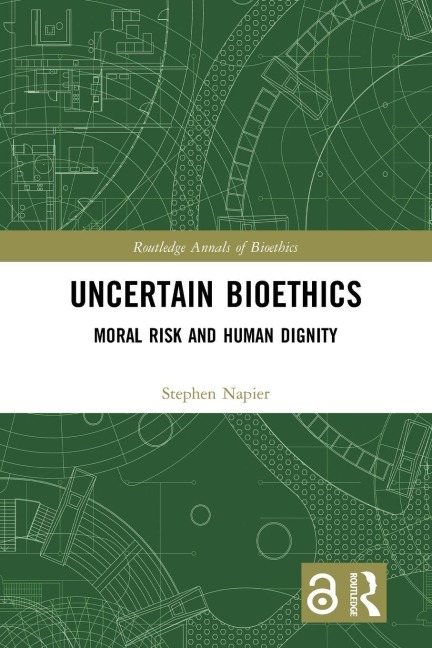

Bioethics is a field of inquiry and as such is fundamentally an epistemic discipline. Knowing how we make moral judgments can bring into relief why certain arguments on various bioethical issues appear plausible to one side and obviously false to the other. Uncertain Bioethics makes a significant and distinctive contribution to the bioethics literature by culling the insights from contemporary moral psychology to highlight the epistemic pitfalls and distorting influences on our apprehension of value. Stephen Napier also incorporates research from epistemology addressing pragmatic encroachment and the significance of peer disagreement to justify what he refers to as epistemic diffidence when one is considering harming or killing human beings. Napier extends these developments to the traditional bioethical notion of dignity and argues that beliefs subject to epistemic diffidence should not be acted upon. He proceeds to apply this framework to traditional and developing issues in bioethics including abortion, stem cell research, euthanasia, decision-making for patients in a minimally conscious state, and risky research on competent human subjects.
Stephen Napier is an associate professor of philosophy at Villanova University. His previous publications include Virtue Epistemology: Motivation and Knowledge, and he edited Persons, Moral Worth, and Embryos. His interests include epistemology, bioethics, and the metaphysics of persons.
Chapter 1. Introduction Part I. Foundational Matters: The Perception of Value, Persons, and Human Worth Chapter 2. Moral Inquiry and the Apprehension of Value Chapter 3. Epistemic Justification, Peer Disagreement, and Practical Interest Chapter 4. Persons and Human Beings Chapter 5. Human Dignity Part II. Dignity as the Beginning and End of Life Chapter 6. Abortion Chapter 7. Human Embryonic Destructive Stem Cell Research Chapter 8. Euthanasia Part III. Balancing Dignity and Autonomy Chapter 9. Decision-Making for Patients with Suppressed Consciousness Chapter 10. Decision-Making for Patients with Apparent Competency Chapter 11. Risky Research on Competent Adults: Justice and Autonomy Chapter 12: Conclusion