Und dann auf "Zum Home-Bildschirm [+]".

Stöbern
genialokal zum Startbildschirm hinzufügen
Installieren Sie die genialokal App auf Ihrem Startbildschirm für einen schnellen Zugriff und eine komfortable Nutzung.
Installieren Sie die genialokal App auf Ihrem Startbildschirm für einen schnellen Zugriff und eine komfortable Nutzung.
Ihr gewünschter Artikel ist in 0 Buchhandlungen vorrätig - wählen Sie hier eine Buchhandlung in Ihrer Nähe aus:

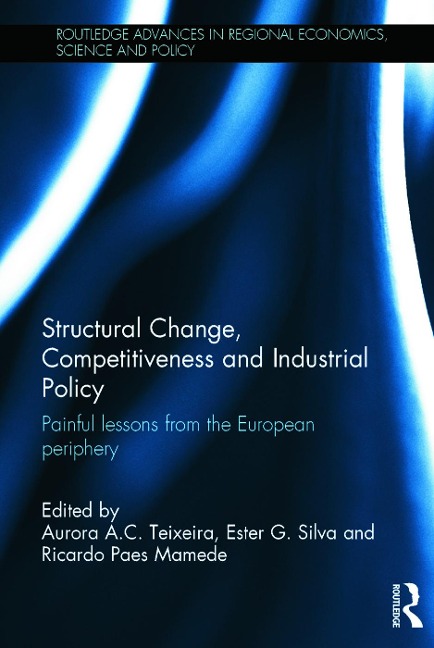
The onset of the global crisis has emphasised the persistence of substantial differences in development and social progress within the euro area. The specific case of countries located in the southern periphery region has come to the centre stage, due to the harsh economic conditions that all these countries have experienced in the recent past.
Aurora A.C. Teixeira is Associate Professor with Habilitation, Faculdade de Economia, Universidade do Porto, Portugal Ester G. Silva is Assistant Professor at Faculdade de Letras, Universidade do Porto, Portugal Ricardo Paes Mamede is Assistant Professor at ISCTE - IUL, Lisbon, Portugal
PART I - THE CONTEXT: EMU, CONVERGENCE, AUSTERITY Chapter 1: Introduction: Structural Change, Competitiveness and Industrial Policy (Ester Silva and Aurora A.C. Teixeira) Chapter 2: The Unsustainable Divergence of National Productive Systems. Seven lessons from the Eurozone crisis (Robert Boyer) Chapter 3: Convergence and Imbalances in the EMU: the case of Portugal (Fernando Teixeira dos Santos) Chapter 4: We'll still be here in the long run - austerity and the peripheral growth hypothesis (Miguel St Aubyn) Chapter 5: The Euro-crisis and the failure of the Lisbon Strategy (Bengt-Åke Lundvall and Edward Lorenz) PART II - STRUCTURAL CHANGE AND COMPETITIVENESS IN THE EUROPEAN PERIPHERY Chapter 6: Structural and technology change in the European periphery (Argentino Pessoa) Chapter 7: National adaptive advantages: Soft innovation and marketing capabilities in periods of crisis and change (Sandro Mendonça) Chapter 8: Human capital and growth in a services economy (Marta Simões and Adelaide Duarte) Chapter 9: Learning, exporting and firm productivity: evidence from manufacturing and services firms (Carlos Carreira) Chapter 10: Comparative advantages and structural transformation: the cases of Greece, Italy, Portugal, and Spain (Miguel Lebre de Freitas, Luis C. Nunes and Rui Costa Neves) PART III - POLICY ISSUES Chapter 11: Industrial Policy in Times of Crisis: The Case of Greece (Tassos Giannitsis and Ioanna Kastelli) Chapter 12: The Italian Economy, the Economic Crisis and Industrial Policy (Michele Di Maio) Chapter 13: Assessment and challenges of industrial policies in Portugal: is there a way out of the 'stuck in the middle' trap? (Ricardo Paes Mamede, Vitor Corado Simões and Manuel Mira Godinho) Chapter 14: The Industrial Sector of Spain in Search of a New Policy (José Molero and Inés Granda) Chapter 15: Conclusions (Ricardo Paes Mamede)