Und dann auf "Zum Home-Bildschirm [+]".

Stöbern
genialokal zum Startbildschirm hinzufügen
Installieren Sie die genialokal App auf Ihrem Startbildschirm für einen schnellen Zugriff und eine komfortable Nutzung.
Installieren Sie die genialokal App auf Ihrem Startbildschirm für einen schnellen Zugriff und eine komfortable Nutzung.
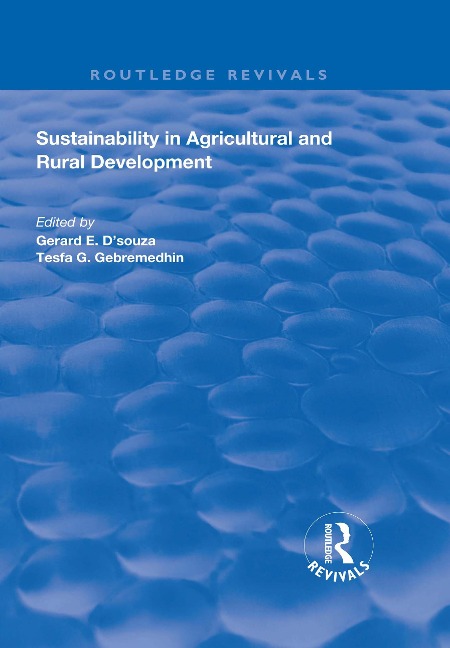
First published in 1998, this book provides a broad but in-depth description of the issues, concepts, methods of analysis, and empirical results related to the sustainable development of agriculture and rural communities. Specifically, it examines the relationships between sustainability and individual topics such as technology, information, population, gender, land use, community, and public policy. A unique aspect of this book is that the topics addressed have not previously been explored together in one publication. With sustainability as the common link, data and evidence are presented and then interpreted in light of individual perspective and experience, in the process advancing our knowledge of this important field. The book comprises of 12 chapters written by prominent authors who come from government and non-government organizations as well as from various academic institutions and disciplines. This book is ideal for a seminar course. It is particularly intended for students in production agriculture, rural sociology, economics and public policy, environmental sciences, geography and land use planning, and other social sciences. Its rich insights make it a useful source of information for policy makers. It can also be used as a reference by professional economists and other researchers interested in issues relating to sustainable agricultural and rural development. While the coverage of some topics is, by necessity, more technical, the book is compiled with a general audience in mind. Thus, it should be of interest to anyone concerned with agriculture, natural resources and rural issues, particularly as they relate to the future of agriculture and of rural communities.
Gerard E. D'Souza, Tesfa G. Gebremedhin
1. Sustainability and Agricultural Industrialization: Issues and Implications. Tesfa G. Gebremedhin and Ralph D. Christy. 2. Sustainability and Size: Are Small Farms More Sustainable? Gerard E. D'Souza, John Ikerd and Lynndee Kemmet. 3. Sustainability: the Role of Markets versus the Government. Luther Tweeten and William Amponsah. 4. Sustainability and Production Technology: Measuring Sustainability for Agricultural Production Systems. Susan M. Capalbo and John M. Antle. 5. Family, Community and Sustainability in Agriculture. Sonya Salamon, Richard L. Farnsworth and Donald G. Bullock. 6. Gender and Sustainable Development. Cornelia Butler Flora and Margaret Kroma. 7. Population and Sustainability: Understanding Population, Environment and Development Linkages. Daniel C. Clay and Thomas Reardon. 8. Sustainability and Economics. Erik Lichtenberg. 9. Sustainability and Public Policy. Neill Schaller. 10. Sustainability and Land Use. Winfried E.H. Blum. 11. Sustainability and Information. David Zilberman and Leslie Lipper. 12. Sustainability: Challenges of Cross-Disciplinary Research. Mary C. Ahearn and Gerald W. Whittaker.
Dieses eBook wird im PDF-Format geliefert und ist mit einem Adobe Kopierschutz (DRM) versehen. Sie können dieses eBook mit allen Geräten lesen, die das PDF-Format und den Adobe Kopierschutz (DRM) unterstützen.
Zum Beispiel mit den folgenden Geräten:
• tolino Reader
Laden Sie das eBook direkt über den Reader-Shop auf dem tolino herunter oder übertragen Sie das eBook auf Ihren tolino mit einer kostenlosen Software wie beispielsweise Adobe Digital Editions.
• Sony Reader & andere eBook Reader
Laden Sie das eBook direkt über den Reader-Shop herunter oder übertragen Sie das eBook mit der kostenlosen Software Sony READER FOR PC/Mac oder Adobe Digital Editions auf ein Standard-Lesegeräte mit epub- und Adobe DRM-Unterstützung.
• Tablets & Smartphones
Möchten Sie dieses eBook auf Ihrem Smartphone oder Tablet lesen, finden Sie hier unsere kostenlose Lese-App für iPhone/iPad und Android Smartphone/Tablets.
• PC & Mac
Lesen Sie das eBook direkt nach dem Herunterladen mit einer kostenlosen Lesesoftware, beispielsweise Adobe Digital Editions, Sony READER FOR PC/Mac oder direkt über Ihre eBook-Bibliothek in Ihrem Konto unter „Meine eBooks“ - „online lesen“.
Schalten Sie das eBook mit Ihrer persönlichen Adobe ID auf bis zu sechs Geräten gleichzeitig frei.
Bitte beachten Sie, dass die Kindle-Geräte das Format nicht unterstützen und dieses eBook somit nicht auf Kindle-Geräten lesbar ist.