Und dann auf "Zum Home-Bildschirm [+]".

Stöbern
genialokal zum Startbildschirm hinzufügen
Installieren Sie die genialokal App auf Ihrem Startbildschirm für einen schnellen Zugriff und eine komfortable Nutzung.
Installieren Sie die genialokal App auf Ihrem Startbildschirm für einen schnellen Zugriff und eine komfortable Nutzung.

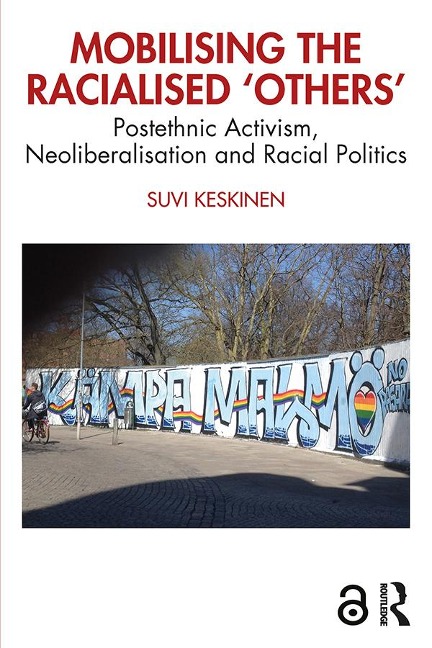
This book provides an original approach to the connections of race, racism and neoliberalisation through a focus on 'postethnic activism,' in which mobilisation is based on racialisation as non-white or 'other' instead of ethnic group membership. Developing the theoretical understanding of political activism under the neoliberal turn in racial capitalism and the increasingly hostile political environment towards migrants and racialised minorities, the book investigates the conditions, forms and visions of postethnic activism in three Nordic countries (Denmark, Sweden and Finland). It connects the historical legacies of European colonialism to the current configurations of racial politics and global capitalism. The book compellingly argues that contrary to the tendencies of neoliberal postracialism to de-politicise social inequalities the activists are re-politicising questions of race, class and gender in new ways. The book is of interest to scholars and students in sociology, ethnic and racial studies, cultural studies, feminist studies and urban studies. The Open Access version of this book, available at www.taylorfrancis.com, has been made available under a Creative Commons Attribution-Non Commercial-No Derivatives 4.0 license.
Suvi Keskinen is Professor of Ethnic Relations at the University of Helsinki, Finland. Her research interests include racism, antiracism, political activism, and the politics of belonging. She is the co-editor of Undoing Homogeneity in the Nordic Region. Migration, Difference and the Politics of Solidarity (2019) and Feminisms in the Nordic Region. Neoliberalism, Nationalism and Decolonial Critique (2021).
1. Introduction 2. Racial Nordicisation and Racial Politics 3. Methodological Routes 4. Creating Communities of Belonging and Naming the 'Common' 5. Autonomous Spaces, Politics and Organising 6. New Representations, Cultural Work and Navigating Neoliberal Rationalities 7. Penal Welfare State, Neoliberal Policies and the Insurgence of the Suburb 8. Histories, Stories and Imaginaries 9. Conclusions