
Stöbern
genialokal zum Startbildschirm hinzufügen
Installieren Sie die genialokal App auf Ihrem Startbildschirm für einen schnellen Zugriff und eine komfortable Nutzung.
Installieren Sie die genialokal App auf Ihrem Startbildschirm für einen schnellen Zugriff und eine komfortable Nutzung.
Tippen Sie einfach auf Teilen:
 Und dann auf "Zum Home-Bildschirm [+]".


Bei genialokal.de kaufen Sie online bei Ihrer lokalen, inhabergeführten Buchhandlung!
Ihr gewünschter Artikel ist in 0 Buchhandlungen vorrätig - wählen Sie hier eine Buchhandlung in Ihrer Nähe aus:

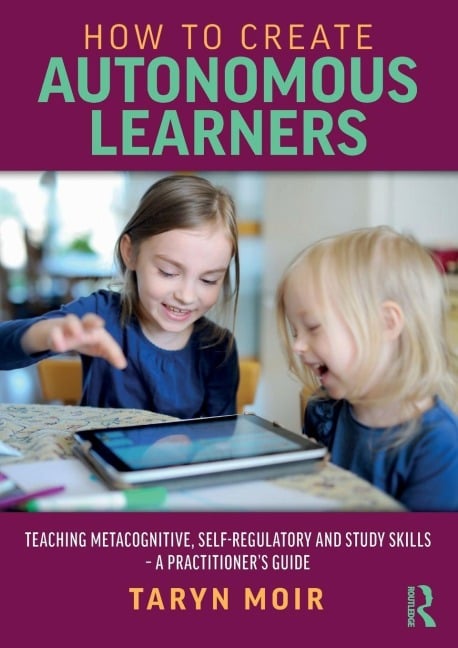
To achieve their full potential, it is essential that children develop skills to become autonomous learners, yet this skill does not come naturally to many learners. This book is a practical teaching and planning guide to the theory, practice and the implementation of evidence-based approaches to develop essential metacognitive and self-study skills.
How to Create Autonomous Learners explains how to get students, parents and partners on board and how to implement these ideas across a class, school, or consortium. Areas covered include:
- How to get children and young people ready to learn.
- Why it is important to teach learning strategies.
- Encouraging children to become more active in the process of learning while also nurturing the development of creativity.
- How to harness learner motivation as metacognition and motivation are highly linked.
Easily applicable in any classroom, this essential resource supports children's development of important metacognitive, self-regulatory and self-study skills, and provides teachers and school leaders with evidence-based approaches for implementing these ideas with the support of parents, students and partners.
Taryn Moir is a Practitioner Senior Educational Psychologist practicing within a local authority and responsible for project work, policy development and in-service training for a large number of primary and secondary schools. She was a lecturer on the Educational Psychology course at the University of Strathclyde and is now an assessor and supervisor for the Level 2 Qualification of Educational Psychology Scotland. Taryn is also Review Editor for two international journals: Frontiers in Education, Special Educational Needs section and Cogent Education.
Chapter 1: Introduction and orientation PART 1: Theory Chapter 2: Theoretical models Chapter 3: Research into strategy instruction Chapter 4: UK research PART 2: Practice and pedagogy Chapter 5: Metacognition and Mindset Chapter 6: Metacognition and Motivation Chapter 7: How should I teach a strategy? Chapter 8: Metacognitive strategies and how to teach them Chapter 9: What cognitive strategies should I teach? Chapter 10: Successful study skills PART 3: Implementation at the whole school or authority level Chapter 11: Whole school implementation Chapter 12: Pupil participation Chapter 13: Parental Engagement Chapter 14: Professional collaboration and a shout out for Educational Psychologists Chapter 15: Some Final Thoughts Acknowledgements