
Stöbern
genialokal zum Startbildschirm hinzufügen
Installieren Sie die genialokal App auf Ihrem Startbildschirm für einen schnellen Zugriff und eine komfortable Nutzung.
Installieren Sie die genialokal App auf Ihrem Startbildschirm für einen schnellen Zugriff und eine komfortable Nutzung.
Tippen Sie einfach auf Teilen:
 Und dann auf "Zum Home-Bildschirm [+]".
Bei genialokal.de kaufen Sie online bei Ihrer lokalen, inhabergeführten Buchhandlung!
Ihr gewünschter Artikel ist in 0 Buchhandlungen vorrätig - wählen Sie hier eine Buchhandlung in Ihrer Nähe aus:

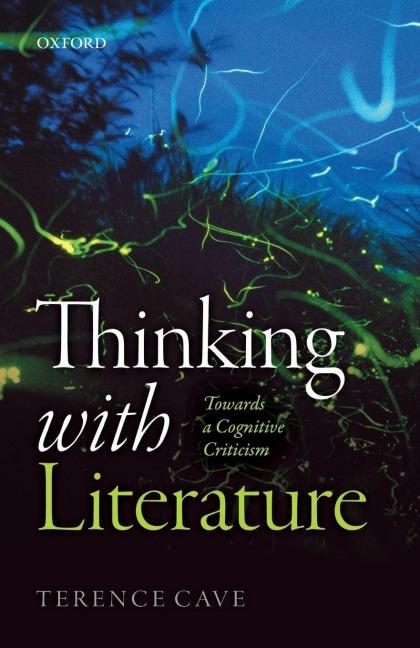
To speak of 'thinking with literature' is to make the assumption that literature (in the broadest sense) is neither a side-show nor a side-issue in human cultures: it belongs to the spectrum of imaginative modes that includes both philosophical and scientific thought. Whether one regards it as a practice or as an archive, literature is highly pervasive, robust, enduring, and pregnant with values. Thinking with Literature argues that what it affords above all is a way of thinking, whether for writer, reader, or critic. Literature constitutes one of the prime instruments of cultural improvisation; it is the embodiment of a powerful, inventive, and ever-changing cognitive agency. As such, it invites a cognitive mode of criticism, one which asserts the priority of the individual literary work as a unique product of human cognition. In this book, discussions of topics, arguments, and hypotheses from the cognitive sciences, philosophy, and the theory of communication are woven into the fabric of a critical analysis which insists on the value of close reading: a poem by Yeats, a scene from Shakespeare, novels by Mme de Lafayette, Conrad, Frantzen, stories from Winnie-the-Pooh, and many others appear here on their own terms, with their own cognitive energies. Written in an accessible style, Thinking with Literature speaks both to mainstream readers of literature and to specialists in cognitive studies.
Terence Cave CBE FBA is a specialist in early modern French literature, thought, and culture. His major publications in this area include The Cornucopian Text: Problems of Writing in the French Renaissance (1979), PrÃ(c)-histoires: textes troublÃ(c)s au seuil de la modernitÃ(c) (1999), PrÃ(c)-histoires II: langues Ã(c)trangÃ-res et troubles Ã(c)conomiques au XVIe siÃ-cle (2001), and How to Read Montaigne (2007). His wider interest in European literature and the history of poetics is represented by Recognitions: A Study in Poetics (1988), Mignon's Afterlives: Crossing Cultures from Goethe to the Twenty-First Century (2011), and (with Sarah Kay and Malcolm Bowie) A Short History of French Literature (2003). In 2009 he was awarded the Balzan Foundation Prize for 'Literature since 1500', and he is currently director of the Balzan Interdisciplinary Seminar 'Literature as an Object of Knowledge', based at the St John's College Research Centre.
Preface
1: Openings
2: Cognitive conversations
3: The balloon, the shed, and the bees
4: Literary affordances: culture as second nature
5: The balloon of the mind: literary imaginations
6: Cognitive figures
7: Cognitive mimesis: the cliff and the ballroom
8: The posture of reading: Joseph Conrad's Lord Jim
9: Literary values in a cognitive perspective
A virtual manifesto for cognitive literary studies