Und dann auf "Zum Home-Bildschirm [+]".

Stöbern
genialokal zum Startbildschirm hinzufügen
Installieren Sie die genialokal App auf Ihrem Startbildschirm für einen schnellen Zugriff und eine komfortable Nutzung.
Installieren Sie die genialokal App auf Ihrem Startbildschirm für einen schnellen Zugriff und eine komfortable Nutzung.
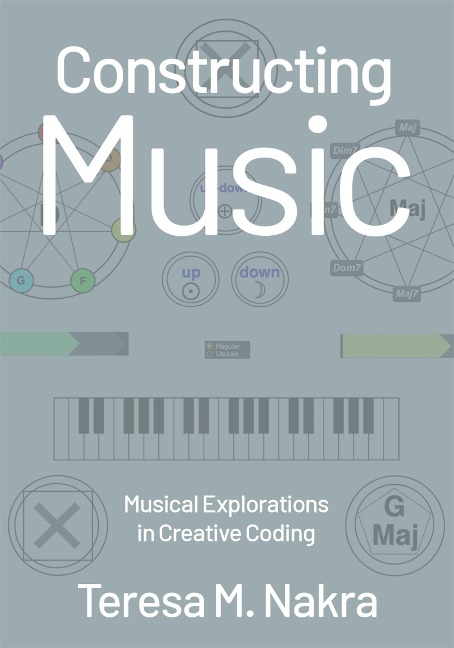
Why does music exert such a strong pull on us? How does it work? Traditional courses in music fundamentals give students a basic understanding of the building blocks of music and how to put them together to make a result that produces an intended effect. Constructing Music: Musical Explorations in Creative Coding takes students a step further: through a series of step-by-step tutorials and lessons, author Teresa M. Nakra presents a new method for teaching music fundamentals that foregrounds creative coding practices and builds upon the computing skills that today's students already possess. By encouraging experimentation with computer code, this book gives students tools to actively investigate, simulate, and engage with the structure of music, ultimately leading to greater understanding about the processes that underlie music's power over us. Designed to support computer-based learning in tonal harmony, musicianship, and music theory, Constructing Music avoids the lens of Western music notation and instead explains music content through analogies with toy bricks and references ideas from creative technology, engineering, and design. Students also engage directly with the components of musical structure using editable short code "patches" developed in Max, a visual coding environment for interactive music, audio, and media. Dozens of patches accompany the book and allow readers to play with the building blocks of sound, reinforcing each topic by tinkering, modifying, and creating their own versions of the material. Each chapter explains core music theory concepts in detail and supports every description through code simulations, progressing through the topics with increasing complexity. In the final chapter, Nakra explores the questions and theories that emerge from the lessons, considering the role of music as a proto-form of AI and its impacts on emotion, wellness, and creativity.
Teresa M. Nakra is Professor of Music, Design, and Creative Technology at The College of New Jersey, where she coordinates Music Technology activities. She is a recipient of the Doris Cohen Levi Prize, the David McCord Prize, the Michael C. Rockefeller Memorial Fellowship, and research fellowships from IBM, Motorola, and Interval Research Corporation. Nakra has designed interactive music systems for museums, music festivals, and concert halls across the United States, Europe, and Japan.
Dedication Foreword Preface Acknowledgements About the Companion Website Introduction 1 Tutorials 2 Building Blocks 3 Pitch-based Structures 4 Time-based Structures 5 Finer Granularities 6 Reflections Glossary Index
Dieses eBook wird im PDF-Format geliefert und ist mit einem Adobe Kopierschutz (DRM) versehen. Sie können dieses eBook mit allen Geräten lesen, die das PDF-Format und den Adobe Kopierschutz (DRM) unterstützen.
Zum Beispiel mit den folgenden Geräten:
• tolino Reader
Laden Sie das eBook direkt über den Reader-Shop auf dem tolino herunter oder übertragen Sie das eBook auf Ihren tolino mit einer kostenlosen Software wie beispielsweise Adobe Digital Editions.
• Sony Reader & andere eBook Reader
Laden Sie das eBook direkt über den Reader-Shop herunter oder übertragen Sie das eBook mit der kostenlosen Software Sony READER FOR PC/Mac oder Adobe Digital Editions auf ein Standard-Lesegeräte mit epub- und Adobe DRM-Unterstützung.
• Tablets & Smartphones
Möchten Sie dieses eBook auf Ihrem Smartphone oder Tablet lesen, finden Sie hier unsere kostenlose Lese-App für iPhone/iPad und Android Smartphone/Tablets.
• PC & Mac
Lesen Sie das eBook direkt nach dem Herunterladen mit einer kostenlosen Lesesoftware, beispielsweise Adobe Digital Editions, Sony READER FOR PC/Mac oder direkt über Ihre eBook-Bibliothek in Ihrem Konto unter „Meine eBooks“ - „online lesen“.
Schalten Sie das eBook mit Ihrer persönlichen Adobe ID auf bis zu sechs Geräten gleichzeitig frei.
Bitte beachten Sie, dass die Kindle-Geräte das Format nicht unterstützen und dieses eBook somit nicht auf Kindle-Geräten lesbar ist.