Und dann auf "Zum Home-Bildschirm [+]".

Stöbern
genialokal zum Startbildschirm hinzufügen
Installieren Sie die genialokal App auf Ihrem Startbildschirm für einen schnellen Zugriff und eine komfortable Nutzung.
Installieren Sie die genialokal App auf Ihrem Startbildschirm für einen schnellen Zugriff und eine komfortable Nutzung.
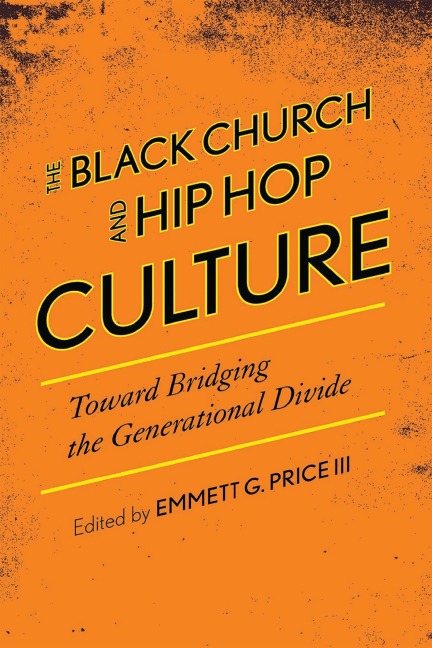
Throughout the 1950s and 1960s, the Black Church stood as the stronghold of the Black Community, fighting for equality and economic self-sufficiency and challenging its body to be self-determined and self-aware. Hip Hop Culture grew from disenfranchised urban youth who felt that they had no support system or resources. Impassioned with the same urgent desires for survival and hope that their parents and grandparents had carried, these youth forged their way from the bottom of America's belly one rhyme at a time. For many young people, Hip Hop Culture is a supplement, or even an alternative, to the weekly dose of Sunday-morning faith.
In this collection of provocative essays, leading thinkers, preachers, and scholars from around the country confront both the Black Church and the Hip Hop Generation to realize their shared responsibilities to one another and the greater society. Arranged into three sections, this volume addresses key issues in the debate between two of the most significant institutions of Black Culture. The first part, "From Civil Rights to Hip Hop," explores the transition from one generation to another through the transmission-or lack thereof-of legacy and heritage. Part II, "Hip Hop Culture and the Black Church in Dialogue," explores the numerous ways in which the conversation is already occurring-from sermons to theoretical examinations and spiritual ponderings. Part III, "Gospel Rap, Holy Hip Hop, and the Hip Hop Matrix," clarifies the perspectives and insights of practitioners, scholars, and activists who explore various expressions of faith and the diversity of locations where these expressions take place.
In The Black Church and Hip Hop Culture, pastors, ministers, theologians, educators, and laypersons wrestle with the duties of providing timely commentary, critical analysis, and in some cases practical strategies toward forgiveness, healing, restoration, and reconciliation. With inspiring reflections and empowering discourse, this collection demonstrates why and how the Black Church must re-engage in the lives of those who comprise the Hip Hop Generation.
Emmett G. Price III is chair of the Department of African American Studies and associate professor of Music and African American Studies at Northeastern University. He is the coeditor of Encyclopedia of African American Music (2011).
Dieses eBook wird im PDF-Format geliefert und ist mit einem Adobe Kopierschutz (DRM) versehen. Sie können dieses eBook mit allen Geräten lesen, die das PDF-Format und den Adobe Kopierschutz (DRM) unterstützen.
Zum Beispiel mit den folgenden Geräten:
• tolino Reader
Laden Sie das eBook direkt über den Reader-Shop auf dem tolino herunter oder übertragen Sie das eBook auf Ihren tolino mit einer kostenlosen Software wie beispielsweise Adobe Digital Editions.
• Sony Reader & andere eBook Reader
Laden Sie das eBook direkt über den Reader-Shop herunter oder übertragen Sie das eBook mit der kostenlosen Software Sony READER FOR PC/Mac oder Adobe Digital Editions auf ein Standard-Lesegeräte mit epub- und Adobe DRM-Unterstützung.
• Tablets & Smartphones
Möchten Sie dieses eBook auf Ihrem Smartphone oder Tablet lesen, finden Sie hier unsere kostenlose Lese-App für iPhone/iPad und Android Smartphone/Tablets.
• PC & Mac
Lesen Sie das eBook direkt nach dem Herunterladen mit einer kostenlosen Lesesoftware, beispielsweise Adobe Digital Editions, Sony READER FOR PC/Mac oder direkt über Ihre eBook-Bibliothek in Ihrem Konto unter „Meine eBooks“ - „online lesen“.
Schalten Sie das eBook mit Ihrer persönlichen Adobe ID auf bis zu sechs Geräten gleichzeitig frei.
Bitte beachten Sie, dass die Kindle-Geräte das Format nicht unterstützen und dieses eBook somit nicht auf Kindle-Geräten lesbar ist.