Und dann auf "Zum Home-Bildschirm [+]".

Stöbern
genialokal zum Startbildschirm hinzufügen
Installieren Sie die genialokal App auf Ihrem Startbildschirm für einen schnellen Zugriff und eine komfortable Nutzung.
Installieren Sie die genialokal App auf Ihrem Startbildschirm für einen schnellen Zugriff und eine komfortable Nutzung.
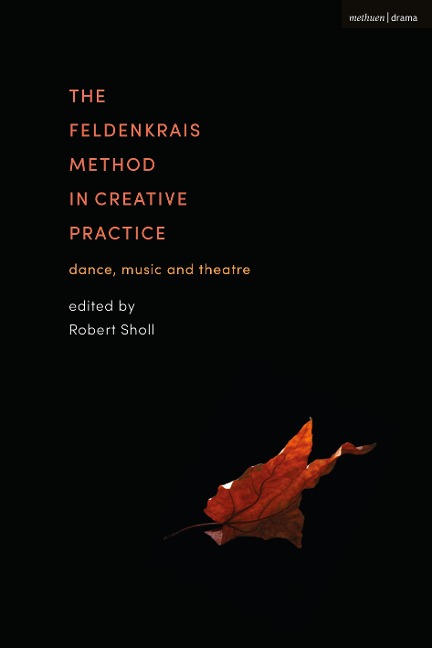
Bringing together scholars and researchers in one volume, this study investigates how the thinking of the Ukrainian-Israeli somatic educationalist Moshe Feldenkrais (1904-84) can benefit and reflect upon the creative practices of dance, music and theatre.
Since its inception, the Feldenkrais Method has been associated with artistic practice, growing contiguously with performance, cognitive and embodied practices in dance, music, and theatre studies. It promotes awareness of fine motor action for improved levels of action and skill, as well as healing for those who are injured. For creative artists, the Feldenkrais Method enables them to refine and improve their work.
This book offers historical, scientific and practical perspectives that develop thinking at the heart of the Method and is divided into three sections: Historical Perspectives on Creative Practice, From Science into Creative Practice and Studies in Creative Practice. All the essays provide insights into self-improvement, training, avoiding injury, history and philosophy of artistic practice, links between scientific and artistic thinking and practical thinking, as well as offering some exercises for students and artistic practitioners looking to improve their understanding of their practice.
Ultimately, this book offers a rich development of the legacy and the ongoing relevance of the Feldenkrais Method. We are shown how it is not just a way of thinking about somatic health, embodiment and awareness, but a vital enactivist epistemology for contemporary artistic thought and practice.
Robert Sholl has published widely on twentieth-century music, including Stravinsky, Berio, Birtwistle, Ferneyhough, Messiaen, Arvo Pärt. He is the editor of Messiaen Studies (with Sander van Maas); Contemporary Music and Spirituality; and is part of a Leverhulme-funded project on The Phantom of the Opera at the Guildhall School of Music and Drama. He has released improvisation to silent film on YouTube and is currently editing volumes on James MacMillan and Messiaen. Robert Scholl is a trained Feldenkrais practitioner.
TABLE OF CONTENTS
List of Figures
List of Contributors
Foreword by Garet Newell
Acknowledgements
Introduction by Robert Sholl, University of West London, UK
PART 1: Historical Perspectives on Creative Practice
Chapter 1: Feldenkrais and the Modernist Body - Thomas Kampe, Bath Spa University, UK
Chapter 2: Feldenkrais, Freud, Lacan, and Gould: how to love thyself not as thy neighbour - Robert Sholl, Royal Academy of Music, UK
Chapter 3: Learning Through Feeling: How the Ideas of Nikolai Bernstein and Moshe Feldenkrais Apply to Performer Training - Dick McCaw, Royal Holloway, UK
PART 2: From Science into Creative Practice
Chapter 4: The Work of Dr Mosche Feldenkrais: A New Applied Kinesiology and a Radical Questioning of Training and Technique - Maxine Sheets-Johnstone, University of Oregon, USA
Chapter 5: Radical Practice: Practising Performance and Practising Oneself is the Same Activity - Roger Russell, Feldenkraiszentrum, Heidelberg, Germany
Chapter 6: Gaining insight on the impact of Feldenkrais Functional Integration in the context of piano playing: Considerations for measuring posture and movement quality: Part I: The Feldenkrais Method and Pianists: A pilot study of objective measurement of posture and movement - Jillian Beacon, University of Ottawa, Canada, Gilles Comeau, University of Ottawa, Canada and Donald Russell, Carleton University, Canada
Chapter 7: Part II: Considerations for measuring posture and movement quality - Jillian Beacon, University of Ottawa, Canada, Gilles Comeau, University of Ottawa, Canada and Donald Russell, Carleton University, Canada
PART 3: Studies in Creative Practice
Chapter 8: Mapping Body Awareness onto Piano Performance for Artistic Rejuvenation - Alan Fraser, Alan Fraser Piano Institute, France
Chapter 9: Building a Model for Injury Prevention in Music Pedagogy Rooted in Feldenkrais's Philosophy and Methodology for Learning - Lisa Burrell, Lone Star College, Houston, Texas, USA
Chapter 10: A Sense of Safety: Polyvagal Theory, The Feldenkrais Method and the Acting Process - Victoria Worsley, Feldenkrais Guild, UK
Chapter 11: Curing the Acting Habit - The Feldenkrais Method, Actors, compulsion, and the performing-arts industry - Mark Lacey, Independent scholar, UK
Chapter 12: Tuning the Body: dancing and singing from rehearsal to performance - Marcia Carr, Independent scholar, UK
Chapter 13: Food for no-thought ... meandering between a personal somatic practice and Feldenkrais teaching - Sylvie Forth, professor at the Dance Department of University du Québec à Montréal, Canada
Bibliography
Index
Dieses eBook wird im PDF-Format geliefert und ist mit einem Adobe Kopierschutz (DRM) versehen. Sie können dieses eBook mit allen Geräten lesen, die das PDF-Format und den Adobe Kopierschutz (DRM) unterstützen.
Zum Beispiel mit den folgenden Geräten:
• tolino Reader
Laden Sie das eBook direkt über den Reader-Shop auf dem tolino herunter oder übertragen Sie das eBook auf Ihren tolino mit einer kostenlosen Software wie beispielsweise Adobe Digital Editions.
• Sony Reader & andere eBook Reader
Laden Sie das eBook direkt über den Reader-Shop herunter oder übertragen Sie das eBook mit der kostenlosen Software Sony READER FOR PC/Mac oder Adobe Digital Editions auf ein Standard-Lesegeräte mit epub- und Adobe DRM-Unterstützung.
• Tablets & Smartphones
Möchten Sie dieses eBook auf Ihrem Smartphone oder Tablet lesen, finden Sie hier unsere kostenlose Lese-App für iPhone/iPad und Android Smartphone/Tablets.
• PC & Mac
Lesen Sie das eBook direkt nach dem Herunterladen mit einer kostenlosen Lesesoftware, beispielsweise Adobe Digital Editions, Sony READER FOR PC/Mac oder direkt über Ihre eBook-Bibliothek in Ihrem Konto unter „Meine eBooks“ - „online lesen“.
Schalten Sie das eBook mit Ihrer persönlichen Adobe ID auf bis zu sechs Geräten gleichzeitig frei.
Bitte beachten Sie, dass die Kindle-Geräte das Format nicht unterstützen und dieses eBook somit nicht auf Kindle-Geräten lesbar ist.