Und dann auf "Zum Home-Bildschirm [+]".

Stöbern
genialokal zum Startbildschirm hinzufügen
Installieren Sie die genialokal App auf Ihrem Startbildschirm für einen schnellen Zugriff und eine komfortable Nutzung.
Installieren Sie die genialokal App auf Ihrem Startbildschirm für einen schnellen Zugriff und eine komfortable Nutzung.

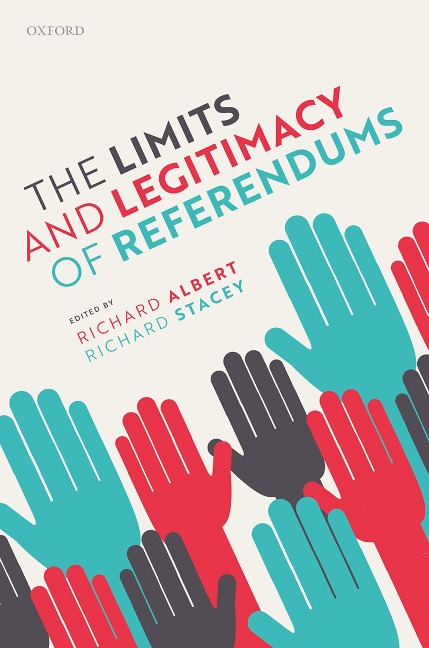
The possibility of democracy-enhancing uses and anti-democratic abuses of referendums reveals a paradox: mechanisms of democracy can be exploited to do violence to the basic principles of democracy. The Limits and Legitimacy of Referendums seeks to identify standards we might use to assess the democratic legitimacy of a referendum when we cannot rely on the norms of traditional liberal democracy. This innovative book explores how referendums manage the tension between liberalism and democracy, and whether this device holds promise for reconciling these two commitments. A range of scholars from around the world expose how referendums may be abused on one hand to achieve short-term political or even personal gains, and how, on the other, they may aspire to reflect the best traditions of deliberative, innovative, democracy-enhancing popular decision-making. Structured around three big questions, this book seeks to identify what makes a referendum legitimate. First, why have referendums on issues of fundamental political importance become so frequent around the world? Second, who are - or who should be - the people that make decisions about a political community's future? And third, are referendums an effective and reliable mechanism of popular sovereignty or democratic choice? These essays - written for scholars, public lawyers, political actors and citizens - bring together diverse perspectives on referendums, constitutionalism, liberalism and democracy in ways that challenge the conventional wisdom, prompt new answers to enduring questions, and urge reconsideration of how we evaluate the legitimacy of referendums.
Richard Albert is the William Stamps Farish Professor in Law, Professor of Government, and Director of Constitutional Studies at the University of Texas at Austin. A scholar of constitutional law and democratic reform, he has published over 20 books, including Constitutional Amendments: Making, Breaking, and Changing Constitutions (Oxford University Press 2019). He is Co-President of the International Society of Public Law, a former law clerk to the Chief Justice of Canada, and he holds law and political science degrees from Yale, Oxford, and Harvard.
Richard Stacey is an Associate Professor at the University of Toronto Faculty of Law. A legal theorist trained in comparative and social science methods, his work explores how public law frames the relationship between people and their governments. He is a graduate of the University of the Witwatersand in South Africa and New York University in the United States, and served as law clerk to Justices Catherine O'Regan and Bess Nkabinde at the South African Constitutional Court.
- Part I: Why Referendums? - 1: Zachary Elkins and Alexander Hudson: The Strange Case of the Package Deal: Amendments and Replacements in Constitutional Reform - 2: Richard Albert: Discretionary Referendums in Constitutional Amendment - 3: Richard Stacey: The Unnecessary Referendum: Popular Sovereignty in the Constitutional Interregnum - Part II: Who Are the People? - 4: Stephen Tierney: Referendums in Federal States: Territorial Pluralism and the Challenge of Direct Democracy - 5: Antoni Abat i Ninet: Referendum and Self-Determination in Catalonia - 6: Anna Fruhstorfer: Referendums and Autocratization: Explaining Referendum in the Post-Soviet Space - Part III: Are the People Sovereign? - 7: Leah Trueblood: Brexit and Two Roles for Referendums in the United Kingdom - 8: Janna Promislow: Deciding on the Future: First Nations Ratification Processes, Crown Policies, and the Making of Modern Treaties - 9: Carlos Bernal: Plebiscites and Peace: Comparative Lessons from the 2016 Colombian Plebiscite for Peace - 10: Aileen Kavanagh and David Kenny: Are the People the Masters? Constitutional Referendums in Ireland