Und dann auf "Zum Home-Bildschirm [+]".

Stöbern
genialokal zum Startbildschirm hinzufügen
Installieren Sie die genialokal App auf Ihrem Startbildschirm für einen schnellen Zugriff und eine komfortable Nutzung.
Installieren Sie die genialokal App auf Ihrem Startbildschirm für einen schnellen Zugriff und eine komfortable Nutzung.
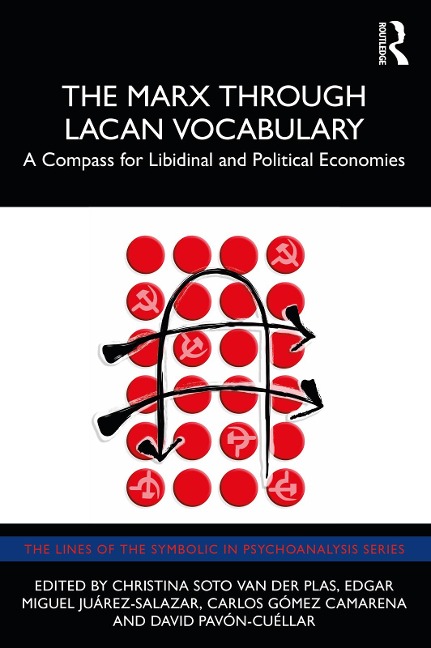
This text explores a set of key concepts in Marxist theory as developed and read by Lacan, demonstrating links and connections between Marxist thought and Lacanian practice. The book examines the complexity of these encounters through the structure of a comprehensive vocabulary which covers diverse areas, from capitalism and communism to history, ideology, politics, work, and family. Offering new perspectives on these concepts in psychoanalysis, as well as in the fields of political and critical theory, the book brings together contributions from a range of international experts to demonstrate the dynamic relationship between Marx and Lacan, as well as illuminating "untranslatable points" which may offer productive tension between the two. The entries trace the trajectory of Lacan's appropriation of Marx's concepts and analyses how they were questioned, criticized, and reworked by Lacan, accounting for the wide reach of two thinkers and worlds in constant homology. Each entry also discusses psychoanalytic debates relating to the concept and seeks to refine the clinical scope of Marx's work, demonstrating its impact on the social and individual dimensions of Lacanian clinical practice. With a practical and structured approach, The Marx through Lacan Vocabulary will appeal to psychoanalysts and researchers in a range of fields, including political science, cultural studies, and philosophy.
Christina Soto van der Plas is professor of Latin American Literature at Santa Clara University, USA. Edgar Miguel Juárez-Salazar is a professor of Social Psychology at Universidad Autónoma Metropolitana-Xochimilco (UAM-X), Mexico. Carlos Gómez Camarena is a professor at Universidad Iberoamericana, Mexico. David Pavón-Cuéllar is a professor at Universidad Michoacana de San Nicolás de Hidalgo (UMSNH), Mexico.
1. Alienation 2. Automatism 3. Bourgeoisie 4. Capitalism 5. Communism 6. Consumption 7. Economy/Oikonomia 8. Freedom/Liberty 9. History 10. Ideology 11. Imperialism 12. Labour/Work 13. Market 14. Master/Tyrant 15. Materialism 16. Money 17. Politics 18. Proletarian/Laborer/Worker 19. Revolution 20. Segregation 21. Slavery 22. Society 23. Superstructure 24. Surplus Jouissance 25. Uneasiness/Discontent/Unhappiness 26. Value
Dieses eBook wird im PDF-Format geliefert und ist mit einem Adobe Kopierschutz (DRM) versehen. Sie können dieses eBook mit allen Geräten lesen, die das PDF-Format und den Adobe Kopierschutz (DRM) unterstützen.
Zum Beispiel mit den folgenden Geräten:
• tolino Reader
Laden Sie das eBook direkt über den Reader-Shop auf dem tolino herunter oder übertragen Sie das eBook auf Ihren tolino mit einer kostenlosen Software wie beispielsweise Adobe Digital Editions.
• Sony Reader & andere eBook Reader
Laden Sie das eBook direkt über den Reader-Shop herunter oder übertragen Sie das eBook mit der kostenlosen Software Sony READER FOR PC/Mac oder Adobe Digital Editions auf ein Standard-Lesegeräte mit epub- und Adobe DRM-Unterstützung.
• Tablets & Smartphones
Möchten Sie dieses eBook auf Ihrem Smartphone oder Tablet lesen, finden Sie hier unsere kostenlose Lese-App für iPhone/iPad und Android Smartphone/Tablets.
• PC & Mac
Lesen Sie das eBook direkt nach dem Herunterladen mit einer kostenlosen Lesesoftware, beispielsweise Adobe Digital Editions, Sony READER FOR PC/Mac oder direkt über Ihre eBook-Bibliothek in Ihrem Konto unter „Meine eBooks“ - „online lesen“.
Schalten Sie das eBook mit Ihrer persönlichen Adobe ID auf bis zu sechs Geräten gleichzeitig frei.
Bitte beachten Sie, dass die Kindle-Geräte das Format nicht unterstützen und dieses eBook somit nicht auf Kindle-Geräten lesbar ist.