Und dann auf "Zum Home-Bildschirm [+]".

Stöbern
genialokal zum Startbildschirm hinzufügen
Installieren Sie die genialokal App auf Ihrem Startbildschirm für einen schnellen Zugriff und eine komfortable Nutzung.
Installieren Sie die genialokal App auf Ihrem Startbildschirm für einen schnellen Zugriff und eine komfortable Nutzung.
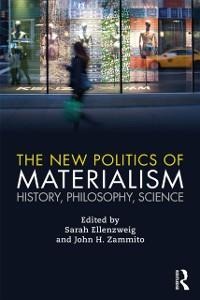
New materialism challenges the mechanistic models characteristic of early modern philosophy that regarded matter as largely passive and inert. Instead it gives weight to topics often overlooked in such accounts: agency, vitalism, complexity, contingency, and self-organization. This collection, which includes an international roster of contributors from philosophy, history, literature, and science, is the first to ask what is "new" about the new materialism and place it in interdisciplinary perspective. Against current theories of new materialism it argues for a deeper engagement with materialism's history, questions whether matter can be "lively," and asks whether new materialism's wish to revitalize politics and the political lives up to its promise. Contributors: Keith Ansell-Pearson, Sarah Ellenzweig, Christian J. Emden, N. Katherine Hayles, Jess Keiser, Mogens Laerke, Ian Lowrie, Lenny Moss, Angela Willey, Catherine Wilson, Charles T. Wolfe, Derek Woods, and John H. Zammito.
Sarah Ellenzweig is Associate Professor in the Department of English at Rice University, USA. She is author of The Fringes of Belief: English Literature, Ancient Heresy, and the Politics of Freethinking, 1660-1760 (2008). She has published essays in ELH, Journal of the History of Ideas, Journal of British Studies, and MLQ. She is currently working on a book on the philosophy of motion and the rise of the novel in the eighteenth century. John H. Zammito is John Antony Weir Professor of History at Rice University, USA. His key publications are: The Genesis of Kant's Critique of Judgment (1992); Kant, Herder, and the Birth of Anthropology (2002); and A Nice Derangement of Epistemes: Post-Positivism in the Study of Science from Quine to Latour (2004). His current research involves the life sciences in Germany in the 18th century and a monograph entitled The Gestation of German Biology is forthcoming from Chicago.
Introduction: New Materialism: Looking Forward, Looking Back Sarah Ellenzweig and John H. Zammito Part 1: Materialist Prehistories 1.Who's Afraid of Inertia? The Cartesian-Newtonian Legacy Reconsidered Sarah Ellenzweig 2., Varieties of Vital Materialism Charles Wolfe 3. Plasticity Matters Jess Keiser 4. Deleuze and New Materialism: Naturalism, Norms, and Ethics Keith Ansell-Pearson Part 2: Humanities and the Sciences of Matter 5. Materialism, Old and New, and the Party of Humanity Catherine Wilson 6. Engendering New Materializations: Feminism, Nature, and the Challenge to Disciplinary Proper Objects Angela Willey 7. What Sort of Thing is the Social? Or, Durkheim and Deleuze on Organization and Infrastructure Ian Lowrie Part 3: Monism, Liveliness, and the Problem of Scale 8. The Cognitive Nonconscious and the New Materialism. N. Katherine Hayles 9. Thinking Scale in the New Materialism Derek Woods Part 4: The Politics of Ontology 10. Detachment Theory: Agency, Normativity and the Claims of New Materialism Lenny Moss 11. Materialism, Constructivism, and Political Skepticism: Leibniz, Hobbes and the Erudite Libertines Mogens Laerke 12. Normativity Matters: Philosophical Naturalism and Political Theory Christian J. Emden Conclusion: Concluding (Irenic) Postscript: Naturalism as a Response to the New Materialism John H. Zammito. Index
Dieses eBook wird im PDF-Format geliefert und ist mit einem Adobe Kopierschutz (DRM) versehen. Sie können dieses eBook mit allen Geräten lesen, die das PDF-Format und den Adobe Kopierschutz (DRM) unterstützen.
Zum Beispiel mit den folgenden Geräten:
• tolino Reader
Laden Sie das eBook direkt über den Reader-Shop auf dem tolino herunter oder übertragen Sie das eBook auf Ihren tolino mit einer kostenlosen Software wie beispielsweise Adobe Digital Editions.
• Sony Reader & andere eBook Reader
Laden Sie das eBook direkt über den Reader-Shop herunter oder übertragen Sie das eBook mit der kostenlosen Software Sony READER FOR PC/Mac oder Adobe Digital Editions auf ein Standard-Lesegeräte mit epub- und Adobe DRM-Unterstützung.
• Tablets & Smartphones
Möchten Sie dieses eBook auf Ihrem Smartphone oder Tablet lesen, finden Sie hier unsere kostenlose Lese-App für iPhone/iPad und Android Smartphone/Tablets.
• PC & Mac
Lesen Sie das eBook direkt nach dem Herunterladen mit einer kostenlosen Lesesoftware, beispielsweise Adobe Digital Editions, Sony READER FOR PC/Mac oder direkt über Ihre eBook-Bibliothek in Ihrem Konto unter „Meine eBooks“ - „online lesen“.
Schalten Sie das eBook mit Ihrer persönlichen Adobe ID auf bis zu sechs Geräten gleichzeitig frei.
Bitte beachten Sie, dass die Kindle-Geräte das Format nicht unterstützen und dieses eBook somit nicht auf Kindle-Geräten lesbar ist.