Und dann auf "Zum Home-Bildschirm [+]".

Stöbern
genialokal zum Startbildschirm hinzufügen
Installieren Sie die genialokal App auf Ihrem Startbildschirm für einen schnellen Zugriff und eine komfortable Nutzung.
Installieren Sie die genialokal App auf Ihrem Startbildschirm für einen schnellen Zugriff und eine komfortable Nutzung.



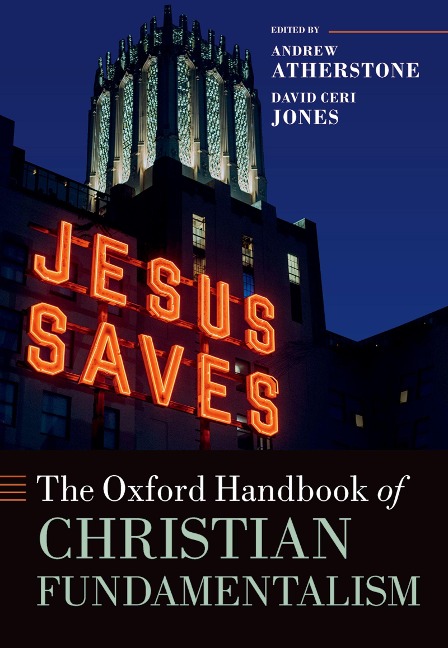
Christian fundamentalism is a significant global movement which originally took its name from The Fundamentals, a series of booklets defending classic evangelical doctrines, published in the 1910s. The Oxford Handbook of Christian Fundamentalism traces the roots of fundamentalism from the late nineteenth century and explores the development of the movement up to the present day. Since its inception, fundamentalism has proved a highly contested category. By some the label is recognised as a badge of honour, by others a term of abuse. This volume does not offer a simple definition of fundamentalism. Rather, it acknowledges its many interpretative and definitional complexities, and allows multiple identities to jostle together under the 'fundamentalist' label. The boundaries are porous between fundamentalism and conservative evangelicalism, so the Handbook includes analysis of some conservative expressions of Christianity which show fundamentalist characteristics, even in groups which refuse to define themselves as 'fundamentalist'. The relationship of fundamentalism to Pentecostalism and charismatic renewal is also explored in detail. Research-led chapters cover significant historical developments, key doctrines such as biblical inerrancy, creationism and separatism, and an extensive range of moral and cultural issues to which the contribution of fundamentalism has been significant, including popular music, alcohol, sport, and family life. Contributors also chart the evolution of the movement globally--far beyond its North Atlantic origins. Recognising the prominence of fundamentalism beyond the Church, the Handbook explores its contribution to public debates concerning political influence, education, human genetics, civil rights, business, global warning, sexuality, Israel and the Middle East, the shaping of contemporary culture, and much else. Christian fundamentalism, this Handbook ultimately shows, is one of the most significant movements operating in today's world.
Andrew Atherstone is Latimer Research Fellow at Wycliffe Hall, Oxford, and a member of Oxford University's Faculty of Theology and Religion. His recent books include Repackaging Christianity: Alpha and the Building of a Global Brand (2022) and, as co-editor, Transatlantic Charismatic Renewal, c.1950-2000 (2021). His research focuses on evangelicalism and Anglicanism in the 19th and 20th centuries. David Ceri Jones is Reader in Early Modern History at Aberystwyth University and a native of Port Talbot. His most recent books include, as co-author, A History of Christianity in Wales (2022), and as co-editor, George Whitefield: Life, Context and Legacy (2016). He is currently working of a multi-volume edition of the letters of George Whitefield, and a new history of evangelicalism in modern and contemporary Wales.
- Contributors - 1: Andrew Atherstone and David Ceri Jones: Defining and Interpreting Christian Fundamentalism - I: Historical Developments - 2: Geoffrey R. Treloar: The Fundamentals - 3: Josh McMullen: Big Tent Revivalism - 4: Thomas Breimaier: A Fundamentalist Forerunner? C. H. Spurgeon and the Downgrade Controversy - 5: Constance Areson Clark: The Scopes Trial - 6: D. G. Hart: Princeton and Fundamentalism - 7: Andrew R. Holmes: Fundamentalism in Interwar Northern Ireland - 8: Gerald W. King: Fundamentalism and Early Pentecostalism - 9: Elesha J. Coffman and Regina Wenger: Billy Graham, Fundamentalism and Neo-Evangelicalism - 10: John Maiden: Fundamentalism and Charismatic Renewal - 11: Andrew Christopher Smith: The Southern Baptist Convention - 12: Amber Thomas Reynolds: Fundamentalist Magazine Publishing - II: Fundamentalist Convictions - 13: Paul C. Gutjahr: Biblical Inerrancy and Higher Criticism - 14: Susan L. Trollinger and William Vance Trollinger, Jr.: Creationism - 15: Sean McGever: Conversion - 16: Tom Schwanda: The Devotional Life of Fundamentalism - 17: Markku Ruotsila: Ecumenism and Separatism - 18: David Ceri Jones: Salvation and the 'Social Gospel' - 19: Martin Spence: The End Times - III: Fundamentalism and Personal Morality - 20: Milton Gaither: Education in Home and School - 21: Adam Laats: Higher Education - 22: Joe Coker: Alcohol - 23: Shawn David Young: Popular Music - 24: Paul Emory Putz: Sport - 25: Emily S. Johnson: Family and Gender - 26: Suzanna Krivulskaya: Sex and Sexuality - 27: Andrew R. Lewis: Abortion - IV: Fundamentalism and the 'World' - 28: Brian Stanley: Global Mission - 29: Mary Beth Swetnam Mathews: Race and Civil Rights - 30: Darren Dochuk: Class - 31: Darren E. Grem: Business - 32: Daniel K. Williams: The Christian Right - 33: Brantley W. Gasaway: The Environment - 34: Daniel G. Hummel: Israel and the Middle East - 35: Christopher Douglas: Literature - 36: Robert Glenn Howard and Megan L. Zahay: From the Television Age to the Digital Revolution - V: Fundamentalist Futures - 37: Andrew Atherstone: Escaping Fundamentalism - 38: Mark P. Hutchinson: Globalized Fundamentalism - Index