Und dann auf "Zum Home-Bildschirm [+]".

Stöbern
genialokal zum Startbildschirm hinzufügen
Installieren Sie die genialokal App auf Ihrem Startbildschirm für einen schnellen Zugriff und eine komfortable Nutzung.
Installieren Sie die genialokal App auf Ihrem Startbildschirm für einen schnellen Zugriff und eine komfortable Nutzung.
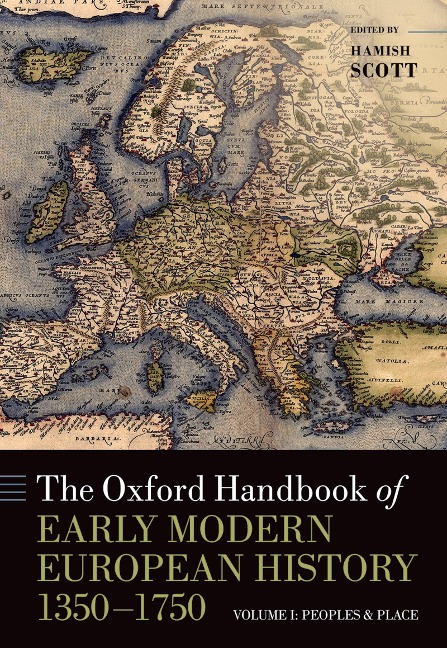
This Handbook re-examines the concept of early modern history in a European and global context. The term 'early modern' has been familiar, especially in Anglophone scholarship, for four decades and is securely established in teaching, research, and scholarly publishing. More recently, however, the unity implied in the notion has fragmented, while the usefulness and even the validity of the term, and the historical periodisation which it incorporates, have been questioned. The Oxford Handbook of Early Modern European History, 1350-1750 provides an account of the development of the subject during the past half-century, but primarily offers an integrated and comprehensive survey of present knowledge, together with some suggestions as to how the field is developing. It aims both to interrogate the notion of 'early modernity' itself and to survey early modern Europe as an established field of study. The overriding aim will be to establish that 'early modern' is not simply a chronological label but possesses a substantive integrity. Volume I examines 'Peoples and Place', assessing structural factors such as climate, printing and the revolution in information, social and economic developments, and religion, including chapters on Orthodoxy, Judaism and Islam.
Hamish Scott has published extensively on eighteenth-century international relations, government and enlightened absolutism, and on the early modern nobility. He taught for many years at the University of St Andrews, and is now attached to the University of Glasgow. A Fellow of the British Academy and of the Royal Society of Edinburgh, he is currently completing a major study, Forming Aristocracy: The reconfiguration of the European Nobility, which is to be published by Oxford University Press.
- 1: Hamish Scott: Introduction: 'Early Modern' Europe and the Idea of Early Modernity - 2: Valerie Kivelson: The Early Modern Emergence of 'Europe'? - 3: Christian Pfister: Weather, Climate, and the Environment - 4: Mary Lindemann: Disease and Medicine - 5: Anne McCants: Demography - 6: Gerhard Dohrn-van Rossum: Time - 7: Hamish Scott: Travel and Communications - 8: James R. Raven: Print and Printedness - 9: Fania Oz-Salzberger: Languages and Literacy - 10: Ann Blair and Devin Fitzgerald: A Revolution in Information? - 11: Regina Grafe: Economic and Social Trends - 12: Andreas Gestrich: The Social Order - 13: Mikolaj Szoltysek: Families and Households - 14: Margaret R. Hunt: Sexual Identity and the Family - 15: Janine Maegraith and Craig Muldrew: Consumption and Material Life - 16: Tom Scott: The Agrarian West - 17: Edgar Melton: The Agrarian East - 18: James S. Amelang: Country and Town in Mediterranean Europe - 19: Rab Houston: Towns and Urbanisation - 20: Markus Küpker: Manufacturing - 21: David J. Collins, SJ: The Christian Church, 1370-1550 - 22: Ulinka Rublack: Protestantism and Its Adherents - 23: Nicholas Terpstra: Early Modern Catholicism - 24: Nikolaos Chrissidis: The World of Orthodoxy - 25: David B. Ruderman: The Transformations of Judaism - 26: Tijana Krstic: Islam within Europe - 27: Caroline Castiglione: The Culture of Peoples - 28: Mack Holt: Belief and its Limits
Dieses eBook wird im PDF-Format geliefert und ist mit einem Adobe Kopierschutz (DRM) versehen. Sie können dieses eBook mit allen Geräten lesen, die das PDF-Format und den Adobe Kopierschutz (DRM) unterstützen.
Zum Beispiel mit den folgenden Geräten:
• tolino Reader
Laden Sie das eBook direkt über den Reader-Shop auf dem tolino herunter oder übertragen Sie das eBook auf Ihren tolino mit einer kostenlosen Software wie beispielsweise Adobe Digital Editions.
• Sony Reader & andere eBook Reader
Laden Sie das eBook direkt über den Reader-Shop herunter oder übertragen Sie das eBook mit der kostenlosen Software Sony READER FOR PC/Mac oder Adobe Digital Editions auf ein Standard-Lesegeräte mit epub- und Adobe DRM-Unterstützung.
• Tablets & Smartphones
Möchten Sie dieses eBook auf Ihrem Smartphone oder Tablet lesen, finden Sie hier unsere kostenlose Lese-App für iPhone/iPad und Android Smartphone/Tablets.
• PC & Mac
Lesen Sie das eBook direkt nach dem Herunterladen mit einer kostenlosen Lesesoftware, beispielsweise Adobe Digital Editions, Sony READER FOR PC/Mac oder direkt über Ihre eBook-Bibliothek in Ihrem Konto unter „Meine eBooks“ - „online lesen“.
Schalten Sie das eBook mit Ihrer persönlichen Adobe ID auf bis zu sechs Geräten gleichzeitig frei.
Bitte beachten Sie, dass die Kindle-Geräte das Format nicht unterstützen und dieses eBook somit nicht auf Kindle-Geräten lesbar ist.