Und dann auf "Zum Home-Bildschirm [+]".

Stöbern
genialokal zum Startbildschirm hinzufügen
Installieren Sie die genialokal App auf Ihrem Startbildschirm für einen schnellen Zugriff und eine komfortable Nutzung.
Installieren Sie die genialokal App auf Ihrem Startbildschirm für einen schnellen Zugriff und eine komfortable Nutzung.
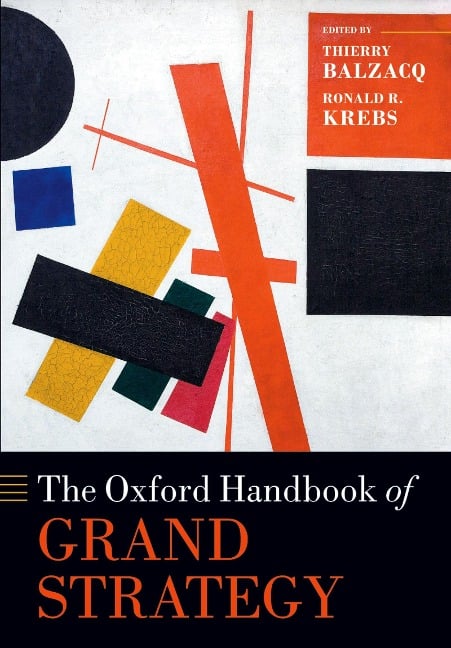
A clearly articulated, well-defined, and relatively stable grand strategy is supposed to allow the ship of state to steer a steady course through the roiling seas of global politics. However, the obstacles to formulating and implementing grand strategy are, by all accounts, imposing. The Oxford Handbook of Grand Strategy addresses the conceptual and historical foundations, production, evolution, and future of grand strategy from a wide range of standpoints. The seven constituent sections present and critically examine the history of grand strategy, including beyond the West; six distinct theoretical approaches to the subject; the sources of grand strategy, ranging from geography and technology to domestic politics to individual psychology and culture; the instruments of grand strategy's implementation, from military to economic to covert action; political actors', including non-state actors', grand strategic choices; the debatable merits of grand strategy, relative to alternatives; and the future of grand strategy, in light of challenges ranging from political polarization to technological change to aging populations. The result is a field-defining, interdisciplinary, and comparative text that will be a key resource for years to come.
Thierry Balzacq is Professor of International Relations at Sciences Po and Professorial Fellow at CERI-Sciences Po where he also serves as the director of graduate studies in International Relations. Balzacq held a Honorary Professorial Fellowship at the University of Edinburgh (2012-2015), where he was also Fellow for "outstanding research" at the Institute for Advanced Studies in the Humanities. In 2015, Balzacq was awarded a Tier 1 Canada Research Chair in Diplomacy and International Security. He held a Marie Curie Visiting Chair in the Department of International Politics at the University of Aberystwyth (2017-2019). He has published over a hundred scientific works in English and French, on Security, IR Theory, and Diplomatic Studies. Balzacq also co-edits the Oxford Studies in Grand Strategy book series. Ronald R. Krebs is Beverly and Richard Fink Professor in the Liberal Arts and Professor of Political Science at the University of Minnesota. Ron Krebs has been named a Fulbright Senior Scholar to Israel (2012), as well as Scholar of the College of Liberal Arts (2017-2020), and a McKnight Land-Grant Professor (2006-2008) at the University of Minnesota. He has published numerous articles in both scholarly and general-interest journals, magazines, and websites. Prof. Krebs is currently editor-in-chief of the leading scholarly journal Security Studies. He is a member of the Editorial Board of Oxford University Press' Oxford Studies in Grand Strategy and of the Journal of Global Security Studies.
- 1: Thierry Balzacq and Ronald R. Krebs: The Enduring Appeal of Grand Strategy - I. The History of Grand Strategy - 2: Lawrence Freedman: Grand Strategy: The History of a Concept - 3: Neville Morley: Thucydides' Legacy in Grand Strategy - 4: Beatrice Heuser: The Clausewitzian Traditions: Die Politik and the Political Purpose of Strategy - 5: Lukas Milevski: Liddell Hart's Impact on the Study of Grand Strategy - 6: Karin M. Fierke: Grand Strategy Beyond the West - II. Theoretical Approaches - 7: Charles Glaser: Rational Analysis of Grand Strategy - 8: Daniel H. Nexon: Network Theory and Grand Strategy - 9: Christian Bueger and Frank Gadinger: Making Grand Strategy in Practice - 10: Thierry Balzacq and Pablo Barnier-Khawam: Ideas and Ideology in Grand Strategy - 11: Markus Kornprobst and Corina-Ioana Traistaru: Discourse, Language, and Grand Strategy - 12: Andrew W. Neal: Governmentality and Grand Strategy - III. Sources - 13: Norrin Ripsman and Igor Kovac: Material Sources of Grand Strategy - 14: Sophie-Charlotte Fischer, Andrea Gilli and Mauro Gilli: Technological Change and Grand Strategy - 15: Jonathan D. Caverley: The Domestic Sources of Grand Strategy - 16: Kevin Narizny: Economic Interests and Grand Strategy - 17: Risa Brooks: Civil-Military Relations and Grand Strategy - 18: Brian C. Rathbun: Individual Psychology and Grand Strategy: Romancing the State - 19: David M. McCourt: Culture, Identity, and Grand Strategy - 20: Stacie E. Goddard: Rhetoric, Legitimation, and Grand Strategy - IV. Instruments - 21: Pascal Vennesson: Grand Strategy and Military Power - 22: Ole Jacob Sending: Diplomacy and Grand Strategy - 23: Bryan R. Early and Keith Preble: Grand Strategy and the Tools of Economic Statecraft - 24: Gregory Mitrovich: Covert Action and Grand Strategy - 25: Joshua Rovner: Intelligence and Grand Strategy - 26: Rosella Cappella Zielinski: Financing the Grand Strategies of Great and Rising Powers - V. Strategic Menus and Choices - 27: Robert Jervis: American Grand Strategies: Untangling the Debates - 28: Joshua R. Itzkowitz Shifrinson: Strategy on the Upward Slope: The Grand Strategies of Rising States - 29: Paul K. MacDonald and Joseph M. Parent: Grand Strategies of Declining Powers - 30: Anders Wivel: The Grand Strategies of Small States - 31: Daniel Byman: The Grand Strategies of Violent Rebel Groups - 32: William James: Grand Strategy and the Challenge of Change - 33: Rebecca Friedman Lissner: Rethinking Grand Strategic Change: Overhauls versus Adjustments in Grand Strategy - VI. Assessing Grand Strategy - 34: Hal Brands and Peter Feaver: Getting Grand Strategy Right - 35: William C. Wohlforth: The Challenge of Evaluating Grand Strategy - 36: Richard K. Betts: Is Grand Strategy an Illusion? Or, the Grandiosity of Grand Strategy - 37: David M. Edelstein: The Limits of Grand Strategy - 38: Peter Dombrowski: Alternatives to Grand Strategy - 39: John Bew, Maeve Ryan and Andrew Ehrhardt: Grand Strategic Thinking in History - VII. The Future of Grand Strategy - 40: Daniel W. Drezner: Grand Strategy in a Fractured Marketplace of Ideas - 41: Ronald R. Krebs: Pluralism, Populism, and the Impossibility of Grand Strategy - 42: Randall W. Schweller: Grand Strategy Under Nonpolarity - 43: Robert G. Cantelmo and Sarah E. Kreps: Grand Strategy and Technological Futures - 44: Mark L. Haas: Population Aging and Grand Strategy
Dieses eBook wird im PDF-Format geliefert und ist mit einem Adobe Kopierschutz (DRM) versehen. Sie können dieses eBook mit allen Geräten lesen, die das PDF-Format und den Adobe Kopierschutz (DRM) unterstützen.
Zum Beispiel mit den folgenden Geräten:
• tolino Reader
Laden Sie das eBook direkt über den Reader-Shop auf dem tolino herunter oder übertragen Sie das eBook auf Ihren tolino mit einer kostenlosen Software wie beispielsweise Adobe Digital Editions.
• Sony Reader & andere eBook Reader
Laden Sie das eBook direkt über den Reader-Shop herunter oder übertragen Sie das eBook mit der kostenlosen Software Sony READER FOR PC/Mac oder Adobe Digital Editions auf ein Standard-Lesegeräte mit epub- und Adobe DRM-Unterstützung.
• Tablets & Smartphones
Möchten Sie dieses eBook auf Ihrem Smartphone oder Tablet lesen, finden Sie hier unsere kostenlose Lese-App für iPhone/iPad und Android Smartphone/Tablets.
• PC & Mac
Lesen Sie das eBook direkt nach dem Herunterladen mit einer kostenlosen Lesesoftware, beispielsweise Adobe Digital Editions, Sony READER FOR PC/Mac oder direkt über Ihre eBook-Bibliothek in Ihrem Konto unter „Meine eBooks“ - „online lesen“.
Schalten Sie das eBook mit Ihrer persönlichen Adobe ID auf bis zu sechs Geräten gleichzeitig frei.
Bitte beachten Sie, dass die Kindle-Geräte das Format nicht unterstützen und dieses eBook somit nicht auf Kindle-Geräten lesbar ist.