Und dann auf "Zum Home-Bildschirm [+]".

Stöbern
genialokal zum Startbildschirm hinzufügen
Installieren Sie die genialokal App auf Ihrem Startbildschirm für einen schnellen Zugriff und eine komfortable Nutzung.
Installieren Sie die genialokal App auf Ihrem Startbildschirm für einen schnellen Zugriff und eine komfortable Nutzung.
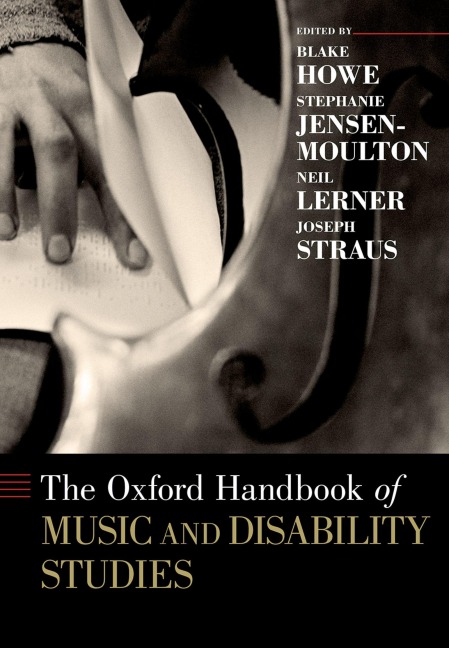
The Oxford Handbook of Disability Studies represents a comprehensive state of current research for the field of Disability Studies and Music. The forty-two chapters in the book span a wide chronological and geographical range, from the biblical, the medieval, and the Elizabethan, through the canonical classics of the eighteenth and nineteenth centuries, up to modernist styles and contemporary musical theater and popular genres, with stops along the way in post-Civil War America, Ghana and the South Pacific, and many other interesting times and places. Disability is a broad, heterogeneous, and porous identity, and that diversity is reflected in the variety of bodily conditions under discussion here, including autism and intellectual disability, deafness, blindness, mobility impairment often coupled with bodily difference, and cognitive and intellectual impairments. Amid this diversity of time, place, style, medium, and topic, the chapters share two core commitments. First, they are united in their theoretical and methodological connection to Disability Studies, especially its central idea that disability is a social and cultural construction. Disability both shapes and is shaped by culture, including musical culture. Second, these essays individually and collectively make the case that disability is not something at the periphery of culture and music, but something central to our art and to our humanity.
Blake Howe is Assistant Professor of Musicology at Louisiana State University. Stephanie Jensen-Moulton is Associate Professor of Musicology at Brooklyn College, City University of New York. Neil Lerner is E. Craig Wall, Jr. Distinguished Teaching Professor in the Humanities and Professor of Music at Davidson College. Joseph Straus is Distinguished Professor of Music at the Graduate Center of the City University of New York.
Introduction: Disability Studies in Music; Music in Disability Studies Blake Howe, Stephanie Jensen-Moulton, Neil Lerner, Joseph Straus Part 1. Disability Communities 1. Toward an Ethnographic Model of Disability in the Ethnomusicology of Autism Michael B. Bakan 2. Music, Intellectual Disability, and Human Flourishing Licia Carlson 3. Imagined Hearing: Music-Making in Deaf Culture Jeannette DiBernardo Jones 4. Musical Expression among Deaf and Hearing Song Signers Anabel Maler 5. The Politics of Sound: Music and Blindness in France, 1750-1830 Ingrid Sykes 6. "They Say We Exchanged Our Eyes for the Xylophone": Resisting Tropes of Disability as Spiritual Deviance in Birifor Music Brian Hogan 7. Understanding is Seeing: Music Analysis and Blindness Shersten Johnson Part 2. Performing Disability 8. Mechanized Bodies: Technology and Supplements in Björk's Electronica Jennifer Iverson 9. Subhuman or Superhuman? (Musical) Assistive Technology, Performance Enhancement, and the Aesthetic/Moral Debate Laurie Stras 10. Disabling Music Performance Blake Howe 11. Music and Bodily Difference in Cirque du Soleil Stephanie Jensen-Moulton 12. Punk Rock and Disability: Cripping Subculture George McKay 13. Moving Experiences: Blindness and the Performing Self in Imré Ungár's Chopin Stefan Sunandan Honisch 14. Stevie Wonder's Tactile Keyboard Mediation, Black Key Compositional Development, and the Quest for Creative Autonomy Will Fulton 15. Oh, the Stories We Tell! Performer-Audience-Disability Michael Beckerman 16. The Dancing Ground: Embodied Knowledge, Disability, and Visibility in New Orleans Second Lines Daniella Santoro Part 3. Race, Gender, Sexuality 17. A Cannon-Shaped Man with an Amphibian Voice: Castrato and Disability in Eighteenth-Century France Hedy Law 18. Sexuality, Trauma, and Dissociated Expression Fred Everett Maus 19. That "Weird and Wonderful Posture": Jump "Jim Crow" and the Performance of Disability Sean Murray 20. Disabled Moves: Multi-dimensional Music Listening, Disturbing/Activating Differences of Identity Marianne Kielian-Gilbert Part 4. War and Trauma 21. Disabled Union Veterans and the Performance of Martial Begging Michael Accinno 22. "Goodbye, Old Arm": The Domestication of Veterans' Disabilities in Civil War-Era Popular Songs Devin Burke 23. "The Absurd Disordering of Notes": Dysfunctional Memory in the Post-Traumatic Music of Ivor Gurney Beth Keyes 24. Vocal Ability and Musical Performances of Nuclear Damages in the Marshall Islands Jessica Schwartz Part 5. Premodern Conceptions 25. Lyrical Humor(s) in the 'Fumeur' Songs Julie Singer 26. Difference, Disability, and Composition in the Late Middle Ages: Of Antonio "Zachara" da Teramo and Francesco "Il Cieco" da Firenze Michael Scott Cuthbert 27. Madness and Music as (Dis)ability in Early Modern England Samantha Bassler 28. Saul, David, and Music's Ideal Body Blake Howe Part 6. The Classical Tradition 29. Narratives of Affliction and Recovery in Haydn Floyd Grave 30. Music and the Labyrinth of Melancholy Elaine Sisman 31. Musical Prosthesis: Form, Expression, and Narrative Structure in Beethoven's Sonata Movements Bruce Quaglia 32. Sounds of Mind: Musicians and Madness in the Popular Imagination James Deaville Part 7. Modernism and After 33. Modernist Opera's Stigmatized Subjects Sherry Lee 34. Autism and Postwar Serialism as Neurodiverse Forms of Cultural Modernism Joseph Straus 35. Broken Facture: Representations of Disability in the Music of Allan Pettersson Allen Gimbel 36. Musical Modernism's Aesthetics of Disability Joseph Straus 37. "Defamiliarizing the Familiar": Michael Nyman, Narrative Medicine, and the Composition of Mental Blindness Stephanie Jensen-Moulton Part 8. Film and Musical Theater 38. Scene in a New Light: Monstrous Mothers, Disabled Daughters, and the Performance of Feminism and Disability in The Light in the Piazza (2005) and Next to Normal (2008) Ann M. Fox 39. "Pitiful Creature of Darkness": The Subhuman and the Superhuman in The Phantom of the Opera Jessica Sternfeld 40. "Waitin' for the Light to Shine": Musicals and Disability Raymond Knapp 41. Music for Richard III: Cinematic Scoring for the Early Modern Monstrous Kendra Preston Leonard 42. Hearing a Site of Masculinity in Franz Waxman's Score for Pride of the Marines (1945) Neil Lerner
Dieses eBook wird im PDF-Format geliefert und ist mit einem Adobe Kopierschutz (DRM) versehen. Sie können dieses eBook mit allen Geräten lesen, die das PDF-Format und den Adobe Kopierschutz (DRM) unterstützen.
Zum Beispiel mit den folgenden Geräten:
• tolino Reader
Laden Sie das eBook direkt über den Reader-Shop auf dem tolino herunter oder übertragen Sie das eBook auf Ihren tolino mit einer kostenlosen Software wie beispielsweise Adobe Digital Editions.
• Sony Reader & andere eBook Reader
Laden Sie das eBook direkt über den Reader-Shop herunter oder übertragen Sie das eBook mit der kostenlosen Software Sony READER FOR PC/Mac oder Adobe Digital Editions auf ein Standard-Lesegeräte mit epub- und Adobe DRM-Unterstützung.
• Tablets & Smartphones
Möchten Sie dieses eBook auf Ihrem Smartphone oder Tablet lesen, finden Sie hier unsere kostenlose Lese-App für iPhone/iPad und Android Smartphone/Tablets.
• PC & Mac
Lesen Sie das eBook direkt nach dem Herunterladen mit einer kostenlosen Lesesoftware, beispielsweise Adobe Digital Editions, Sony READER FOR PC/Mac oder direkt über Ihre eBook-Bibliothek in Ihrem Konto unter „Meine eBooks“ - „online lesen“.
Schalten Sie das eBook mit Ihrer persönlichen Adobe ID auf bis zu sechs Geräten gleichzeitig frei.
Bitte beachten Sie, dass die Kindle-Geräte das Format nicht unterstützen und dieses eBook somit nicht auf Kindle-Geräten lesbar ist.