Und dann auf "Zum Home-Bildschirm [+]".

Stöbern
genialokal zum Startbildschirm hinzufügen
Installieren Sie die genialokal App auf Ihrem Startbildschirm für einen schnellen Zugriff und eine komfortable Nutzung.
Installieren Sie die genialokal App auf Ihrem Startbildschirm für einen schnellen Zugriff und eine komfortable Nutzung.

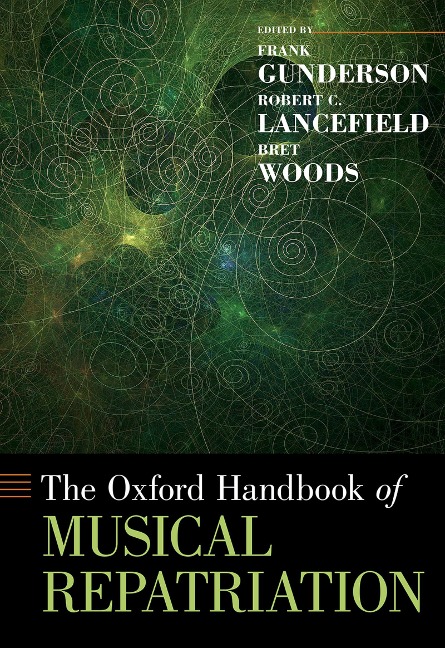
The Oxford Handbook of Musical Repatriation is a significant edited volume that critically explores issues surrounding musical repatriation, chiefly of recordings from audiovisual archives. The Handbook provides a dynamic and richly layered collection of stories and critical questions for anyone engaged or interested in repatriation or archival work. Repatriation often is overtly guided by an ethical mandate to "return" something to where it belongs, by such means as working to provide reconnection and Indigenous control and access to cultural materials. Essential as these mandates can be, this remarkable volume reveals dimensions to repatriation beyond those which can be understood as simple acts of "giving back" or returning an archive to its "homeland." Musical repatriation can entail subjective negotiations involving living subjects, intangible elements of cultural heritage, and complex histories, situated in intersecting webs of power relations and manifold other contexts. The forty-eight expert authors of this book's thirty-eight chapters engage with multifaceted aspects of musical repatriation, situating it as a concept encompassing widely ranging modes of cultural work that can be both profoundly interdisciplinary and embedded at the core of ethnographic and historical scholarship. These authors explore a rich variety of these processes' many streams, making the volume a compelling space for critical analysis of musical repatriation and its wider significance. The Handbook presents these chapters in a way that offers numerous emergent perspectives, depending on one's chosen trajectory through the volume. From retracing the paths of archived collections to exploring memory, performance, research goals, institutional power, curation, preservation, pedagogy and method, media and transmission, digital rights and access, policy and privilege, intellectual property, ideology, and the evolving institutional norms that have marked the preservation and ownership of musical archives-The Oxford Handbook of Musical Repatriation addresses these key topics and more in a deep, richly detailed, and diverse exploration.
Frank Gunderson is Associate Professor of Ethnomusicology at Florida State University. His research interests include African and African diasporan history, musical labor, sonic repatriation, biographical approaches, human rights, and documentary film. He is an active member of the African Studies Association (ASA), the American Anthropological Association (AAA), and the Society for Ethnomusicology (SEM). He is editor of the SEM academic journal Ethnomusicology, and has also served as the journal's Film, Video, and Multimedia Review Editor. He has published articles and reviews in Africa Today, History and Anthropology, Soundings, and African Music, and has twice been a guest editor of the journal World of Music. Robert Lancefield leads digital work at the Davison Art Center, Wesleyan University. A former president of the Museum Computer Network (MCN), the organization for people who do digital work in museums, Lancefield chairs the American Alliance of Museums (AAM) Council of Affiliates. Rob's Wesleyan University MA thesis considered the repatriation of recorded sound and the cultural meanings of intangible cultural documentation. His PhD dissertation examined how ideas about musical bodies and voices lent false credence to ideas of orientalized difference. Formerly a professional musician and recording engineer, Rob performed widely with Talking Drums, a US ensemble of Ghanaians and Americans. Bret Woods is an ethnomusicologist, author, filmmaker, and theoretician whose work explores music, media, and narrative through the lenses of mediology, anthropology, and social genre theory. Their main areas of focus are digital media studies, narratives and languages, performance and dissemination (through engagement of community and technology), and traditional musics. Bret is an active proponent of "ethnomediology," their approach to studying expression and interaction mediated through access to archives, digital technologies, and the Internet. Bret's research explores engagement in and negotiation of traditions globally and locally through contemporary media.
Acknowledgments About the Editors List of Contributors About the Companion Website Pathways and Trajectories: A Guide to the Organization and Use of This Book Pathways toward Open Dialogues about Sonic Heritage: An Introduction to The Oxford Handbook of Musical Repatriation Frank Gunderson and Bret Woods 1. Musical Traces' Retraceable Paths: The Repatriation of Recorded Sound Robert C. Lancefield 2. Reflections on Reconnections: When Human and Archival Modes of Memory Meet Daniel B. Reed 3. Music Archives and Repatriation: Digital Return of Hugh Tracey's Chemirocha Recordings in Kenya Diane Thram 4. Rethinking Repatriation and Curation in Newfoundland: Archives, Angst, and Opportunity Beverly Diamond and Janice Esther Tulk 5. Repatriating the Alan Lomax Haitian Recordings in Post-quake Haiti Gage Averill 6. "Where Dead People Walk": Fifty Years of Archives to Q'eros, Peru Holly Wissler 7. Audiovisual Archives: Bridging Past and Future Judith Gray 8. Archives, Repatriation, and the Challenges Ahead Anthony Seeger 9. Returning Voices: Repatriation as Shared Listening Experiences Brian Diettrich 10. "Boulders, Fighting on the Plain": A World-War-One-Era Song Repatriated and Remembered in Western Tanzania Frank Gunderson 11. "We Want Our Voices Back": Ethical Dilemmas in the Repatriation of Recordings Grace Koch 12. Sharing John Blacking: Recontextualizing Children's Music and Reimagining Musical Instruments in the Repatriation of a Historical Collection Andrea Emberly and Jennifer C. Post 13. Autism Doesn't Speak, People Do: Musical Thinking, Chat Messaging, and Autistic Repatriation Michael B. Bakan 14. Musical Repatriation as Method Michael Iyanaga 15. Teachers as Agents of the Repatriation of Music and Cultural Heritage Patricia Shehan Campbell and J. Christopher Roberts 16. "Each in Our Own Village": Creating Sustainable Interactions between Custodian Communities and Archives Catherine Ingram 17. Radio Afghanistan Archive Project: Averting Repatriation, Building Capacity Hiromi Lorraine Sakata, Laurel Sercombe, and John Vallier 18. Bringing Radio Haiti Home: The Digital Archive as Devoir de Mémoire Craig Breaden and Laura Wagner 19. Strategies for Cultural Repatriation: Bali 1928 Music Recordings and 1930s Films Edward Herbst 20. Cinematic Journeys to the Source: Musical Repatriation to Africa in Film Lisa Osunleti Beckley-Roberts 21. "Pour préserver la mémoire": Algerian Sha'b? Musicians as Repatriated Subjects and Agents of Repatriation Christopher Orr 22. Repatriating an Egyptian Modernity: Transcriptions and the Rise of Coptic Women's Song Activism Carolyn M. Ramzy 23. Memory, Trauma, and the Politics of Repatriating Bikindi's Music in the Aftermath of the Rwandan Genocide Jason McCoy 24. New Folk Music as Attempted Repatriation in Romania Maurice Mengel 25. The Politics of Repatriating Civil War Brass Music Elizabeth Whittenburg Ozment 26. Radio Archives and the Art of Persuasion Carlos Odria 27. The Banning of Samoa's Repatriated Mau Songs Richard Moyle 28. Bells in the Cultural Soundscape: Nazi-Era Plunder, Repatriation, and Campanology Carla Shapreau 29. Digital Repatriation: Copyright Policies, Fair Use, and Ethics Alex Perullo 30. Mountain Highs, Valley Lows: Institutional Archiving of Gospel Music in the Twenty-first Century Birgitta Johnson 31. "The Songs Are Alive": Bringing Frances Densmore's Recordings Back Home to Ojibwe Country Lyz Jaakola and Timothy B. Powell 32. Moving Songs: Repatriating Audiovisual Recordings of Aboriginal Australian Dance and Song (Kimberley Region, Northwestern Australia) Sally Treloyn, Matthew Dembal Martin, and Rona Googninda Charles 33. After the Archive: An Archaeology of Bosnian Voices Peter McMurray 34. Reclaiming Ownership of the Indigenous Voice: The Hopi Music Repatriation Project Trevor Reed 35. Yolngu Music, Indigenous Knowledge Centres, and the Emergence of Archives as Contact Zones Peter G. Toner 36. Traditional Re-Appropriation: Modes of Access and Digitization in Irish Traditional Music Bret Woods 37. Claiming Ka Mate: M?ori Cultural Property and the Nation's Stake Lauren E. Sweetman and Kirsten Zemke 38. Repatriation and Decolonization: Thoughts on Ownership, Access, and Control Robin R. R. Gray Index