Und dann auf "Zum Home-Bildschirm [+]".

Stöbern
genialokal zum Startbildschirm hinzufügen
Installieren Sie die genialokal App auf Ihrem Startbildschirm für einen schnellen Zugriff und eine komfortable Nutzung.
Installieren Sie die genialokal App auf Ihrem Startbildschirm für einen schnellen Zugriff und eine komfortable Nutzung.
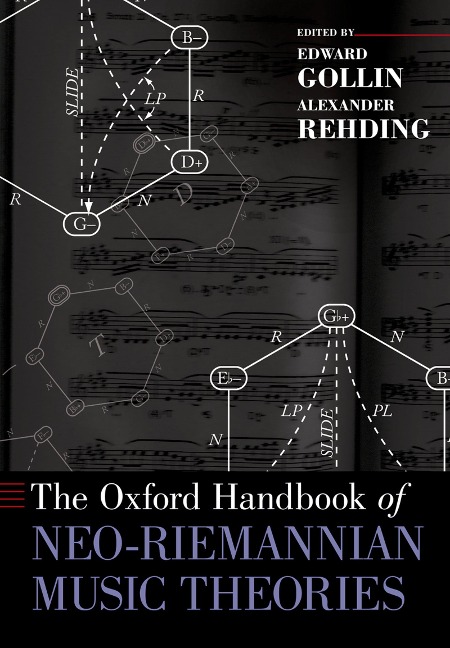
In recent years Hugo Riemann's ideas have thoroughly captured the music-theoretical imagination, both in the United States and abroad. Neo-Riemannian theory has proven particularly adept at explaining features of chromatic music where other theoretical approaches have failed, and in so doing has established itself as the leading theoretical approach of our time. The Oxford Handbook of Neo-Riemannian Music Theories brings together an international group of leading proponents of Riemannian and neo-Riemannian theory for a thoroughgoing exploration of the music-analytical, systematic, and historical aspects of this important new field. The volume elucidates key aspects of the field, draws connections between Riemann's original ideas and current thought, and suggests new applications and avenues for further study. A number of essays suggest connections to other fields of inquiry, such as cognitive and mathematical music theory, as well as applications in the field of metric or melodic analysis. The selection of essays is complemented by several of Hugo Riemann's key original texts, many of which appear in English translation for the first time, and is rounded off by a glossary of key concepts for easy reference.
Edward Gollin is Associate Professor of Music at Williams College. Alexander Rehding teaches music at Harvard University. His interests are in the history of music theory, and in nineteenth and twentieth century music. He is the author of Hugo Riemann and the Birth of Modern Musical Thought and Music and Monumentality, and is co-editor of Acta musicologica.
Acknowledgments Preface Part I. Intellectual Contexts Chapter 1. The Reception of Hugo Riemann's Music Theory Ludwig Holtmeier Chapter 2. The Nature of Harmony: A Translation and Commentary Benjamin Steege Chapter 3. What is a Function? Brian Hyer Chapter 4. Riemann and Melodic Analysis: Studies in Folk-Musical Tonality Matthew Gelbart and Alexander Rehding Part II. Dualism Chapter 5. The Problem of Harmonic Dualism: A Translation and Commentary Ian Bent Chapter 6. Harmonic Dualism as Historical and Structural Imperative Henry Klumpenhouwer Chapter 7. Dualistic Forms Alexander Rehding Chapter 8. Dualism and the Beholder's Eye: Inversional Symmetry in Chromatic Tonal Music Dmitri Tymoczko Part III. Tone Space Chapter 9. From Matrix to Map: Tonbestimmung, the Tonnetz, and Riemann's Combinatorial Conception of Interval Edward Gollin Chapter 10. On the Imagination of Tone in Schubert's Liedesend (D473), Trost (D523), and Gretchens Bitte (D564) Suzannah Clark Chapter 11. Tonal Pitch Space and the (neo-) Riemannian Tonnetz Richard Cohn Part IV. Harmonic Space Chapter 12. Neo-Riemannian Perspectives on the Harmonieschritte, with a Translation of Riemann's Systematik der Harmonieschritte Nora Engebretsen Chapter 13. On a Transformational Curiosity in Riemann's Schematisirung der Dissonanzen Edward Gollin Chapter 14. Chromaticism and the Question of Tonality David Kopp Part V. Temporal Space Chapter 15. Perspectives on Riemann's Mature Theory of Meter William E. Caplin Chapter 16. Reading Between the Lines: Hugo Riemann and Beethoven's Op. 31 Piano Sonatas Scott Burnham Chapter 17. Metric Freedoms in Brahms's Songs: A Translation and Commentary Paul Berry Part VI. Transformation, Analysis, Criticism Chapter 18. Riemannian Analytical Values, Paleo- and Neo- Steven Rings Chapter 19. Tonal Interpretation, Transformational Models, and the Chromatic Calls to Repent in Franck's Le chasseur maudit Robert C. Cook Chapter 20. Three Short Essays on Neo-Riemannian Theory Daniel Harrison Glossary Selected Bibliography Index
Dieses eBook wird im PDF-Format geliefert und ist mit einem Adobe Kopierschutz (DRM) versehen. Sie können dieses eBook mit allen Geräten lesen, die das PDF-Format und den Adobe Kopierschutz (DRM) unterstützen.
Zum Beispiel mit den folgenden Geräten:
• tolino Reader
Laden Sie das eBook direkt über den Reader-Shop auf dem tolino herunter oder übertragen Sie das eBook auf Ihren tolino mit einer kostenlosen Software wie beispielsweise Adobe Digital Editions.
• Sony Reader & andere eBook Reader
Laden Sie das eBook direkt über den Reader-Shop herunter oder übertragen Sie das eBook mit der kostenlosen Software Sony READER FOR PC/Mac oder Adobe Digital Editions auf ein Standard-Lesegeräte mit epub- und Adobe DRM-Unterstützung.
• Tablets & Smartphones
Möchten Sie dieses eBook auf Ihrem Smartphone oder Tablet lesen, finden Sie hier unsere kostenlose Lese-App für iPhone/iPad und Android Smartphone/Tablets.
• PC & Mac
Lesen Sie das eBook direkt nach dem Herunterladen mit einer kostenlosen Lesesoftware, beispielsweise Adobe Digital Editions, Sony READER FOR PC/Mac oder direkt über Ihre eBook-Bibliothek in Ihrem Konto unter „Meine eBooks“ - „online lesen“.
Schalten Sie das eBook mit Ihrer persönlichen Adobe ID auf bis zu sechs Geräten gleichzeitig frei.
Bitte beachten Sie, dass die Kindle-Geräte das Format nicht unterstützen und dieses eBook somit nicht auf Kindle-Geräten lesbar ist.