Und dann auf "Zum Home-Bildschirm [+]".

Stöbern
genialokal zum Startbildschirm hinzufügen
Installieren Sie die genialokal App auf Ihrem Startbildschirm für einen schnellen Zugriff und eine komfortable Nutzung.
Installieren Sie die genialokal App auf Ihrem Startbildschirm für einen schnellen Zugriff und eine komfortable Nutzung.

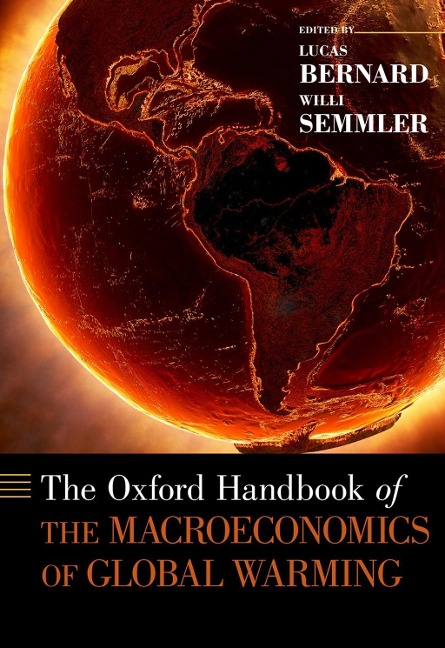
The first World Climate Conference, which was sponsored by the World Meteorological Organization in Genève in 1979, triggered an international dialogue on global warming. From the 1997 United Nations-sponsored conference-during which the Kyoto Protocol was signed-through meetings in Copenhagen, Cancún, Durban, and most recently Doha (2012) and Warsaw (2013), worldwide attention to the issue of global warming and its impact on the world's economy has rapidly increased in intensity. The consensus of these debates and discussions, however, is less than clear. Optimistically, many geoscience researchers and members of the Intergovernmental Panel on Climate Change (IPCC) have supported CO2 emission reduction pledges while maintaining that a 2°C limit in increased temperature by the year 2100 is achievable through international coordination. Other observers postulate that established CO2 reduction commitments such as those agreed to at the Copenhagen United Nations Climate Change Conference (2009) are insufficient and cannot hold the global warming increase below 2°C. As experts theorize on precisely what impact global warming will have, developing nations have become particularly alarmed. The developed world will use energy to mitigate global warming effects, but developing countries are more exposed by geography and poverty to the most dangerous consequences of a global temperature rise and lack the economic means to adapt. The complex dynamics that result from this confluence of science and geopolitics gives rise to even more complicated issues for economists, financial planners, business leaders, and policy-makers. The Oxford Handbook of the Macroeconomics of Global Warming analyzes the economic impact of issues related to and resulting from global warming, specifically the implications of possible preventative measures, various policy changes, and adaptation efforts as well as the different consequences climate change will have on both developing and developed nations. This multi-disciplinary approach, which touches on issues of growth, employment, and development, elucidates for readers state-of-the-art research on the complex and far-reaching problem of global warming.
Lucas Bernard is a Professor of Business at The New York City College of Technology, The City University of New York. Willi Semmler is the Henry Arnhold Professor of Economics at The New School for Social Research.
List of Contributors
1. The Macroeconomics of Global Warming Lucas Bernard and Willi Semmler
PART I: GROWTH AND CLIMATE CHANGE 2. Improving Climate Projections to Better Inform Climate Risk Management Klaus Keller and Robert Nicholas
3. Energy Balance Climate Models, Damage Reservoirs and the Time Profile of Climate Change Policy William Brock, Gustav Engström, and Anastasios Xepapadeas
4. Economics of Environmental Regime Shifts Florian Wagener
5. Policy Scenarios in a Model of Optimal Economics Growth and Climate Change Helmut Maurer, Johann Jakob Preuß, and Willi Semmler
6. Adaptive Model-Predictive Climate Policies in a Multi-Country Setting Thierry Bréchet, Carmen Camacho, and Vladimir M. Veliov
PART II: MITIGATION POLICY MODELING 7. Prospects of Tools from Differential Games in the Study of Macroeconomics of Climate Change Jacob Engwerda
8. Fairness in Climate Negotiations: A Meta-Game Analysis Based on Community Integrated Assessment Alain Haurie, Frédéric Babonneau, Neil Edwards, Phil Holden, Amit Kanudia, Maryse Labriet, Barbara Pizzileo, and Marc Vielle
9. Climate Change and Second-Best Abatement in a Multi-Region World with Endogenous Growth Alfred Greiner
10. Global Warming and R&D-Based Growth in a Trade Model between Environmentally Sensitive and Environmentally Neglectful Countries Francisco Cabo, Guiomar Martín-Herrán, and María Pilar Martínez-García
11. Climate Change and Inter-Generational Wellbeing Jeffrey D. Sachs
12. The Atmosphere as a Global Commons: Challenges for International Cooperation and Governance Ottmar Edenhofer, Christian Flachsland, Michael Jakob, and Kai Lessmann
13. The Social Cost of Carbon Richard S. J. Tol
PART III: TECHNOLOGY AND ENERGY POLICIES 14. Climate-Friendly Technological Change for Developing Countries David Popp
15. Renewable Energy: Models, Implications, and Prospects Franz Wirl and Yuri Yegorov
16. Emission Trading Systems and Technological Innovation: A Random Matching Model Angelo Antoci, Simone Borghesi, and Mauro Sodini
17. The Reality of Nuclear Power: The Fukushima Experience and Its Impact Kozo Mayumi and John M. Polimeni
PART IV: ECONOMIC EFFECTS OF MITIGATION AND ADAPTATION 18. Forecast Based Pricing of Weather Derivatives Wolfgang Karl Härdle, Brenda López Cabrera, Matthias Ritter
19. Employment and Output Effects of Climate Policies Mika Kato, Stefan Mittnik, Daniel Samaan, and Willi Semmler
20. Macroeconomic Effects of Renewable Energy and Energy Efficiency Policies with a Focus on Germany Christian Lutz and Ulrike Lehr
PART V: INTERNATIONAL PERSPECTIVES 21. The Stabilization of Earth's Climate in the 21st Century by the Stabilization of Per Capita Consumption Askar Akaev
22. Does Kyoto Protocol Intensify Carbon Leakage to China? Zhong Maochu and Shi Yadong
23. Climate Thresholds, Weather Extremes, and Catastrophic Losses Lopamudra Banerjee
24. Climate Impacts on Agriculture: A Challenge to Complacency? Frank Ackerman, Elizabeth A. Stanton
PART VI: DIRECTIONS IN MITIGATION POLICY DESIGN 25. The Legal Framework of Global Environment Governance on Climate Change: A Critical Survey Raphaële Chappe
26. Environment and Development Challenges: The Imperative of a Carbon Fee and Dividend James E. Hansen
27. The Need for Sustainable Development and a Carbon Market: Avoiding Extinction Graciela Chichilnisky