Und dann auf "Zum Home-Bildschirm [+]".

Stöbern
genialokal zum Startbildschirm hinzufügen
Installieren Sie die genialokal App auf Ihrem Startbildschirm für einen schnellen Zugriff und eine komfortable Nutzung.
Installieren Sie die genialokal App auf Ihrem Startbildschirm für einen schnellen Zugriff und eine komfortable Nutzung.
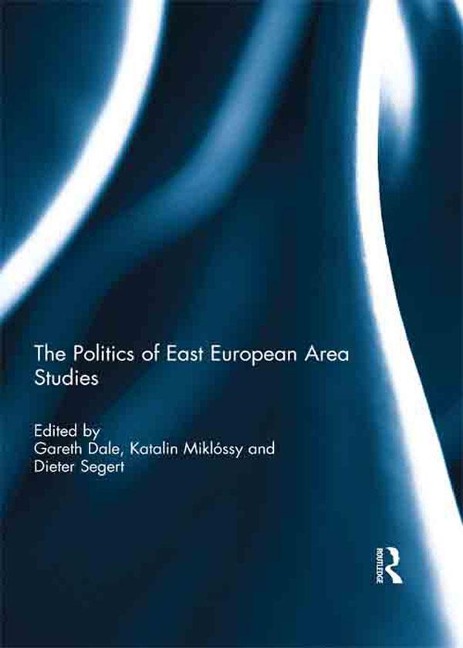
Following the end of the Cold War and European Union enlargement, in what sense does Eastern Europe continue to exist as a meaningful geo-political concept? In addressing this question, contributors to this volume-Alex Cistelecan, Robert Bideleux, Katalin Miklóssy and Dieter Segert-tease out the implications for an 'Area Studies' approach to the region. They examine its contradictory situation within discourses of 'orientalisation': on one hand, posited as the 'underdeveloped' pendant to its western neighbours; on the other, largely Christian by religion and an integral part of a continent that dominated the world. They uncover the roots of area studies in the 'colonial paradigm' by which great powers promote the creation of predictive, 'problem-solving' knowledge that is immediately apprehendable for decision makers, helping them to take advantage of a region's resources and strategic position, but which tends to homogenise the region's geography and history. For critical inquiry, they argue, the challenge is to delineate transparently the reasons underlying Eastern Europe's construction as an area of study, to identify the epistemological interests of motivated organisations such as funding agencies and political bodies, and to counter the ongoing orientalism of Western perspectives toward the East. This book was originally published as a special issue of the Journal of Contemporary Central and Eastern Europe.
Gareth Dale teaches politics at Brunel University. He has published on Karl Polanyi, Eastern Europe and the GDR, green growth, and international migration. Recent publications include "First the Transition, then the Crash: Eastern Europe in the 2000s" (2011) and "Karl Polanyi: The Limits of the Market" (2010). Katalin Miklóssy teaches Eastern European area studies at the University of Helsinki, with a particular focus on issues related to democratisation. She has published on competition, modernisation and Cold War interactions regarding East Central European countries. Dieter Segert teaches Eastern European Area Studies at Vienna University. He has published in numerous books and journals on state socialism and its legacy, democracy and party politics.
1. Introduction to Special Issue on The Politics of East European Area Studies: Disputing Contemporary Identifications 2. The ''Orientalization'' and ''de-Orientalization'' of East Central Europe and the Balkan Peninsula 3. From Region to Culture, from Culture to Class 4. Russian and East European Studies with a Finnish Flavour 5. Is There Really Something Like ''Eastern Europe''? And If So, Why Do We Need Area Studies of It?
Dieses eBook wird im PDF-Format geliefert und ist mit einem Adobe Kopierschutz (DRM) versehen. Sie können dieses eBook mit allen Geräten lesen, die das PDF-Format und den Adobe Kopierschutz (DRM) unterstützen.
Zum Beispiel mit den folgenden Geräten:
• tolino Reader
Laden Sie das eBook direkt über den Reader-Shop auf dem tolino herunter oder übertragen Sie das eBook auf Ihren tolino mit einer kostenlosen Software wie beispielsweise Adobe Digital Editions.
• Sony Reader & andere eBook Reader
Laden Sie das eBook direkt über den Reader-Shop herunter oder übertragen Sie das eBook mit der kostenlosen Software Sony READER FOR PC/Mac oder Adobe Digital Editions auf ein Standard-Lesegeräte mit epub- und Adobe DRM-Unterstützung.
• Tablets & Smartphones
Möchten Sie dieses eBook auf Ihrem Smartphone oder Tablet lesen, finden Sie hier unsere kostenlose Lese-App für iPhone/iPad und Android Smartphone/Tablets.
• PC & Mac
Lesen Sie das eBook direkt nach dem Herunterladen mit einer kostenlosen Lesesoftware, beispielsweise Adobe Digital Editions, Sony READER FOR PC/Mac oder direkt über Ihre eBook-Bibliothek in Ihrem Konto unter „Meine eBooks“ - „online lesen“.
Schalten Sie das eBook mit Ihrer persönlichen Adobe ID auf bis zu sechs Geräten gleichzeitig frei.
Bitte beachten Sie, dass die Kindle-Geräte das Format nicht unterstützen und dieses eBook somit nicht auf Kindle-Geräten lesbar ist.