Und dann auf "Zum Home-Bildschirm [+]".

Stöbern
genialokal zum Startbildschirm hinzufügen
Installieren Sie die genialokal App auf Ihrem Startbildschirm für einen schnellen Zugriff und eine komfortable Nutzung.
Installieren Sie die genialokal App auf Ihrem Startbildschirm für einen schnellen Zugriff und eine komfortable Nutzung.
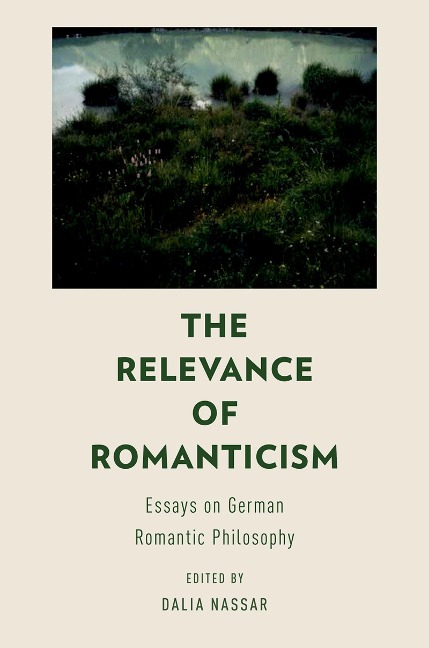
Since the early 1990s, there has been a resurgence of interest in philosophy between Kant and Hegel, and in early German romanticism in particular. Philosophers have come to recognize that, in spite of significant differences between the contemporary and romantic contexts, romanticism continues to persist, and the questions which the romantics raised remain relevant today. The Relevance of Romanticism: Essays on Early German Romantic Philosophy is the first collection of essays that offers an in-depth analysis of the reasons why philosophers are (and should be) concerned with romanticism. Through historical and systematic reconstructions, the collection offers a deeper understanding and more encompassing picture of romanticism as a philosophical movement than has been presented thus far, and explicates the role that romanticism plays -- or can play -- in contemporary philosophical debates. The volume includes essays by a number of preeminent international scholars and philosophers -- Karl Ameriks, Frederick Beiser, Richard Eldridge, Michael Forster, Manfred Frank, Jane Kneller, and Paul Redding -- who discuss the nature of philosophical romanticism and its potential to address contemporary questions and concerns. Through contributions from established and emerging philosophers, discussing key romantic themes and concerns, the volume highlights the diversity both within romantic thought and its contemporary reception. Part One consists of the first published encounter between Manfred Frank and Frederick Beiser, in which the two major scholars directly discuss their vastly differing interpretations of philosophical romanticism. Part Two draws significant connections between romantic conceptions of history, sociability, hermeneutics and education and explores the ways in which these views can illuminate pressing questions in contemporary social-political philosophy and theories of interpretation. Part Three consists in some of the most innovative takes on romantic aesthetics, which seek to bring romantic thought into dialogue, with, for instance, contemporary Analytic aesthetics and theories of cognition/mind. The final part offers one of the few rigorous engagements with romantic conceptions science, and demonstrates ways in which the romantic views of nature, scientific experimentation and mathematics need not be relegated to historical curiosities.
Dalia Nassar is a research fellow of the Australian Research Council (ARC) in the philosophy department at the University of Sydney and assistant professor of philosophy at Villanova University. She is the author of The Romantic Absolute: Being and Knowing in Early German Romantic Philosophy 1795-1804 (University of Chicago Press, 2013). Acknowledgements Abbreviations Contributors Introduction PART ONE German Romanticism as a Philosophical Movement 1. What is Early German Romantic Philosophy? Manfred Frank 2. Romanticism and Idealism Frederick Beiser PART TWO History, Hermeneutics and Sociability 3. History, Succession, and German Romanticism Karl Ameriks 4. Romanticism and Language Michael N. Forster 5. Hermeneutics, Individuality, and Tradition: Schleiermacher's Idea of Bildung in the Landscape of Hegelian Thought Kristin Gjesdal 6. Sociability and the Conduct of Philosophy: What We Can Learn from Early German Romanticism Jane Kneller PART THREE Literature, Art and Mythology 7. "Doch sehnend stehst /Am Ufer du" ("But Longing You Stand On the Shore"): Hölderlin, Philosophy, Subjectivity, and Finitude Richard Eldridge 8. On the Defense of Literary Value: From Early German Romanticism to Analytic Philosophy of Literature Brady Bowman 9. "No Poetry, No Reality": Schlegel, Wittgenstein, Fiction and Reality Keren Gorodeisky 10. The Simplicity of the Sublime: A New Picturing of Nature in Caspar David Friedrich Laure Cahen-Maurel 11. The New Mythology: Romanticism between Religion and Humanism Bruce Matthews PART FOUR Science and Nature 12. Mathematics, Computation, Language and Poetry: The Novalis Paradox Paul Redding 13. Friedrich Schlegel's Romantic Calculus: Reflections on the Mathematical Infinite around 1800 John H. Smith 14. The "Mathematical" Wissenschaftslehre: On a Late Fichtean Reflection of Novalis David W. Wood 15. Irritable Figures: Herder's Poetic Empiricism Amanda Jo Goldstein 16. Romantic Empiricism after the "End of Nature": Contributions to Environmental Philosophy Dalia Nassar Works Cited Index
Acknowledgements Abbreviations Contributors Introduction PART ONE German Romanticism as a Philosophical Movement 1. What is Early German Romantic Philosophy? Manfred Frank 2. Romanticism and Idealism Frederick Beiser PART TWO History, Hermeneutics and Sociability 3. History, Succession, and German Romanticism Karl Ameriks 4. Romanticism and Language Michael N. Forster 5. Hermeneutics, Individuality, and Tradition: Schleiermacher's Idea of Bildung in the Landscape of Hegelian Thought Kristin Gjesdal 6. Sociability and the Conduct of Philosophy: What We Can Learn from Early German Romanticism Jane Kneller PART THREE Literature, Art and Mythology 7. "Doch sehnend stehst /Am Ufer du" ("But Longing You Stand On the Shore"): Hölderlin, Philosophy, Subjectivity, and Finitude Richard Eldridge 8. On the Defense of Literary Value: From Early German Romanticism to Analytic Philosophy of Literature Brady Bowman 9. "No Poetry, No Reality": Schlegel, Wittgenstein, Fiction and Reality Keren Gorodeisky 10. The Simplicity of the Sublime: A New Picturing of Nature in Caspar David Friedrich Laure Cahen-Maurel 11. The New Mythology: Romanticism between Religion and Humanism Bruce Matthews PART FOUR Science and Nature 12. Mathematics, Computation, Language and Poetry: The Novalis Paradox Paul Redding 13. Friedrich Schlegel's Romantic Calculus: Reflections on the Mathematical Infinite around 1800 John H. Smith 14. The "Mathematical" Wissenschaftslehre: On a Late Fichtean Reflection of Novalis David W. Wood 15. Irritable Figures: Herder's Poetic Empiricism Amanda Jo Goldstein 16. Romantic Empiricism after the "End of Nature": Contributions to Environmental Philosophy Dalia Nassar Works Cited Index
Dieses eBook wird im PDF-Format geliefert und ist mit einem Adobe Kopierschutz (DRM) versehen. Sie können dieses eBook mit allen Geräten lesen, die das PDF-Format und den Adobe Kopierschutz (DRM) unterstützen.
Zum Beispiel mit den folgenden Geräten:
• tolino Reader
Laden Sie das eBook direkt über den Reader-Shop auf dem tolino herunter oder übertragen Sie das eBook auf Ihren tolino mit einer kostenlosen Software wie beispielsweise Adobe Digital Editions.
• Sony Reader & andere eBook Reader
Laden Sie das eBook direkt über den Reader-Shop herunter oder übertragen Sie das eBook mit der kostenlosen Software Sony READER FOR PC/Mac oder Adobe Digital Editions auf ein Standard-Lesegeräte mit epub- und Adobe DRM-Unterstützung.
• Tablets & Smartphones
Möchten Sie dieses eBook auf Ihrem Smartphone oder Tablet lesen, finden Sie hier unsere kostenlose Lese-App für iPhone/iPad und Android Smartphone/Tablets.
• PC & Mac
Lesen Sie das eBook direkt nach dem Herunterladen mit einer kostenlosen Lesesoftware, beispielsweise Adobe Digital Editions, Sony READER FOR PC/Mac oder direkt über Ihre eBook-Bibliothek in Ihrem Konto unter „Meine eBooks“ - „online lesen“.
Schalten Sie das eBook mit Ihrer persönlichen Adobe ID auf bis zu sechs Geräten gleichzeitig frei.
Bitte beachten Sie, dass die Kindle-Geräte das Format nicht unterstützen und dieses eBook somit nicht auf Kindle-Geräten lesbar ist.