Und dann auf "Zum Home-Bildschirm [+]".

Stöbern
genialokal zum Startbildschirm hinzufügen
Installieren Sie die genialokal App auf Ihrem Startbildschirm für einen schnellen Zugriff und eine komfortable Nutzung.
Installieren Sie die genialokal App auf Ihrem Startbildschirm für einen schnellen Zugriff und eine komfortable Nutzung.
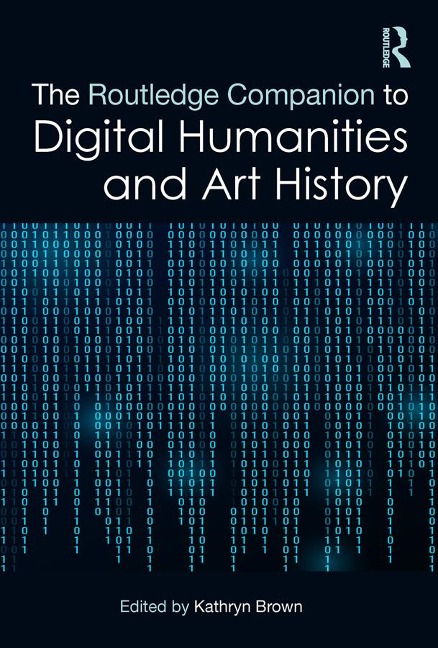
The Routledge Companion to Digital Humanities and Art History offers a broad survey of cutting-edge intersections between digital technologies and the study of art history, museum practices, and cultural heritage. The volume focuses not only on new computational tools that have been developed for the study of artworks and their histories but also debates the disciplinary opportunities and challenges that have emerged in response to the use of digital resources and methodologies. Chapters cover a wide range of technical and conceptual themes that define the current state of the field and outline strategies for future development. This book offers a timely perspective on trans-disciplinary developments that are reshaping art historical research, conservation, and teaching. This book will be of interest to scholars in art history, historical theory, method and historiography, and research methods in education.
Kathryn Brown is a lecturer in art history and visual culture at Loughborough University, UK.
List of Figures; List of Table; List of Contributors; Introduction (Kathryn Brown); Part I: Histories and Critical Debates; 1 Digital Methods and the Historiography of Art (Paul B. Jaskot); 2 Blind Spot: Information Visualization and Art History (Johanna Drucker); 3 The Digital Transformation of Art History (Harald Klinke); 4 Feminist Digital Art History (Kathryn Brown and Elspeth Mitchell); 5 Slow Digital Art History and KUbism: Or, Situation Awareness and the Promise of Open-World Games (Koenraad Brosens, Bruno Cardoso, and Fred Truyen); Part II: Archives, Networks, and Maps; 6 Tangled Metaphors: Network Thinking and Network Analysis in the History of Art (Matthew D. Lincoln); 7 Digital Humanities for a Spatial, Global, and Social History of Art (Béatrice Joyeux-Prunel); 8 Mapping Paintings, or How to Breathe Life Into Provenance (Jodi Cranston); 9 Qualitative Approaches to Network Analysis in Art History: Research on Contemporary Artists' Networks (Sanja Sekelj); 10 Mapping Senufo: Mapping as a Method to Transcend Colonial Assumptions (Susan Elizabeth Gagliardi); 11 X-Reception: Re-mediating Trans- Feminist and Queer Performance Art (T.L. Cowan); 12 Digital Methods and the Study of the Art Market (Pamela Fletcher and Anne Helmreich); 13 Noise Management in the Archival Ecosystem: Debating Principles for Classification (Anna Dot and Pablo Santa Olalla); Part III: Museums: Real, Virtual, and Augmented; 14 Digital Imaging Projects for Asian Art and Visual Culture: Transcultural Mediations and Collaborations (Katherine R. Tsiang); 15 A Field Guide to Digital Surrogates: Evaluating and Contextualizing a Rapidly Changing Resource (Emma Stanford); 16 A Service-Orientation and Open-Source Approach to Developing Virtual Museums (Martin White and Ben Jackson); 17 Art History, Heritage Games, and Virtual Reality (Erik Champion and Anna Foka); 18 Art With a Lifespan: Digital Technologies and the Preservation of BioArt (Christl Baur); 19 The Expanding Role of Digitized Collections: The Medici Archive (Alessio Assonitis); 20 Digital Languages for Art History: Audience Engagement, Virtual and Augmented Reality (Stefania De Vincentis and Luca Nicolò Vascon); Part IV: Computational Techniques for Analyzing Artworks; 21 Curation, Content, Creation: Computer Approaches to the Fine Arts (Javier de la Rosa and Juan-Luis Suárez); 22 Computerized Analysis of Paintings (James Z. Wang, Baris Kandemir, and Jia Li); 23 Digital 3D Modeling for the History of Art (Amy Jeffs); 24 Metadata, Material Culture, and Global Art History (Robert Wellington); 25 Image Processing and Computer Vision in the Field of Art History (Nuria Rodríguez-Ortega); 26 Pointers and Proxies: Thoughts on the Computational Modeling of the Phenomenal World (Alison Langmead and David Newbury); 27 Approaching Aby Warburg and Digital Art History: Thinking Through Images (Amanda Du Preez); 28 Analyzing Gesture in Digital Art History (Leonardo Impett); 29 Digital Techniques for the Study of Portuguese Azulejos (Glazed Tiles): Between Alice's White Rabbit and the Mad Tea Party (Rosário Salema de Carvalho, Rafaela Xavier, and Inês Leitão); Part V: Digital Resources, Publication, and Education; 30 The Database of Modern Exhibitions (DoME): European Paintings and Drawings 1905-1915 (Christina Bartosch, Nirmalie Mulloli, Daniel Burckhardt, Marei Döhring, Walid Ahmad, and Raphael Rosenberg); 31 The Art-Historical Catalogue in the Digital Era (Anne Collins Goodyear); 32 Digital Provenance, Open Access, and Data-Driven Art History (Anne Luther); 33 Research, Process, Publication, and Pedagogy: Reconstructing the World's Columbian Exposition of 1893 (Lisa M. Snyder); 34 Social Media in the Art History Classroom (Lauren Jimerson and Allison Leigh); Index
Dieses eBook wird im PDF-Format geliefert und ist mit einem Adobe Kopierschutz (DRM) versehen. Sie können dieses eBook mit allen Geräten lesen, die das PDF-Format und den Adobe Kopierschutz (DRM) unterstützen.
Zum Beispiel mit den folgenden Geräten:
• tolino Reader
Laden Sie das eBook direkt über den Reader-Shop auf dem tolino herunter oder übertragen Sie das eBook auf Ihren tolino mit einer kostenlosen Software wie beispielsweise Adobe Digital Editions.
• Sony Reader & andere eBook Reader
Laden Sie das eBook direkt über den Reader-Shop herunter oder übertragen Sie das eBook mit der kostenlosen Software Sony READER FOR PC/Mac oder Adobe Digital Editions auf ein Standard-Lesegeräte mit epub- und Adobe DRM-Unterstützung.
• Tablets & Smartphones
Möchten Sie dieses eBook auf Ihrem Smartphone oder Tablet lesen, finden Sie hier unsere kostenlose Lese-App für iPhone/iPad und Android Smartphone/Tablets.
• PC & Mac
Lesen Sie das eBook direkt nach dem Herunterladen mit einer kostenlosen Lesesoftware, beispielsweise Adobe Digital Editions, Sony READER FOR PC/Mac oder direkt über Ihre eBook-Bibliothek in Ihrem Konto unter „Meine eBooks“ - „online lesen“.
Schalten Sie das eBook mit Ihrer persönlichen Adobe ID auf bis zu sechs Geräten gleichzeitig frei.
Bitte beachten Sie, dass die Kindle-Geräte das Format nicht unterstützen und dieses eBook somit nicht auf Kindle-Geräten lesbar ist.