Und dann auf "Zum Home-Bildschirm [+]".

Stöbern
genialokal zum Startbildschirm hinzufügen
Installieren Sie die genialokal App auf Ihrem Startbildschirm für einen schnellen Zugriff und eine komfortable Nutzung.
Installieren Sie die genialokal App auf Ihrem Startbildschirm für einen schnellen Zugriff und eine komfortable Nutzung.
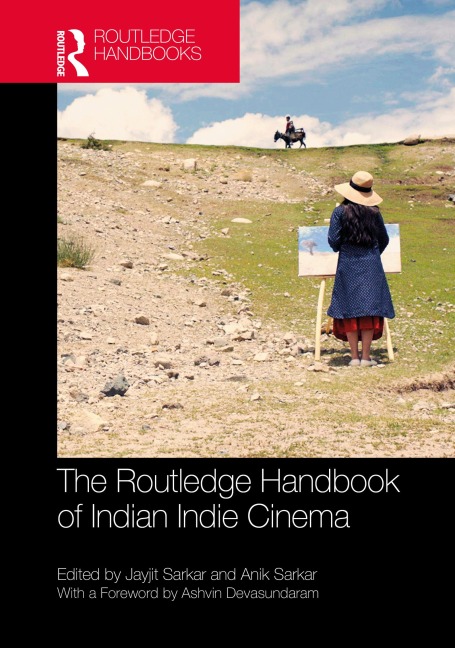
This handbook offers a critical introduction to Indian Indie cinema, exploring its subversion of dominant ideas, aesthetics and narratives; its inclusion of marginal and alternative experiences and ideologies; its relationship with audiences; and its defiance of norms followed by commercial Bollywood cinema. It takes a critical look at independent and alternative films in India that cover a wide range of genres, regions, textual forms and languages. These films may be regional, experimental in style or feature innovative and timely sociopolitical interventions. The handbook contextualises this cinema historically and addresses the key issues concerning its significance. A definitive guide to independent Indian films, this volume provides acritical understanding of the many experimentations undertaken by alternative voices and filmmakers in India; offers new conceptual engagements that widen perspectives on "minor" and regional cinema; and covers a wide range of films while touching upon current and new filmmaking trends, emerging cinematic styles, film production and key filmmakers. These analyses of the Indie film industry and films in India are an essential read for students and researchers of media and film studies, film studies, cultural studies, world cinema and contemporary cinema, besides being of interest to film buffs.
Jayjit Sarkar is assistant professor at the Department of English, Raiganj University, India. He is the author of the monograph Illness as Method: Beckett, Kafka, Mann, Woolf and Eliot (2019) and the editor-contributor of Trans(in)fusion and Contemporary Thought: Thinking in Migration (2023). Anik Sarkar is assistant professor of English at SRM University Sikkim. His research areas and interests include philosophy of technology, surveillance, film studies and videogames. His recent work is The Films of Apichatpong Weerasethakul (2024).
1.Foreword 2. Introduction 3. Interface between Forest and City: Ecofeminist Evaluation of Satyajit Ray's Aranyer Din Ratri (1970) 4. Two Women and a Film Crew: Female Relational Dynamics and Double Standards of Parallel Cinema in Rituporno Ghosh's Bariwali (2000) 5. Dancing Rain and Marigolden Marriages: Monsoon Wedding (2001) Twenty Years On 6. Wearing the Motley in Rituparno Ghosh's Lear (2007) 7. Manorama Six Feet Under (2007): Understanding the making of a star through the culture of independent cinema 8. Connection and Separation: Art as a Life and Life as an Art in Kiran Rao's Dhobi Ghat (2010) 9. The Ghat of the Only World: Trauma, Dignity, Marginalisation and the City in Onir's I Am (2010) 10. Against Commodification of Films in South Asian (Indian) 'Media-Scape': A Reading of Q's Gandu (2010) 11. "Exotic, Intense, Explosive, Erotic": Gandu (2010) and the Flesh of Cinema 12. A brief inquiry into the ontology of the voyeur in Banerjee's Love, Sex and Dhoka (2010) 13. Beyond the Conventional binary: Rituparno Ghosh's Chitrangada: The Crowning Wish (2012) 14. Ankhon Dekhi (2013): A Curious Case of Objectivity 15. The Lunchbox (2013): A narrative about loneliness and emotional wiltedness 16. Fandry (2013): An act of resistance and assertion 17. Intersectionality and Gender Performativity in Margarita with a Straw (2014) 18. Aligarh (2015): New Cartographies of (Anti)Intimacies in Indian Cinema 19. Masaan (2015): A Cathartic Journey of Reconciliation with Destiny 20. Vituperating the Female Body and Violence in a F-rated Indie Movie Parched (2015) 21. The Male Malady: Confined Spaces and Social Exclusion in A Death in the Gunj (2016) 22. Village Rockstars (2017): Micronarratives of the Nation 23. Angamaly Diaries (2017): Intersectionality and Politics of Violence and Food 24. A camera into the human life: Reading the Ethos of Angamaly Diaries (2017) 25. "Can the Transgender Speak?": A Critical Analysis of Kaushik Ganguly's Nagarkirtan (2017) 26. Silence and Chaos in Nishil Sheth's Bhasmasur (2017) 27. The Poetics, Politics and Patriarchies of Bulbul Can Sing (2018) 28. On Mixing Memory and Desire: Reading Sengupta's Jonaki (2018) as a Chronotope of Nostalgia 29. Striking a fine balance: Duty, Dreams and being true to self in Rohena Gera' Sir (2018) 30. The Organs of Darkness: Horror and Desire in Rahi Anil Barve and Adesh Prasad's Tumbbad (2018) 31. The Fiasco at Funeral: An Insight on the Theme of Death in Pellissery's Ee.Maa.Yau (2018) 32. "When the Reel Represents the Real": Mapping Resistance and Agency against the Post-truth Regime in Anand Patwardhan's Vivek (2018) 33. Widow of Silence (2018) and its Action in Silence 34. Bhaskar Hazarika's Aamis (2019): A Tale of Visceral Journey and Vorarephilia 35. Unruliness of Desire and Consumption in Bhaskar Hazarika's Aamis (2019) 36. Food and politics of othering of Northeastern experiences in Nicholas Kharkongor's Axone (2019) 37. Cargo (2019): Life after Death in Indian Space 38. Gamak Ghar (2019): A Common Story Uncommonly Told 39. Gamak Ghar (2019): The House that Lived in Memory 40. Jallikattu (2019) and the Demise of Multi-species Sociality 41. Eeb Allay Ooo! (2019): A new zoo story 42. Stewing Rebellion in The Great Indian Kitchen (2021)
Dieses eBook wird im PDF-Format geliefert und ist mit einem Adobe Kopierschutz (DRM) versehen. Sie können dieses eBook mit allen Geräten lesen, die das PDF-Format und den Adobe Kopierschutz (DRM) unterstützen.
Zum Beispiel mit den folgenden Geräten:
• tolino Reader
Laden Sie das eBook direkt über den Reader-Shop auf dem tolino herunter oder übertragen Sie das eBook auf Ihren tolino mit einer kostenlosen Software wie beispielsweise Adobe Digital Editions.
• Sony Reader & andere eBook Reader
Laden Sie das eBook direkt über den Reader-Shop herunter oder übertragen Sie das eBook mit der kostenlosen Software Sony READER FOR PC/Mac oder Adobe Digital Editions auf ein Standard-Lesegeräte mit epub- und Adobe DRM-Unterstützung.
• Tablets & Smartphones
Möchten Sie dieses eBook auf Ihrem Smartphone oder Tablet lesen, finden Sie hier unsere kostenlose Lese-App für iPhone/iPad und Android Smartphone/Tablets.
• PC & Mac
Lesen Sie das eBook direkt nach dem Herunterladen mit einer kostenlosen Lesesoftware, beispielsweise Adobe Digital Editions, Sony READER FOR PC/Mac oder direkt über Ihre eBook-Bibliothek in Ihrem Konto unter „Meine eBooks“ - „online lesen“.
Schalten Sie das eBook mit Ihrer persönlichen Adobe ID auf bis zu sechs Geräten gleichzeitig frei.
Bitte beachten Sie, dass die Kindle-Geräte das Format nicht unterstützen und dieses eBook somit nicht auf Kindle-Geräten lesbar ist.