Und dann auf "Zum Home-Bildschirm [+]".

Stöbern
genialokal zum Startbildschirm hinzufügen
Installieren Sie die genialokal App auf Ihrem Startbildschirm für einen schnellen Zugriff und eine komfortable Nutzung.
Installieren Sie die genialokal App auf Ihrem Startbildschirm für einen schnellen Zugriff und eine komfortable Nutzung.
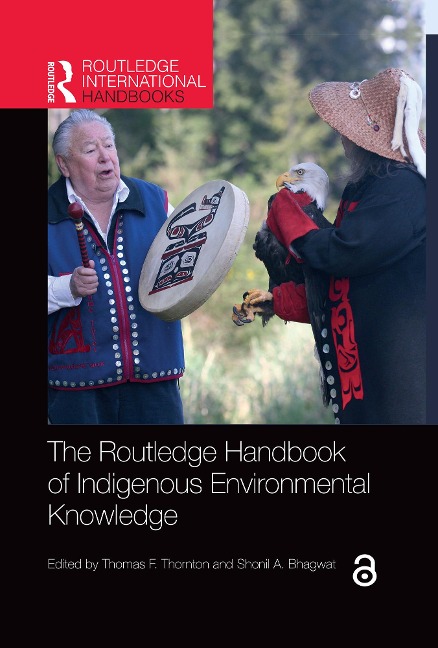
This volume provides an overview of key themes in Indigenous Environmental Knowledge (IEK) and anchors them with brief but well-grounded empirical case studies of relevance for each of these themes, drawn from bioculturally diverse areas around the world. It provides an incisive, cutting-edge overview of the conceptual and philosophical issues, while providing constructive examples of how IEK studies have been implemented to beneficial effect in ecological restoration, stewardship, and governance schemes. Collectively, the chapters in the Routledge Handbook of Indigenous Environmental Knowledge cover Indigenous Knowledge not only in a wide range of cultures and livelihood contexts, but also in a wide range of environments, including drylands, savannah grassland, tropical forests, mountain landscapes, temperate and boreal forests, Pacific and Indian Ocean islands, and coastal environments. The chapters discuss the complexities and nuances of Indigenous cosmologies and ethno-metaphysics and the treatment and incorporation of IEK in local, national, and international environmental policies. Taken together, the chapters in this volume make a strong case for the potential of Indigenous Knowledge in addressing today's local and global environmental challenges, especially when approached from a perspective of appreciative inquiry, using cross-cultural methods and ethical, collaborative approaches which limit bias and inappropriate extraction of IEK. The book is a guide for graduate and advanced undergraduate teaching, and a key reference for academics in development studies, environmental studies, geography, anthropology, and beyond, as well as anyone with an interest in Indigenous Environmental Knowledge. Chapters 10 and 23 of this book are freely available as a downloadable Open Access PDF at http://www.taylorfrancis.com under a Creative Commons Attribution-Non Commercial-No Derivatives (CC-BY-NC-ND) 4.0 license.
Thomas F. Thornton is Dean of Arts and Sciences and Vice-Provost for Research and Sponsored Programs at University of Alaska Southeast, USA, and Associate Professor (part-time) at the Environmental Change Institute, School of Geography and the Environment, University of Oxford, UK. Shonil A. Bhagwat is Professor of Environment and Development, and Head of the School of Social Sciences and Global Studies at the Open University, UK. His research focuses on the links between environment and development in the context of global challenges.
1 Introduction PART I Concepts and context 2 Indigenous Ecological Knowledge: Why bother? 3 Context matters: the holism and subjectivity of environmental knowledge 4 Cultivar diversity and management as traditional environmental knowledge 5 On serving salmon: an ethnography of hyperkeystone interactions in Interior Alaska 6 Performance knowledge: uncovering the dynamics of biocultural diversity of Borneo's tropical forests through a Penan hunting technique 7 Soil ethnoecology 8 Bridging paradigms: analyzing traditional Tsimane' hunting with a double lens PART II Issues of perspective, values, and engagement 9 Asian and Middle Eastern pastoralists 10 Balance on every ledger: Kwakwaka'wakw resource values and traditional ecological management 11 Challenges surrounding education and transmission of Ainu Indigenous Ecological Knowledge in Japan: disparate valuations of a people and their IEK 12 Engaging with Indigenous Environmental Knowledge in the North American Arctic: moving from documentation to decisions in environmental governance 13 Taiga Forest reindeer herders and hunters, subsistence, stewardship 14 Tlingit engagement with salmon: the philosophy and practice of relational sustainability 15 Matauranga as knowledge, process and practice in Aotearoa New Zealand PART III Applications of IEK for adaptation, conservation, and coexistence 16 Integrating Amazigh cultural practices in Moroccan High Atlas biodiversity conservation 17 Sacred groves of Sierra Leone: preserving Indigenous Environmental Knowledge 18 The role of biodiversity in the maintenance of ecosystem services in human-dominated landscapes: evidence from the Terai Plains of Nepal 19 Creating coexistence: traditional knowledge and institutions as a foundation for Maasai-wildlife coexistence in southern Kenya 20 Cultural keystone species as indicators of climatic changes 21 Living with elephants: indigenous world-views 22 Do dragons prevent deforestation?: The Gambia's sacred forests 23 Fire, native ecological knowledge, and the enduring anthropogenic landscapes of Yosemite Valley PART IV Governance and equity 24 Who benefits? Indigenous Environmental Knowledge (IEK) in multilateral biodiversity agreements 25 The use and misuse of IEK in conservation in Vietnam 26 Including Indigenous and Local Knowledge in the work of the Intergovernmental Science-Policy Platform on Biodiversity and Ecosystem Services (IPBES) Global Assessment: outcomes and lessons for the future 27 Indigenous Knowledge, knowledge-holders and marine environmental governance 28 Incorporating social-ecological systems into protected area networks: indigenous and Community Conserved Areas (ICCAs) in Sabah, Malaysian Borneo
Dieses eBook wird im PDF-Format geliefert und ist mit einem Adobe Kopierschutz (DRM) versehen. Sie können dieses eBook mit allen Geräten lesen, die das PDF-Format und den Adobe Kopierschutz (DRM) unterstützen.
Zum Beispiel mit den folgenden Geräten:
• tolino Reader
Laden Sie das eBook direkt über den Reader-Shop auf dem tolino herunter oder übertragen Sie das eBook auf Ihren tolino mit einer kostenlosen Software wie beispielsweise Adobe Digital Editions.
• Sony Reader & andere eBook Reader
Laden Sie das eBook direkt über den Reader-Shop herunter oder übertragen Sie das eBook mit der kostenlosen Software Sony READER FOR PC/Mac oder Adobe Digital Editions auf ein Standard-Lesegeräte mit epub- und Adobe DRM-Unterstützung.
• Tablets & Smartphones
Möchten Sie dieses eBook auf Ihrem Smartphone oder Tablet lesen, finden Sie hier unsere kostenlose Lese-App für iPhone/iPad und Android Smartphone/Tablets.
• PC & Mac
Lesen Sie das eBook direkt nach dem Herunterladen mit einer kostenlosen Lesesoftware, beispielsweise Adobe Digital Editions, Sony READER FOR PC/Mac oder direkt über Ihre eBook-Bibliothek in Ihrem Konto unter „Meine eBooks“ - „online lesen“.
Schalten Sie das eBook mit Ihrer persönlichen Adobe ID auf bis zu sechs Geräten gleichzeitig frei.
Bitte beachten Sie, dass die Kindle-Geräte das Format nicht unterstützen und dieses eBook somit nicht auf Kindle-Geräten lesbar ist.