Und dann auf "Zum Home-Bildschirm [+]".

Stöbern
genialokal zum Startbildschirm hinzufügen
Installieren Sie die genialokal App auf Ihrem Startbildschirm für einen schnellen Zugriff und eine komfortable Nutzung.
Installieren Sie die genialokal App auf Ihrem Startbildschirm für einen schnellen Zugriff und eine komfortable Nutzung.
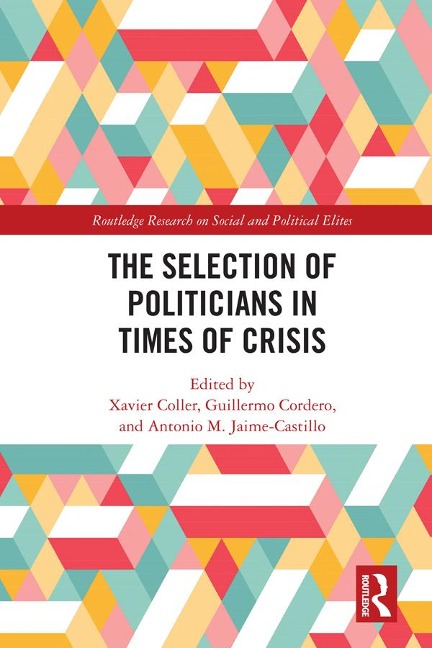
Selecting candidates for elections is a major goal of political parties and a major function of political regimes in democratic systems. With the negative effects of the economic crisis being seen to translate into changes in voting patterns, and citizens using elections to punish parties in government for their roles in economic mismanagement or lack of response to the global economic crisis, a broad examination is required. This book is presented as the first comparative study of the effects of the political crisis on candidate selection covering a large number of countries. Using an integrated framework and unified strategy, it examines how new relevant political actors are really implementing participative ways of candidate selection, whether they are being innovative in their political environments and the extent to which traditionally mainstream parties are changing selection procedures to have more open and inclusive mechanisms as part of internal, or intra-party, democracy. The book illuminates these issues through empirically driven chapters explaining changes in the way candidates for parliaments are selected in countries where new parties have emerged and consolidated, or where traditional mainstream parties have adopted new mechanisms of selection affecting (if not challenging) traditional politics. Additionally, therefore, this work will serve as a response to some current debates in the discipline on the consequences of the democratization of party life, relating political participation and representation. This text will be of key interest to scholars and students of political parties, organizational change, social and political elites and more broadly to comparative politics and sociology.
Xavier Coller is Professor of Sociology at the Universidad Pablo de Olavide in Seville, Spain. Guillermo Cordero is Assistant Professor of Political Science at the Universidad Autónoma de Madrid, Spain. Antonio M. Jaime-Castillo is Associate Professor of Sociology at the Universidad de Málaga, Spain.
1. Economic Crisis and the Selection of Candidates [Xavier Coller, Guillermo Cordero, and Antonio M. Jaime-Castillo] 2. Political Crisis and its Effect on Candidate Selection [Klaus Detterbeck] 3. Austria: Tradition and Innovation in Legislative Candidate Selection [Marcelo Jenny] 4. The Curious Stability of Candidate Selection Methods in Belgium in Times of Crisis [Audrey Vandeleene and Lieven De Winter] 5. Leader as a Focal Point: New Political Entrepreneurs and Candidate Selection in the Czech Republic [Vít HlouSek and Lubomír Kopecek] 6. Contagion Effects by the AfD? Candidate Selection in Germany [Marion Reiser] 7. New Actors, Old Practices? Candidate Selection and Recruitment Patterns in Greece [Manina Kakepaki] 8. Representation in Crisis: The Icelandic Case [Gunnar Helgi Kristinsson and Eva H. Önnudóttir] 9. Candidate Selection in Ireland: New Parties and Candidate Diversity [Theresa Reidy] 10. The Hurricane in Parliament: M5s and its MPs, Selection Procedures, Profiles and Legislative Behavior [Antonella Seddone and Stefano Rombi] 11: New Political Parties in Latin America: A New Way of Selection and New Elite Profiles? [Mélany Barragán and Asbel Bohigues] 12. Party-protective Institutions and Candidate Selection for Mexico's Chamber of Deputies [Joy Langston] 13. The Limits of Party Change: Candidate Selection in Portugal in the Age of Crisis [Marco Lisi] 14. New Parties and New Ways of Candidate Selection in Spain [Antonio M. Jaime-Castillo, Xavier Coller, and Guillermo Cordero] 15. US Politics in a Post Crisis Era: Populism, Polarization and Candidate Selection [Patricia Craig] 16. The Effects of the Great Recession on Candidate Selection in America and Europe [Guillermo Cordero, Xavier Coller and Antonio M. Jaime-Castillo]
Dieses eBook wird im PDF-Format geliefert und ist mit einem Adobe Kopierschutz (DRM) versehen. Sie können dieses eBook mit allen Geräten lesen, die das PDF-Format und den Adobe Kopierschutz (DRM) unterstützen.
Zum Beispiel mit den folgenden Geräten:
• tolino Reader
Laden Sie das eBook direkt über den Reader-Shop auf dem tolino herunter oder übertragen Sie das eBook auf Ihren tolino mit einer kostenlosen Software wie beispielsweise Adobe Digital Editions.
• Sony Reader & andere eBook Reader
Laden Sie das eBook direkt über den Reader-Shop herunter oder übertragen Sie das eBook mit der kostenlosen Software Sony READER FOR PC/Mac oder Adobe Digital Editions auf ein Standard-Lesegeräte mit epub- und Adobe DRM-Unterstützung.
• Tablets & Smartphones
Möchten Sie dieses eBook auf Ihrem Smartphone oder Tablet lesen, finden Sie hier unsere kostenlose Lese-App für iPhone/iPad und Android Smartphone/Tablets.
• PC & Mac
Lesen Sie das eBook direkt nach dem Herunterladen mit einer kostenlosen Lesesoftware, beispielsweise Adobe Digital Editions, Sony READER FOR PC/Mac oder direkt über Ihre eBook-Bibliothek in Ihrem Konto unter „Meine eBooks“ - „online lesen“.
Schalten Sie das eBook mit Ihrer persönlichen Adobe ID auf bis zu sechs Geräten gleichzeitig frei.
Bitte beachten Sie, dass die Kindle-Geräte das Format nicht unterstützen und dieses eBook somit nicht auf Kindle-Geräten lesbar ist.