Und dann auf "Zum Home-Bildschirm [+]".

Stöbern
genialokal zum Startbildschirm hinzufügen
Installieren Sie die genialokal App auf Ihrem Startbildschirm für einen schnellen Zugriff und eine komfortable Nutzung.
Installieren Sie die genialokal App auf Ihrem Startbildschirm für einen schnellen Zugriff und eine komfortable Nutzung.
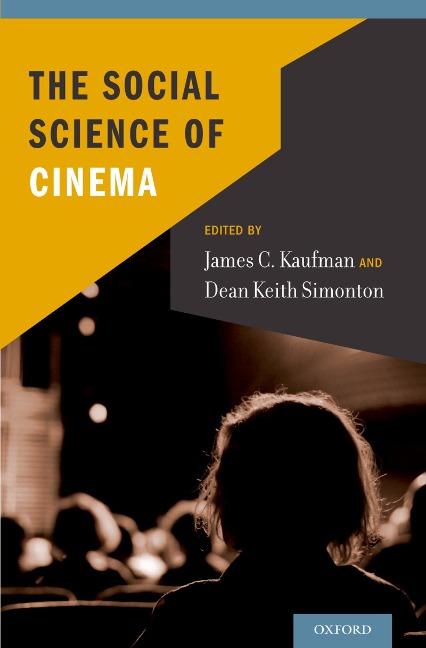
Ever since motion pictures first landed on screen, there have been many key questions that the studios and movie watchers have tried to answer. What makes a movie an Oscar winner? How does one movie become a hit and another movie flop? Why do some films earn critical acclaim while other films become critical turkeys or bombs? How do audiences perceive film? What makes a movie resonate with a viewer? Are we unduly influenced by negative behaviors on screen? These questions have spurred debates, discussions, and many theories. Until the last two decades, however, it was quite rare to have the issues approached from a scientific viewpoint. The Social Science of Cinema compiles research from such varied disciplines as psychology, economics, sociology, business, and communications to find the best empirical research being done on the movies, based on perspectives that many filmgoers have never considered. Essays explore such topics as the specific factors that influence whether movies make money, win awards, or flop; how our personality impacts on our viewing preferences; issues of gender inequity on screen; the relationship between visual perception and the way movies are edited; and many more. This book attempts the ultimate act of figuring out the mystery behind the movies - what makes them so memorable to us, what makes them this century's leading works of art, and how this art intersects with the business of making money.
James C. Kaufman, Ph.D., is Professor of Educational Psychology at the University of Connecticut. An international leader in the field of creativity, he has published 23 books and more than 200 papers. He is the president of the American Psychological Association's Division 10 (Aesthetics, Creativity, and the Arts) and the founding editor of Psychology of Popular Media Culture. Dean Keith Simonton, Ph.D., is Distinguished Professor of Psychology at the University of California, Davis. Internationally known for his research on genius, creativity, and leadership, he has produced over 450 publications that have received more than 11,000 citations, and 180 publications have been cited at least 10 times. He is the winner of APA's Division 46 Distinguished Scientific Contribution to Media Psychology. His Google Scholar h index is 51.
Acknowledgements Dedication List of Contributors
Introduction: Social Science of the Cinema: Fade In James C. Kaufman and Dean Keith Simonton
Section One: The Creation 1. Writing for success: Screenplays and cinematic impact Dean Keith Simonton 2. Sell by date? Examining the shelf life and effects of female actors in popular films Stacy L. Smith, Amy Granados, Marc Choueiti and Katherine M. Pieper 3. Resolving the paradox of film music through a cognitive narrative approach to film comprehension Annabel Cohen
Section Two: The Audience 4. What type of movie person are you? Understanding individual differences in film preferences and uses: A psychographic approach Tomas Chamorro-Premuzic, Andrea Kallias, and Anne Hsu 5. Film through the human visual system: Finding patterns and limits Jordan E. DeLong, Kaitlin L. Brunick, and James E. Cutting 6. Self and the cinematic experience in the age of electronic transmission Gerald C. Cupchik and Michelle C. Hilscher
Section Three: The Production 7. The producer-director dyad: Managing the faultline between art and commerce Joris J. Ebbers, Nachoem M. Wijnberg, and Pawan V. Bhansing 8. Networks and rewards among Hollywood artists: Evidence for a social structural ordering of creativity Gino Cattani and Simone Ferriani 9. Strategic assets and performance across institutional environments Allègre L. Hadida
Section Four: The Reception 10. Analyzing the Academy Awards: Factors associated with winning and when surprises occur Iain Pardoe and Dean Keith Simonton 11. Responses to and judgments of acting on film Thalia R. Goldstein 12. As good as it gets? Blockbusters and the inequality of box office results since 1950 Victor Fernandez-Blanco, Victor Ginsburgh, Juan Prieto-Rodriguez, and Sheila Weyers
End Section 13. Social Science of the Cinema: Fade Out Joshua Butler and James C. Kaufman
Dieses eBook wird im PDF-Format geliefert und ist mit einem Adobe Kopierschutz (DRM) versehen. Sie können dieses eBook mit allen Geräten lesen, die das PDF-Format und den Adobe Kopierschutz (DRM) unterstützen.
Zum Beispiel mit den folgenden Geräten:
• tolino Reader
Laden Sie das eBook direkt über den Reader-Shop auf dem tolino herunter oder übertragen Sie das eBook auf Ihren tolino mit einer kostenlosen Software wie beispielsweise Adobe Digital Editions.
• Sony Reader & andere eBook Reader
Laden Sie das eBook direkt über den Reader-Shop herunter oder übertragen Sie das eBook mit der kostenlosen Software Sony READER FOR PC/Mac oder Adobe Digital Editions auf ein Standard-Lesegeräte mit epub- und Adobe DRM-Unterstützung.
• Tablets & Smartphones
Möchten Sie dieses eBook auf Ihrem Smartphone oder Tablet lesen, finden Sie hier unsere kostenlose Lese-App für iPhone/iPad und Android Smartphone/Tablets.
• PC & Mac
Lesen Sie das eBook direkt nach dem Herunterladen mit einer kostenlosen Lesesoftware, beispielsweise Adobe Digital Editions, Sony READER FOR PC/Mac oder direkt über Ihre eBook-Bibliothek in Ihrem Konto unter „Meine eBooks“ - „online lesen“.
Schalten Sie das eBook mit Ihrer persönlichen Adobe ID auf bis zu sechs Geräten gleichzeitig frei.
Bitte beachten Sie, dass die Kindle-Geräte das Format nicht unterstützen und dieses eBook somit nicht auf Kindle-Geräten lesbar ist.