Und dann auf "Zum Home-Bildschirm [+]".

Stöbern
genialokal zum Startbildschirm hinzufügen
Installieren Sie die genialokal App auf Ihrem Startbildschirm für einen schnellen Zugriff und eine komfortable Nutzung.
Installieren Sie die genialokal App auf Ihrem Startbildschirm für einen schnellen Zugriff und eine komfortable Nutzung.
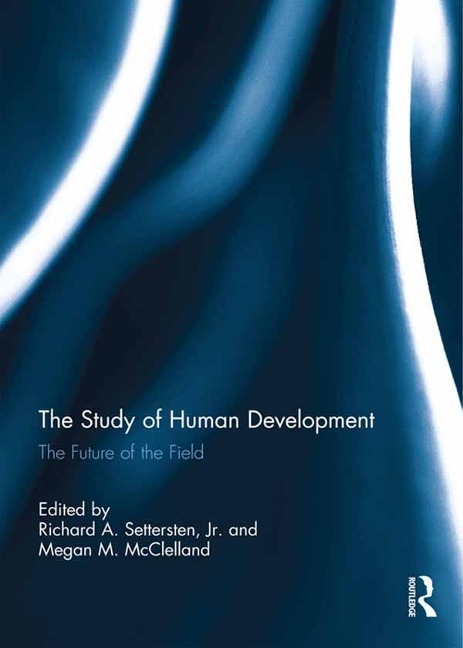
If you had just one wish for the study of human development, what would it be? How would it advance the field? And what would it take for your vision to be realized? This was the charge given to twenty-eight scholars, coming from different disciplines and fields, and who study different periods of the life course. This book compiles provocative contributions from a wide range of established scholars, organized into seven thematic areas: conceptual advances; systems, levels, and contexts; individual differences; methodological advances; harnessing science for human welfare and social justice; underexplored life course dynamics; and interdisciplinary collaboration and playing well with others. This book was originally published as a special issue of Research in Human Development.
Richard A. Settersten is Professor of Human Development and Family Sciences and Endowed Director of the Hallie Ford Center for Healthy Children and Families at Oregon State University, USA. His research examines transitions across the life course, and has most recently focused on the longer and more uncertain process of becoming an adult today. Megan M. McClelland is the Katherine E. Smith Professor of Healthy Children and Families in Human Development and Family Sciences at Oregon State University, USA. Her research focuses on optimizing children's development, especially as it relates to children's self-regulation from early childhood to adulthood.
Introduction: Just One Wish for the Study of Human Development Part I: Conceptual Advances 1. Taking Conceptual Analyses Seriously 2. On the Need to Seriously Challenge the Empiricist Side of the Nativist-Empiricist Debate 3. Eliminating Genetic Reductionism from Developmental Science 4. How Can Developmental Systems Theories Cope With Free Will? The Importance of Stress-Related Growth and Mindfulness Part II: Systems, Levels, and Contexts 5. An Observatory for Life Courses: Populations, Countries, Institutions, and History 6. Toward a Vigorous Incorporation of Culture in the Study of Human Development 7. Right in Front of Us: Taking Everyday Life Seriously in the Study of Human Development 8. Relationships in Time and the Life Course: The Significance of Linked Lives Part III: Individual Differences 9. Tracing Three Lines of Personality Development 10. Towards a New Synthesis for Development in Adulthood 11. Why Should Cognitive Developmental Psychology Remember that Individuals Are Different? Part IV: Methodological Advances 12. Fellow Scholars: Let's Liberate Ourselves from Scientific Machinery 13. Toward an Empirically Robust Science of Human Development 14. Getting at Developmental Processes Through Experiments 15. Methodological Practice as Matters of Justice, Justification, and the Pursuit of Verisimilitude Part V: Harnessing Science for Human Welfare and Social Justice 16. Human Developmental Science for Social Justice 17. Understanding and Watering the Seeds of Compassion 18. Research that Helps Move Us Closer to a World Where Each Child Thrives 19. Mothering Mothers Part VI: Underexplored Life Course Dynamics 20. Toward a New Science of Academic Engagement 21. Recognizing Civic Engagement as a Critical Domain of Human Development 22. Contribution of Adolescence to the Life Course: What Matters Most in the Long Run? 23. Mind the Gap in the Middle: A Call to Study Midlife Part VII: Interdisciplinary Collaboration and Playing Well With Others 24. Towards Truly Interdisciplinary Research on Human Development 25. Teams Do It Better! 26. Let's Work Together: Towards Interdisciplinary Collaboration 27. The Study That Got Away 28. Understanding Human Development: Toward a Comprehensive Framework
Dieses eBook wird im PDF-Format geliefert und ist mit einem Adobe Kopierschutz (DRM) versehen. Sie können dieses eBook mit allen Geräten lesen, die das PDF-Format und den Adobe Kopierschutz (DRM) unterstützen.
Zum Beispiel mit den folgenden Geräten:
• tolino Reader
Laden Sie das eBook direkt über den Reader-Shop auf dem tolino herunter oder übertragen Sie das eBook auf Ihren tolino mit einer kostenlosen Software wie beispielsweise Adobe Digital Editions.
• Sony Reader & andere eBook Reader
Laden Sie das eBook direkt über den Reader-Shop herunter oder übertragen Sie das eBook mit der kostenlosen Software Sony READER FOR PC/Mac oder Adobe Digital Editions auf ein Standard-Lesegeräte mit epub- und Adobe DRM-Unterstützung.
• Tablets & Smartphones
Möchten Sie dieses eBook auf Ihrem Smartphone oder Tablet lesen, finden Sie hier unsere kostenlose Lese-App für iPhone/iPad und Android Smartphone/Tablets.
• PC & Mac
Lesen Sie das eBook direkt nach dem Herunterladen mit einer kostenlosen Lesesoftware, beispielsweise Adobe Digital Editions, Sony READER FOR PC/Mac oder direkt über Ihre eBook-Bibliothek in Ihrem Konto unter „Meine eBooks“ - „online lesen“.
Schalten Sie das eBook mit Ihrer persönlichen Adobe ID auf bis zu sechs Geräten gleichzeitig frei.
Bitte beachten Sie, dass die Kindle-Geräte das Format nicht unterstützen und dieses eBook somit nicht auf Kindle-Geräten lesbar ist.