Und dann auf "Zum Home-Bildschirm [+]".

Stöbern
genialokal zum Startbildschirm hinzufügen
Installieren Sie die genialokal App auf Ihrem Startbildschirm für einen schnellen Zugriff und eine komfortable Nutzung.
Installieren Sie die genialokal App auf Ihrem Startbildschirm für einen schnellen Zugriff und eine komfortable Nutzung.
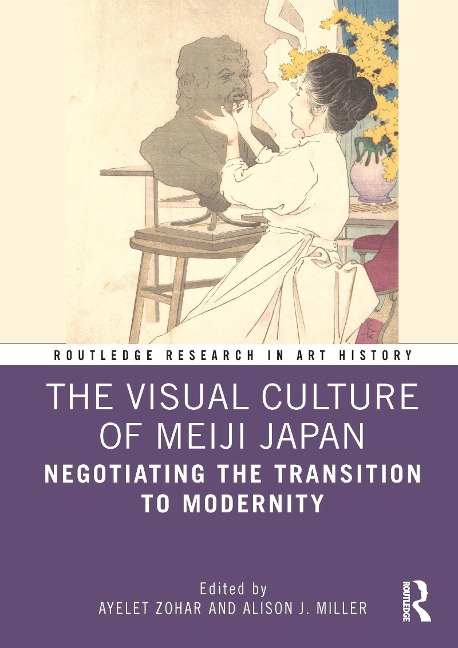
This volume examines the visual culture of Japan's transition to modernity, from 1868 to the first decades of the twentieth century. Through this important moment in Japanese history, contributors reflect on Japan's transcultural artistic imagination vis-a-vis the discernment, negotiation, assimilation, and assemblage of diverse aesthetic concepts and visual pursuits. The collected chapters show how new cultural notions were partially modified and integrated to become the artistic methods of modern Japan, based on the hybridization of major ideologies, visualities, technologies, productions, formulations, and modes of representation. The book presents case studies of creative transformation demonstrating how new concepts and methods were perceived and altered to match views and theories prevalent in Meiji Japan, and by what means different practitioners negotiated between their existing skills and the knowledge generated from incoming ideas to create innovative modes of practice and representation that reflected the specificity of modern Japanese artistic circumstances. The book will be of interest to scholars working in art history, Japanese studies, Asian studies, and Japanese history, as well as those who use approaches and methods related to globalization, cross-cultural studies, transcultural exchange, and interdisciplinary studies.
Ayelet Zohar is Senior Lecturer of History of Art at Tel Aviv University. Alison J. Miller is Assistant Professor of Art History at the University of the South (Sewanee).
Introduction. In-Between Temporality and Spatiality: Visual Convergences and Meiji Hybridity Ayelet Zohar and Alison J. Miller - Between Kanji and Hiragana: An Allegorical Reading of the Katakana (Non-) Space Michio Hayashi - Modernization as Rejection of Westernization: The Case of Japanese Calligraphy Eugenia Bogdanova-Kummer - Classical Greece in Japan and Why It Matters: A Postcolonial Perspective Michael Lucken - Medievalism, Modernity, and Militarism in Imperial Japan Oleg Benesch - Dinner Table Negotiations: Tableware and the presentation of Japan at the Enryokan Mary Redfern - Imaging Industry: Woodblock Prints, Factory Women, and Sericulture in Meiji Japan Alison J. Miller - Negotiating Realism: Kawabata Gyokusho's Strive for Modern Japanese Painting Katharina Rode - Mural Paintings in late 19th and early 20th century Western-style Public Buildings in Japan Emiko Yamanashi - Framing Scenery: A Potential History of Landscape Photography in Colonial Hokkaido Ayelet Zohar - Colors of Empire: Watercolor in Meiji Japan Chinghsin Wu - Exploring Tokyo's Hidden Spaces in Nagai Kafu's Hiyorigeta (Fair-Weather Clogs, 1914) with Charles Baudelaire's Flâneur and Walter Benjamin's Porosity Evelyn Schulz
Dieses eBook wird im PDF-Format geliefert und ist mit einem Adobe Kopierschutz (DRM) versehen. Sie können dieses eBook mit allen Geräten lesen, die das PDF-Format und den Adobe Kopierschutz (DRM) unterstützen.
Zum Beispiel mit den folgenden Geräten:
• tolino Reader
Laden Sie das eBook direkt über den Reader-Shop auf dem tolino herunter oder übertragen Sie das eBook auf Ihren tolino mit einer kostenlosen Software wie beispielsweise Adobe Digital Editions.
• Sony Reader & andere eBook Reader
Laden Sie das eBook direkt über den Reader-Shop herunter oder übertragen Sie das eBook mit der kostenlosen Software Sony READER FOR PC/Mac oder Adobe Digital Editions auf ein Standard-Lesegeräte mit epub- und Adobe DRM-Unterstützung.
• Tablets & Smartphones
Möchten Sie dieses eBook auf Ihrem Smartphone oder Tablet lesen, finden Sie hier unsere kostenlose Lese-App für iPhone/iPad und Android Smartphone/Tablets.
• PC & Mac
Lesen Sie das eBook direkt nach dem Herunterladen mit einer kostenlosen Lesesoftware, beispielsweise Adobe Digital Editions, Sony READER FOR PC/Mac oder direkt über Ihre eBook-Bibliothek in Ihrem Konto unter „Meine eBooks“ - „online lesen“.
Schalten Sie das eBook mit Ihrer persönlichen Adobe ID auf bis zu sechs Geräten gleichzeitig frei.
Bitte beachten Sie, dass die Kindle-Geräte das Format nicht unterstützen und dieses eBook somit nicht auf Kindle-Geräten lesbar ist.