Und dann auf "Zum Home-Bildschirm [+]".

Stöbern
genialokal zum Startbildschirm hinzufügen
Installieren Sie die genialokal App auf Ihrem Startbildschirm für einen schnellen Zugriff und eine komfortable Nutzung.
Installieren Sie die genialokal App auf Ihrem Startbildschirm für einen schnellen Zugriff und eine komfortable Nutzung.
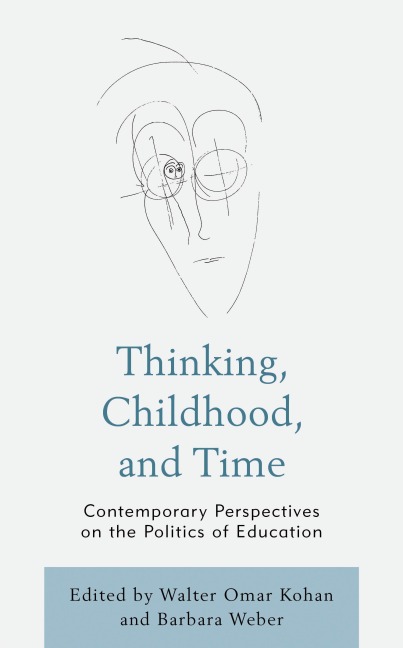
Thinking, Childhood, and Time: Contemporary Perspectives on the Politics of Education is an interdisciplinary exploration of the notion of childhood and its place in a philosophical education. Contributors consider children's experiences of time, space, embodiment, and thinking. By acknowledging Hannah Arendt's notion that every child brings a new beginning into the world, they address the question of how educators can be more responsive to the Otherness that childhood offers, while assuming that most educational models follow either a chronological model of child development or view children as human beings that are lacking.
The contributors explore childhood as a philosophical concept in children, adults, and even beyond human beings-Childhood as a (forgotten) dimension of the world. Contributors also argue that a pedagogy that does not aim for an "exodus of childhood," but rather responds to the arrival of a new human being responsibly (dialogically), fosters a deeper appreciation of the newness that children bring in order to sensitize us for our own Childhood as adults as well and allow us to welcome other forms of childhood in the world. As a whole, this book argues that the experience of natality, such as the beginning of life, is not chronologically determined, but rather can occur more than once in a human life and beyond. Scholars of philosophy, education, psychology, and childhood studies will find this book particularly useful.
Walter Omar Kohan is professor in the Childhood Studies Department at the State University of Rio de Janeiro.
Barbara Weber is associate professor and program chair of the Interdisciplinary Studies Graduate Program (ISGP) at the University of British Columbia.
Acknowledgments
Part One: Phenomenological Explorations of Time, Thinking and Embodiment
Chapter 1: Childhood and the Genesis of Time: A Phenomenological Approach
James Mensch
Chapter 2: Child and Time: A Phenomenological Journey into the Human Conditions of Education
Barbara Weber
Chapter 3: Think Like a Girl: Scout's Time and Experience in To Kill a Mockingbird
Peter Costello
Chapter 4: Listening, Phronein and the First Principle of Happiness
Pablo Muruzábal Lamberti
Chapter 5: Thinking and the Play of Being
Michael A. Bonnett
Chapter 6: Philosophia Ludens for Children: A Proposal to Play and to Think
Annalisa Caputo
Part Two: Decolonial and Postructuralist Perspectives on the Politics of Education
Chapter 7: Becoming Child: Wild Being and the Post-Human
David Kennedy
Chapter 8: Paulo Freire and the Childhood of a Philosophical and Educational Life
Walter Omar Kohan
Chapter 9: Democratic Child's Play: Natality, Responsible Education, and Decolonial Praxis
Toby Rollo
Chapter 10:
Dieses eBook wird im PDF-Format geliefert und ist mit einem Adobe Kopierschutz (DRM) versehen. Sie können dieses eBook mit allen Geräten lesen, die das PDF-Format und den Adobe Kopierschutz (DRM) unterstützen.
Zum Beispiel mit den folgenden Geräten:
• tolino Reader
Laden Sie das eBook direkt über den Reader-Shop auf dem tolino herunter oder übertragen Sie das eBook auf Ihren tolino mit einer kostenlosen Software wie beispielsweise Adobe Digital Editions.
• Sony Reader & andere eBook Reader
Laden Sie das eBook direkt über den Reader-Shop herunter oder übertragen Sie das eBook mit der kostenlosen Software Sony READER FOR PC/Mac oder Adobe Digital Editions auf ein Standard-Lesegeräte mit epub- und Adobe DRM-Unterstützung.
• Tablets & Smartphones
Möchten Sie dieses eBook auf Ihrem Smartphone oder Tablet lesen, finden Sie hier unsere kostenlose Lese-App für iPhone/iPad und Android Smartphone/Tablets.
• PC & Mac
Lesen Sie das eBook direkt nach dem Herunterladen mit einer kostenlosen Lesesoftware, beispielsweise Adobe Digital Editions, Sony READER FOR PC/Mac oder direkt über Ihre eBook-Bibliothek in Ihrem Konto unter „Meine eBooks“ - „online lesen“.
Schalten Sie das eBook mit Ihrer persönlichen Adobe ID auf bis zu sechs Geräten gleichzeitig frei.
Bitte beachten Sie, dass die Kindle-Geräte das Format nicht unterstützen und dieses eBook somit nicht auf Kindle-Geräten lesbar ist.