Und dann auf "Zum Home-Bildschirm [+]".

Stöbern
genialokal zum Startbildschirm hinzufügen
Installieren Sie die genialokal App auf Ihrem Startbildschirm für einen schnellen Zugriff und eine komfortable Nutzung.
Installieren Sie die genialokal App auf Ihrem Startbildschirm für einen schnellen Zugriff und eine komfortable Nutzung.
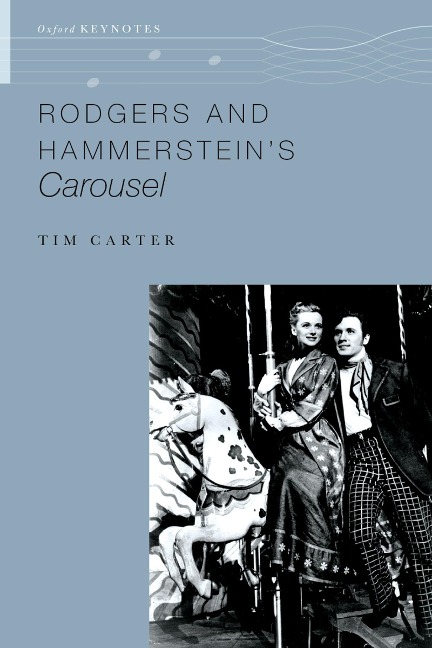
Carousel (1945), with music by Richard Rodgers and the book and lyrics by Oscar Hammerstein II, was their second collaboration following the surprising success of Oklahoma! (1943). They worked again with Theresa Helburn and Lawrence Langner of the Theatre Guild (producers), Rouben Mamoulian (director), and Agnes de Mille (choreographer). But with Oklahoma! still running to sell-out houses, they needed to do something quite different. Based on a play, Liliom (1909), by the Hungarian playwright Ferenc Molnár, Carousel took Broadway musical theater in far darker directions because of its subject matter-the protagonist, Billy Bigelow, is wholly an anti-hero-and also given its extensive music that some claimed came close to opera. The action is shifted from a gritty working-class suburb of Budapest to the New England coast (Maine), but the themes remain the same as two social misfits try to survive harsh economic times. Billy Bigelow is unemployed, prone to domestic violence, and dies in the course of committing a robbery; Julie Jordan sticks by him through thick and thin; and the show seeks some manner of redemption for both of them as Billy is given a day back on earth to do some good for his wife and their daughter. Troubling though these matters are nowadays, they fit squarely in the context of a country moving through the end of World War II to an uncertain future. Not for nothing had composers such as Giacomo Puccini and Kurt Weill already tried to persuade Molnár to release his play. It also led Rodgers and Hammerstein to new heights: songs such as "If I Loved You," Billy's "Soliloquy," and "You'll Never Walk Alone" transformed the American musical. In this book, we discover how and why they came about, and exactly what Carousel was trying to achieve.
Tim Carter is the author of books on opera and musical theater ranging from Monteverdi through Mozart to Rodgers and Hammerstein. Prior to moving to the University of North Carolina at Chapel Hill in 2001, he was head of the Music Department at Royal Holloway, University of London.
Contents
Acknowledgments Sources and permissions List of illustrations, tables, and music examples
1: Carousel in Context
2: Molnár's Liliom: From Budapest to Broadway (and Beyond) Three film versions The Theatre Guild, American musical theater, and a would-be Carousel Molnár sees Oklahoma!
3: Creating Carousel Some dilemmas Hammerstein's draft scenario Casting, rehearsals, and tryouts
4: A Duet, a Soliloquy, and a Ballet The "Bench scene" "Soliloquy" "Louise's Ballet"
5: The Problems of an Ending Up or down? A post-war message
6: From Stage to Screen (and Back) The search for "American opera" Carousel on film Restoring Carousel
Appendix: Hammerstein's Scenario for Carousel Further Reading, Listening, and Viewing Notes Index
Dieses eBook wird im PDF-Format geliefert und ist mit einem Adobe Kopierschutz (DRM) versehen. Sie können dieses eBook mit allen Geräten lesen, die das PDF-Format und den Adobe Kopierschutz (DRM) unterstützen.
Zum Beispiel mit den folgenden Geräten:
• tolino Reader
Laden Sie das eBook direkt über den Reader-Shop auf dem tolino herunter oder übertragen Sie das eBook auf Ihren tolino mit einer kostenlosen Software wie beispielsweise Adobe Digital Editions.
• Sony Reader & andere eBook Reader
Laden Sie das eBook direkt über den Reader-Shop herunter oder übertragen Sie das eBook mit der kostenlosen Software Sony READER FOR PC/Mac oder Adobe Digital Editions auf ein Standard-Lesegeräte mit epub- und Adobe DRM-Unterstützung.
• Tablets & Smartphones
Möchten Sie dieses eBook auf Ihrem Smartphone oder Tablet lesen, finden Sie hier unsere kostenlose Lese-App für iPhone/iPad und Android Smartphone/Tablets.
• PC & Mac
Lesen Sie das eBook direkt nach dem Herunterladen mit einer kostenlosen Lesesoftware, beispielsweise Adobe Digital Editions, Sony READER FOR PC/Mac oder direkt über Ihre eBook-Bibliothek in Ihrem Konto unter „Meine eBooks“ - „online lesen“.
Schalten Sie das eBook mit Ihrer persönlichen Adobe ID auf bis zu sechs Geräten gleichzeitig frei.
Bitte beachten Sie, dass die Kindle-Geräte das Format nicht unterstützen und dieses eBook somit nicht auf Kindle-Geräten lesbar ist.