Und dann auf "Zum Home-Bildschirm [+]".

Stöbern
genialokal zum Startbildschirm hinzufügen
Installieren Sie die genialokal App auf Ihrem Startbildschirm für einen schnellen Zugriff und eine komfortable Nutzung.
Installieren Sie die genialokal App auf Ihrem Startbildschirm für einen schnellen Zugriff und eine komfortable Nutzung.

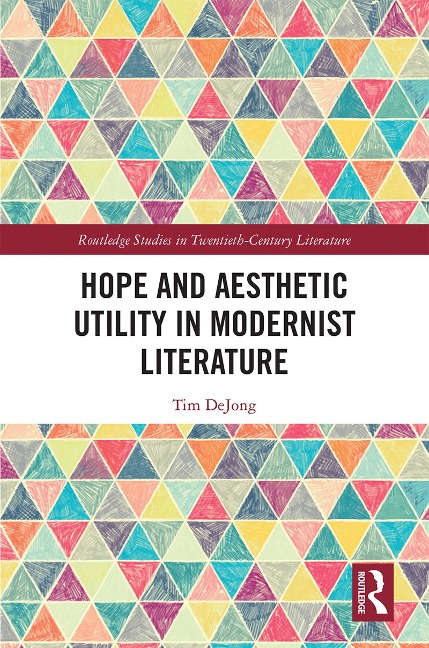
"Hope" and "modernism" are two words that are not commonly linked. Moving from much-discussed negative affects to positive forms of feeling, Hope and Aesthetic Utility in Modernist Literature argues that they should be. This book contends that much of modernist writing and thought reveals a deeply held confidence about the future, one premised on the social power of art itself. In chapters ranging across a diverse array of canonical writers - Henry James, D.W. Griffith, H.D., Melvin Tolson, and Samuel Beckett - this text locates in their works an optimism linked by a common faith in the necessity of artistic practice for cultural survival. In this way, the famously self-attentive nature of modernism becomes a means, for its central thinkers and artists, of reflecting on what DeJong calls aesthetic utility: the unpredictable, ungovernable capacity of the work of art to shape the future even while envisioning it.
Tim DeJong received his Ph.D. in English at Western University and is currently employed as a Lecturer in the English Department at Baylor University. His academic essays have been published in Modernist Cultures, Research in African Literatures, College Literature, Texas Studies in Literature and Language, and English Studies in Canada. His poetry appears in Rattle, Roanoke Review, Booth, Kindred, Nomadic Journal, Common Ground Review, and other journals. He lives with his wife and three children in Woodway, Texas.
Acknowledgments Introduction: The Contexts of Modernist Hope Chapter One: The Image in the Mirror: Aesthetic Utility in Late James Chapter Two: Screened Anxieties: Hope and Fear in D.W. Griffith's The Birth of a Nation Chapter Three: Unpredictable Texts: H.D.'s Grammar of Creation Chapter Four: Recovering Democracy: Unfashionable Hope in Melvin B. Tolson's Libretto for the Republic of Liberia Chapter Five: Refusing Silence: Art as Deferment in Waiting for Godot and Endgame Coda: Legacies of Modernist Hope: Poetic Unknowing and the Call to Wonder