Und dann auf "Zum Home-Bildschirm [+]".

Stöbern
genialokal zum Startbildschirm hinzufügen
Installieren Sie die genialokal App auf Ihrem Startbildschirm für einen schnellen Zugriff und eine komfortable Nutzung.
Installieren Sie die genialokal App auf Ihrem Startbildschirm für einen schnellen Zugriff und eine komfortable Nutzung.
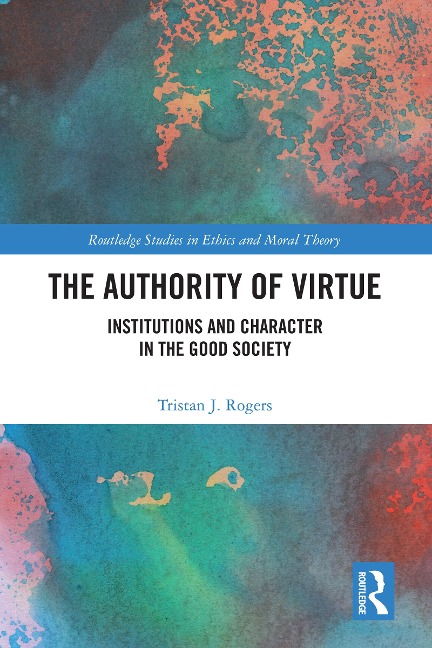
This book provides a unified account of the connection between justice and the good life. It argues that the virtues of character require institutions, while good institutions enable persons to live together virtuously. Although virtue ethics and political philosophy are rich and sophisticated philosophical traditions, there has been an unfortunate divergence, in theory and practice, between the virtues of character and the virtues of institutions. This book has two primary purposes. First, it reorients political philosophy around the concept of the good life. To do so, the author addresses the problem of political authority from a virtue ethics perspective. He also considers whether a political theory oriented around the good life is compatible with Rawls's notion of reasonable pluralism. Second, the book explains the relationship between the virtues of institutions and the virtues of character. The author shows how institutions support the development and exercise of the virtues of character, while examining specific other-regarding virtues such as justice and friendship. The Authority of Virtue will appeal to scholars and advanced students working in virtue ethics, social and political philosophy, ancient philosophy, and political theory.
Tristan J. Rogers is Lecturer in the Departments of Philosophy at California State University, Sacramento and the University of California, Davis. He completed his PhD at the University of Arizona in 2017. His work also appears in Journal of the American Philosophical Association, Journal of Social Philosophy, and The Journal of Value Inquiry. tristanjrogers.com
1. Introduction Part I: Living Well in a Political Community 2. Virtue and Political Authority 3. Living Well and The Fact of Reasonable Pluralism Part II: The Role of Virtuous Persons in Good Institutions 4. Justice as Lawfulness 5. The Common Good of Political Friendship Part III: The Role of Good Institutions in Living Well 6. The Constraining Role of Institutions in Living Well 7. The Formative Role of Institutions in Living Well 8. Conclusion
Dieses eBook wird im PDF-Format geliefert und ist mit einem Adobe Kopierschutz (DRM) versehen. Sie können dieses eBook mit allen Geräten lesen, die das PDF-Format und den Adobe Kopierschutz (DRM) unterstützen.
Zum Beispiel mit den folgenden Geräten:
• tolino Reader
Laden Sie das eBook direkt über den Reader-Shop auf dem tolino herunter oder übertragen Sie das eBook auf Ihren tolino mit einer kostenlosen Software wie beispielsweise Adobe Digital Editions.
• Sony Reader & andere eBook Reader
Laden Sie das eBook direkt über den Reader-Shop herunter oder übertragen Sie das eBook mit der kostenlosen Software Sony READER FOR PC/Mac oder Adobe Digital Editions auf ein Standard-Lesegeräte mit epub- und Adobe DRM-Unterstützung.
• Tablets & Smartphones
Möchten Sie dieses eBook auf Ihrem Smartphone oder Tablet lesen, finden Sie hier unsere kostenlose Lese-App für iPhone/iPad und Android Smartphone/Tablets.
• PC & Mac
Lesen Sie das eBook direkt nach dem Herunterladen mit einer kostenlosen Lesesoftware, beispielsweise Adobe Digital Editions, Sony READER FOR PC/Mac oder direkt über Ihre eBook-Bibliothek in Ihrem Konto unter „Meine eBooks“ - „online lesen“.
Schalten Sie das eBook mit Ihrer persönlichen Adobe ID auf bis zu sechs Geräten gleichzeitig frei.
Bitte beachten Sie, dass die Kindle-Geräte das Format nicht unterstützen und dieses eBook somit nicht auf Kindle-Geräten lesbar ist.