Stöbern
genialokal zum Startbildschirm hinzufügen
Installieren Sie die genialokal App auf Ihrem Startbildschirm für einen schnellen Zugriff und eine komfortable Nutzung.
Installieren Sie die genialokal App auf Ihrem Startbildschirm für einen schnellen Zugriff und eine komfortable Nutzung.
Tippen Sie einfach auf Teilen:
 Und dann auf "Zum Home-Bildschirm [+]".
Ihr gewünschter Artikel ist in 0 Buchhandlungen vorrätig - wählen Sie hier eine Buchhandlung in Ihrer Nähe aus:

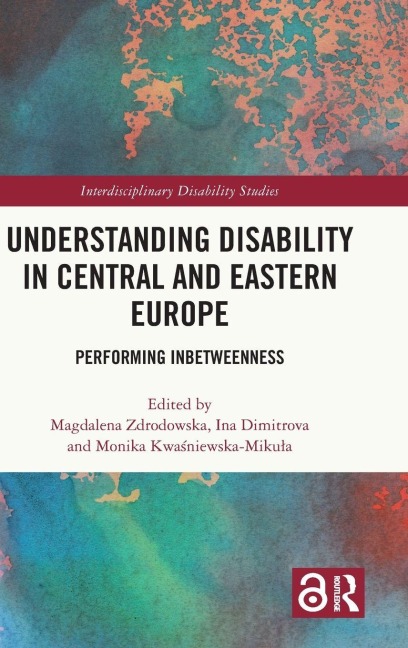
This collection brings together activism-informed disability research conducted both IN and FROM the region by scholars and activists representing local communities and languages. Disability in Central and Eastern Europe is situated between ethnic and national identities and languages, socialist/communist and harshly capitalist and neoliberal orders, shifting state borders, policies and regimes, and the fact that disability studies is not yet an academically institutionalised field that manoeuvres between different disciplines. This inherent inbetweenness fuels disability studies in CEE with the diversity of the rich and diverse systems of knowledge and experience. A carefully curated selection of chapters is centred around three main themes that animate contemporary disability studies in CEE: - local disability histories that contribute to global disability history - disability activism and (auto-)biographical methods in disability studies - the impact of artistic practices and texts, and accessibility of technology Bringing together a diverse group of researchers working in Bosnian, Bulgarian, Croatian, Czech, Hungarian, Latvian, Polish, Polish Sign Language, Serbian and Slovenian, it will be of interest to all scholars and students of disability studies, sociology, social policy, cultural studies and regional studies more broadly.
Magdalena Zdrodowska is an Assistant Professor in the Institute of Audiovisual Arts, Jagiellonian University in Kraków, Poland. She is an anthropologist, and film and media scholar, working at the crossroads of deaf studies, disability studies, and history of cinema. She is an author of Television on the Borderlands (2013) and Telephone, Cinema and Cyborgs: The Mutual Relations between Deafness and Technology (2021), both published in Polish. She is working on her third book Deaf Cinema. She is a co-founder of Disability Studies in East Europe: Reconfigurations research platform. Ina Dimitrova is Associate Professor of social philosophy and bioethics at University of Plovdiv "Paisii Hilendarski", Bulgaria. Her research lies at the intersection of disability studies, science and technology studies, and history of medicine, with a particular focus on disability activism, disability history, and the history of psychiatry in socialist Bulgaria. She has participated in research projects examining patterns of care for people with disabilities in Bulgaria, as well as in participatory initiatives exploring barriers to independent living in the postsocialist region. Monika Kwäniewska-Miku-a is an Assistant Professor at the Department of Theatre and Drama. She is an author of books Od wstr-tu do sublimacji. Teatr Krzysztofa Warlikowskiego w -wietle teorii Julii Kristevej (2009), Pytanie o wspólnot-. Jerzy Grzegorzewski i Jan Klata (2016), Mi-dzy hierarchi- a anarchi-. Teatr -Instytucja - Krytyka (2019) and #MeToo na rzecz przysz-o-ci teatru. Projekty artystyczne o przemocy (seksualnej) w teatrze (2025). She is co-editor of the books Z-a pami--. Przeciw-historia w polskim teatrze i dramacie (2012), Teatr brzydkich uczu- (2021) Autocenzura i cenzura. Nowe uj-cia (2024) and Polish theatre after #MeToo: new discourses and (un)doings (2026, in preparation). Currently, she focuses on contemporary performance acting, disability in theater and performance (with a particular emphasis on mental health and neurodiversity).
'Introduction. Introduction: Understanding Disability in Central and East Europe. 0. Imagined Futures and Politics of Disability Studies in Central and East Europe: Discussion with Kamila Albin, Kate-ina Kolá-ová, Gabor Petri, Magda(lena) Szarota, and Darja Zaviršek. Part I. Disability Histories. 1. Children and Youth with Visual Disabilities and Institutional Practices in Early Socialism in Bosnia and Herzegovina (1947-1959). 2. Constructing a Social Field: The Deaf Community and State Power in Communist Poland. 3. From the Wave of Human Rights to Illiberal Disablement: Changing Political Opportunities for the Disability Movement in Post-Socialist Hungary. Part II. Activism and (Autho)biographies. 4. Spaces for Messiness: Neurokvíring Activist Research in Czechia. 5. Experiencing Time in Academia: A Personal Narrative by a Woman with Asperger's Syndrome. 6. From Rebellion to Silent Work: How Women with Disabilities in Poland Interpret Their Activism. 7. Between Experience and Expectations of Life with Intellectual Disabilities in Bulgaria: Visions of Disabled People and Parental Narratives. Part III. Art and Technology. 8. Disability and Nation in Subject: Julek. 9. Cripped Ecorelationality in the Polish Performing Arts of the 2020s. 10. Striving Towards Accessibility in Contemporary Art: A Case Study of the International Contemporary Art Festival Survival Kit in Latvia. 11. How Translation Supports the Empowerment of People with Disabilities: The Case of the Community of Blind Polish Podcasters. Afterword. Afterword.