
Stöbern
genialokal zum Startbildschirm hinzufügen
Installieren Sie die genialokal App auf Ihrem Startbildschirm für einen schnellen Zugriff und eine komfortable Nutzung.
Installieren Sie die genialokal App auf Ihrem Startbildschirm für einen schnellen Zugriff und eine komfortable Nutzung.
Tippen Sie einfach auf Teilen:
 Und dann auf "Zum Home-Bildschirm [+]".
Bei genialokal.de kaufen Sie online bei Ihrer lokalen, inhabergeführten Buchhandlung!

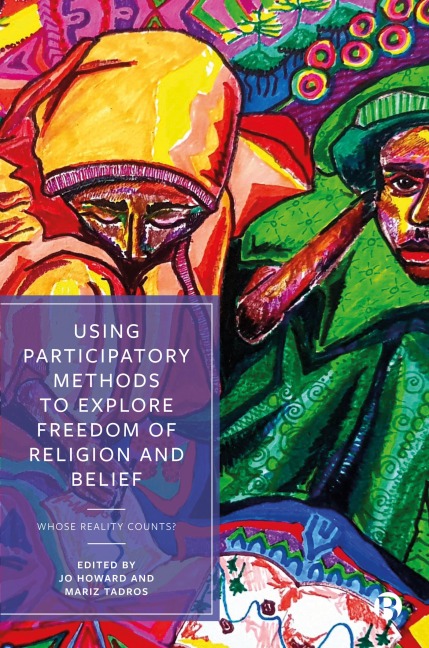
EPDF and EPUB available Open Access under CC-BY-NC-ND licence. Examining countries where religious pluralism is in decline, including Iraq, India, Pakistan and Nigeria, this book brings together reflections, knowledge and learning about the daily experiences of religiously marginalized groups, generated using participatory research methods. It also showcases the participatory methodologies implemented by its international team of contributors and highlights the importance of using non-extractive methods for engaging with participants. Including a careful consideration of the ethics and limitations of participatory research with marginalized groups, the book reflects on the implications for people's agency when research creates space for them to reflect on their realities in a group setting and uses methods which put their own experience and analysis at the centre of the process.
Jo Howard is a Research Fellow and leader of the Participation, Inclusion and Social Change research cluster at the Institute of Development Studies. Mariz Tadros is a Professor of Politics and Development and a Research Fellow at the Institute of Development Studies and Director of the Coalition for Religious Equality and Inclusive Development (CREID) programme.
1. Religious Inequalities: The Blind Spot in Participatory Methodologies and Understandings of Freedom of Religion or Belief ~ Jo Howard and Mariz Tadros Part 1: India 2. Participatory Methods and the Freedom of Religion or Belief ~ Rebecca Shah and Timothy Shah 3. The Personal, the Relational and the Community: Researching With Dalit Christian Women in India During COVID-19 ~ Rebecca Shah With Lata John 4. Faith and Researcher Positionality: Researching With Dalit Muslim Women in India During COVID-19 ~ Rebecca Shah With Laila Khan Part 2: Nigeria 5. Using Participatory Methodologies in the Context of Fragility ~ Plangsat Bitrus Dayil 6. Applying Participatory Methodologies in Understanding the Impact of the COVID-19 Epidemic on Religious Communities in Nigeria ~ Henry Gyang Mang 7. Working With Survivors of Trauma: Using Participatory Ranking To Explore the Experiences of Izala Women in Northern Nigeria ~ Fatima Suleiman Part 3: Iraq 8. Facilitating Peer Research for Freedom of Religion or Belief in Iraq ~ Sofya Shahab 9. Participatory Learning and Action (PLA) and Reflective Practices: Training Teachers To Become Effective Promoters of Freedom of Religion or Belief Principles in Education ~ Yusra Mahdi 10. Embracing Emotion and Building Confidence: Using Participatory Methods With Yazidi Women in Iraq ~ Zeri Khairi Gadi Part 4: Pakistan 11. Lessons Learned Using Participatory Methodologies in Exploring Intersectional Marginalization of Religious and Sectarian Minorities in Pakistan ~ Asad Shoaib and Jaffer Abbas Mirza 12. Using Participatory Research Methodology to Understand Daily Experiences of Religiously Marginalized Communities: A Case Study of Christians in Joseph Colony (Lahore) and Rimsha Colony (Islamabad) and Shi'as in Balti Basti (Karachi) ~ Maryam Kanwer and Jaffer Abbas Mirza 13. Using Participatory Methods With Ahmadis in Exile ~ M.K. 14. Addressing the Intersection of Religious and Other Inequalities Through Participatory Methodologies ~ Mariz Tadros and Jo Howard