Und dann auf "Zum Home-Bildschirm [+]".

Stöbern
genialokal zum Startbildschirm hinzufügen
Installieren Sie die genialokal App auf Ihrem Startbildschirm für einen schnellen Zugriff und eine komfortable Nutzung.
Installieren Sie die genialokal App auf Ihrem Startbildschirm für einen schnellen Zugriff und eine komfortable Nutzung.
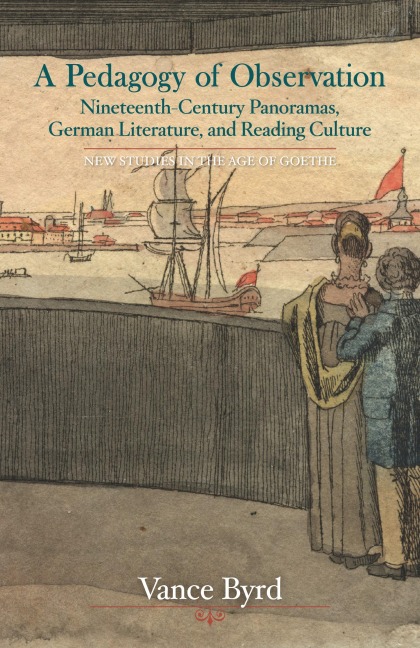
A Pedagogy of Observation argues that the fascination with learning about the past and new locations in panoramic form spread far from the traditional sites of popular entertainment and amusement. Although painted panoramas captivated audiences from Hamburg to Leipzig and Berlin to Vienna, relatively few people had direct access to this invention. Instead, most Germans in the early nineteenth century encountered panoramas for the first time through the written word. The panorama experience described inthis book centers on the emergence of a new type of visual language and self-fashioning in material culture adopted by Germans at the turn of the nineteenth century, one that took cues from the pedagogy of observing and interpreting space at panorama shows. By reading about what editors, newspaper correspondents, and writers referred to as "panoramas," curious Germans learned about a new representational medium and a new way to organize and produce knowledge about the scenes on display, even if they had never seen these marvels in person. Like an audience member standing on a panorama platform at a show, reading about panoramas transported Germans to new worlds in the imagination, while maintaining a safe distance from the actual transformations being portrayed. A Pedagogy of Observation identifies how the German bourgeois intelligentsia created literature as panoramic stages both for self-representation and as a venue for critiquing modern life. These written panoramas, so to speak, helped German readers see before their eyes industrial transformations, urban development, scientific exploration, and new possibilities for social interactions. Through the immersive act of reading, Germans entered an experimental realm that fostered critical engagement with modern life before it was experienced firsthand. Surrounded on all sides by new perspectives into the world, these readers occupied the position of the characters that they read about in panoramic literature. From this vantage point, Germans apprehended changes to their immediate environment and prepared themselves for the ones still to come.
Vance Byrd is associate professor of German at Grinnell College.
List of Illustrations
Acknowledgments
Introduction
Chapter 1: Reading Panoramas
Chapter 2: A Domestic Spectacle: Panorama Entertainments and Fashion Journals
Chapter 3: The Panorama and the Limits of Representation
Chapter 4: The Urban Apartment as Panorama: E.T.A. Hoffmann's My Cousin's Corner Window
Chapter 5: The Photographic Sketch and Panoramic Observation
Epilogue: The Renewed Promise of Panoramas
Bibliography
Index
About the Author
Dieses eBook wird im PDF-Format geliefert und ist mit einem Adobe Kopierschutz (DRM) versehen. Sie können dieses eBook mit allen Geräten lesen, die das PDF-Format und den Adobe Kopierschutz (DRM) unterstützen.
Zum Beispiel mit den folgenden Geräten:
• tolino Reader
Laden Sie das eBook direkt über den Reader-Shop auf dem tolino herunter oder übertragen Sie das eBook auf Ihren tolino mit einer kostenlosen Software wie beispielsweise Adobe Digital Editions.
• Sony Reader & andere eBook Reader
Laden Sie das eBook direkt über den Reader-Shop herunter oder übertragen Sie das eBook mit der kostenlosen Software Sony READER FOR PC/Mac oder Adobe Digital Editions auf ein Standard-Lesegeräte mit epub- und Adobe DRM-Unterstützung.
• Tablets & Smartphones
Möchten Sie dieses eBook auf Ihrem Smartphone oder Tablet lesen, finden Sie hier unsere kostenlose Lese-App für iPhone/iPad und Android Smartphone/Tablets.
• PC & Mac
Lesen Sie das eBook direkt nach dem Herunterladen mit einer kostenlosen Lesesoftware, beispielsweise Adobe Digital Editions, Sony READER FOR PC/Mac oder direkt über Ihre eBook-Bibliothek in Ihrem Konto unter „Meine eBooks“ - „online lesen“.
Schalten Sie das eBook mit Ihrer persönlichen Adobe ID auf bis zu sechs Geräten gleichzeitig frei.
Bitte beachten Sie, dass die Kindle-Geräte das Format nicht unterstützen und dieses eBook somit nicht auf Kindle-Geräten lesbar ist.